
General Contractor Cost Guide: What Los Angeles Homeowners Pay in 2026
Most Los Angeles homeowners will pay between $150 and $450 per square foot for a general contractor-managed remodel in 2026, depending on scope, finishes, and whether load-bearing walls or major systems are touched. Kitchen remodels typically land between $65,000 and $165,000, primary bathrooms between $35,000 and $90,000, and whole-home renovations between $200,000 and $600,000. If you’d rather skip the math and get a written number from someone who has done this in LA for two decades, call Bradford Remodeling home at (903) 568-7222.
Here is the thing most cost guides will not tell you: a general contractor bid is not one number. It is a stack of costs, each with its own logic, and once you understand the stack, you can read any bid like a foreman reads a takeoff. That is what this guide is built to do.
The Anatomy of a General Contractor Bid in Los Angeles
A legitimate general contractor bid has five structural layers. If your bid does not show them, ask for the breakdown. In Los Angeles, where construction costs run 20 to 30 percent above the national average, you cannot afford to compare totals without knowing what is inside them.
First is direct materials. This is lumber, drywall, tile, countertops, fixtures, doors, windows, and hardware. On a $150,000 kitchen remodel, materials might run $45,000 to $60,000. The quality of this line item is not guesswork at General Contractor in Los Angeles rates. For example, a Therma-Tru exterior door costs more than a big-box off-brand, and it holds its weather seal for years longer in LA’s marine-layer humidity along the westside. We specify brands like Therma-Tru, ECO Window Systems, and ViewLux because their manufacturer specs are documented, and that documentation backs our own warranty.
Second is subcontractor labor. Electricians, plumbers, HVAC, and tile setters in Los Angeles bill at $85 to $150 per hour depending on trade. A kitchen rough-in with electrical and plumbing runs $18,000 to $32,000. Licensed electricians and plumbers are the tightest trades in the Los Angeles market right now. The city’s ongoing push on ADUs and electrification has pulled the pool thin, and post-2025 wildfire rebuilding in the Pacific Palisades and Altadena corridors has made supply even shorter. That is real money in your bid, and it is not negotiable from the contractor’s side.
Third is the general contractor’s overhead-and-profit markup on subcontracted work, typically 15 to 20 percent in Los Angeles. This is the line that separates a disciplined GC from a guy working out of a truck. That markup pays for insurance, license bond, supervision time, job site protection, the cost of whoever answers the phone at 7 a.m., and your warranty liability. A GC who quotes you 8 percent is either uninsured, unbonded, or planning to make up the difference in change orders. We have fixed enough of those jobs to know the pattern.
Fourth is permit fees, and this is where most guides go quiet. The City of Los Angeles and neighboring jurisdictions like Pasadena, Burbank, and Santa Monica calculate permit fees as a percentage of project valuation. On a $200,000 remodel, a realistic LA permit line is $5,000 to $12,000 depending on scope. It is not a flat fee. It is not optional. And any bid that excludes it should make you ask what else is missing.
Fifth is the GC’s own direct scope where the general contractor performs the work directly, demolition, framing, drywall, finish carpentry, and site management, billed at $95 to $140 per hour in Los Angeles plus materials. On a whole-home remodel, this line is the largest single labor component.
Real 2026 Los Angeles Cost Ranges by Project Type
Here are honest ranges we use daily at Home Remodeling in Los Angeles. They assume existing square footage, no seismic retrofit surprises, and mid-range to premium finishes. Los Angeles is a coastal seismic zone, and older houses in neighborhoods like Silver Lake, Eagle Rock, and West Adams frequently carry unpermitted past work or foundation issues that surface once walls come open. Budget for a 10 to 15 percent contingency, not because contractors are sloppy, but because Los Angeles housing stock is old and honest disclosure died in escrow decades ago.
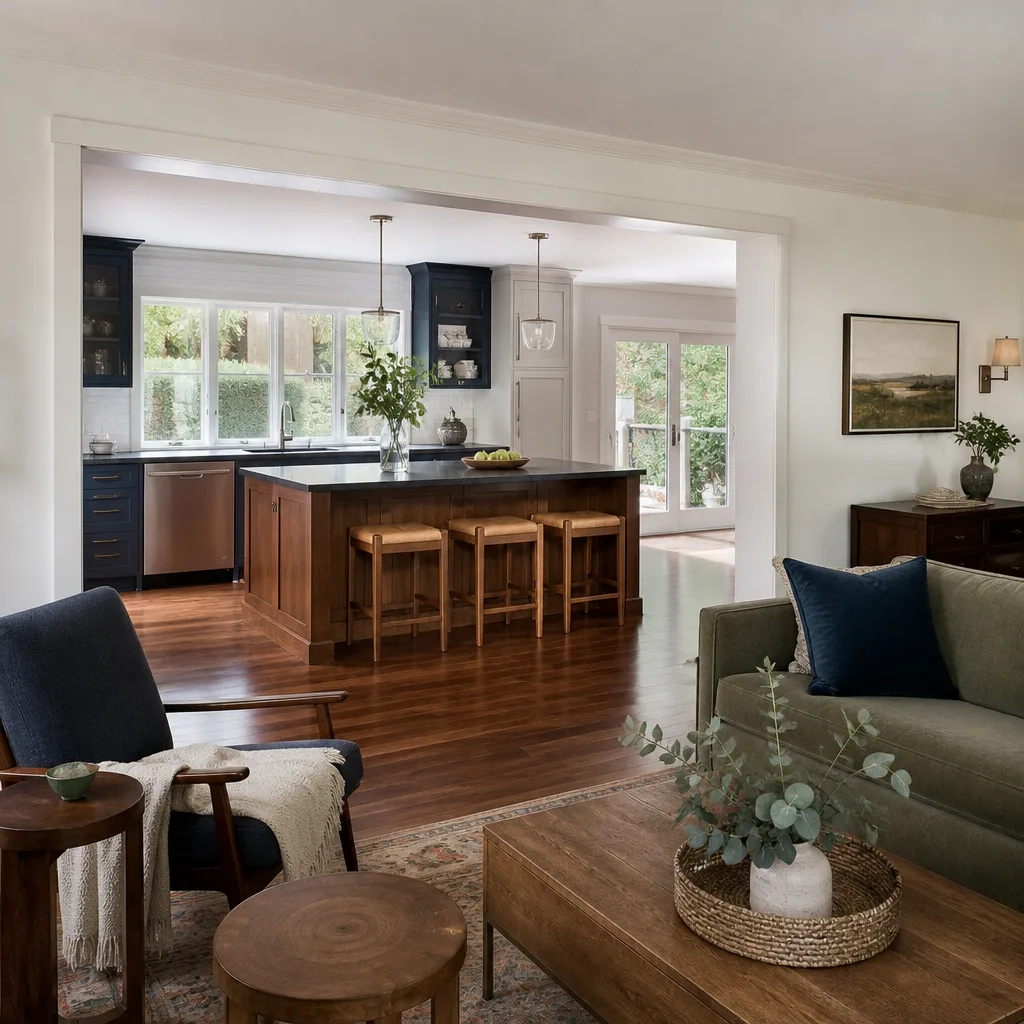
- Kitchen remodel: $65,000 to $165,000. Layout-preserving jobs run lower; moving plumbing or removing walls runs higher. Cabinetry from KraftMaid or Wellborn and quartz from Cambria or Caesarstone move the materials line, but those brands carry documented specs, and that traceability matters to us and to you at close-out.
- Primary bathroom remodel: $35,000 to $90,000. Curbless showers, heated floors, and freestanding tubs push toward the top. Substrate repair, meaning the framing and backer board underneath the tile, is the hidden line nobody budgets for but every honest bid includes.
- Whole-home remodel: $200,000 to $600,000. This is the widest range because it depends entirely on how much of the house gets opened. Systems work (electrical panel upgrades, repiping, HVAC) runs $45,000 to $90,000 before a single finish is installed.
- ADU (Accessory Dwelling Unit): $250,000 to $450,000 for a 600 to 800 square-foot new build in Los Angeles. Note that certain public works and prevailing wage rules can trigger on larger projects, spiking labor 30 to 40 percent, and a good GC will tell you whether your project falls under that threshold before you sign.
Why Los Angeles Labor Costs More Than the National Average
Three structural forces keep Los Angeles construction labor above almost every other market in the country, and none of them are going away in 2026.
The trade shortage is real and localized. Licensed electricians and plumbers in Los Angeles are aging out. Apprenticeship numbers have not kept pace with demand, especially after the 2025 wildfire season, which pulled thousands of skilled tradespeople into high-priority rebuilding zones. That means longer waits and higher rates for every trade that touches your house. It is not your contractor marking up labor; it is the labor market setting the price.
Insurance costs post-wildfire have reset the market. General liability and builders’ risk premiums for Los Angeles contractors rose sharply after the 2025 season. Carriers are recalculating exposure across the entire basin, not just the burn perimeters. Every legitimate GC carries those premiums and charges them through overhead. A contractor who has not re-priced his insurance in two years is either underinsured or about to be.
Permit friction adds calendar time, and time is money. The Los Angeles Department of Building and Safety runs on a digital review system that has improved from its early days but still moves slower than homeowners expect. Plan review cycles, inspections, and corrections add weeks to a job, and supervision hours cover that entire window. A cheap GC shortens the schedule by skipping inspections. That is not a deal; it is deferred liability.
One more line worth understanding: the difference between licensed and unlicensed activity. California allows unlicensed contractors to work only on jobs under $500 total including materials. Anyone who shows up in Los Angeles quoting less than that threshold and then “helps out” with a bathroom is breaking state law, and the homeowner is absorbing the liability. We mention it because at least two of you reading this will see a cheap number in the next month and wonder. Now you know.
How a Legitimate Payment Schedule Maps to Completed Work
Here is where qualified Los Angeles homeowners get burned, not by total price, but by payment structure. A legitimate draw schedule ties every dollar to completed, inspectable work. A front-loaded schedule is a financial risk indicator, full stop. If a contractor asks for 50 percent down on a three-month remodel, that is not how disciplined contractors operate, and we say that as people who have been asked to fix the jobs that followed.
A standard schedule for a $150,000 kitchen remodel in Los Angeles looks like this:
- Deposit at contract signing: 10 to 15 percent ($15,000 to $22,500). This covers mobilization, initial material orders, and the permit application fee.
- Demolition and rough-in completion: 25 percent. Framing is done, plumbing and electrical rough-in is visible and inspectable, and the walls are open.
- Drywall and inspection close-out: 25 percent. The city inspector has signed off on the rough work, and finishes are rolling.
- Cabinet, tile, and millwork installation: 25 percent. Most of the visible work is in place.
- Final walkthrough and signed close-out: 10 to 15 percent. The site is cleaned, the scope is verified line by line, and the written guarantee is in your hand.
Every payment in that schedule corresponds to a phase you can see and verify. That is the discipline behind the Kitchen Remodeling in Los Angeles bids we write. Under The Garrison Standard, the written price and the written schedule come together, and neither changes unless you approve a change order in writing. A crew that follows that rule does not reprice at the door, because the number was never soft to begin with.
Permit Costs: The Line Item Most Guides Undervalue
Los Angeles permit fees are calculated as a percentage of project valuation, which is the estimated total cost of the work including materials and labor. On a $200,000 whole-home remodel, do not be surprised to see a permit line of $8,000 to $12,000 before plan check fees. That is not a contractor markup; it is the city’s fee structure, and it applies whether you hire a GC or pull the permit yourself.
What a good general contractor does with that line is make it transparent. We itemize it. We show you the LADBS fee schedule reference. We tell you which inspections have to pass and in what order. A contractor who says he can skip permits to save you money in Los Angeles is offering to save you $10,000 in exchange for a house that becomes a problem when you sell, refinance, or file an insurance claim. The trade is not worth it.
This matters in neighborhoods like Los Feliz, Mar Vista, and Granada Hills because the planning departments are active, neighbor complaints about unpermitted work are common, and code enforcement does not need a warrant to check. Los Angeles has been doing this long enough to know where the unpermitted work hides, and it is usually behind the newest drywall.
When to Call a Pro (And When Not To)
You can paint a room yourself. You can replace a light fixture or swap a faucet if you turn the water off first. What you should not do yourself is anything involving structural framing, load-bearing wall removal, electrical panel work, or gas lines. Those are the jobs where the cost of a mistake is measured in life safety, not drywall repair. A general contractor in Los Angeles carries the license, the bond, the insurance, and the inspection record for that work, and that is exactly what you are paying that 15 to 20 percent markup to cover.
We pulled a wall out of a 1940s bungalow over in Atwater Village last month where the original framing had been notched through by a previous owner’s handyman to run a kitchen vent. The house had stood that way for 15 years. It would have failed in the next earthquake. That is not a scare story; it is a Tuesday in Los Angeles construction.
If you are pricing a kitchen remodel, a whole-home renovation, or a general contracting scope, the relevant service pages are Kitchen Remodeling in Los Angeles and Home Remodeling in Los Angeles. They give you the scope and the deliverables in plain language. If you want numbers, call us.
The Bottom Line
General contractor pricing in Los Angeles in 2026 is not a single number you compare across bids. It is a structure: direct materials, subcontracted trade work, a 15 to 20 percent markup that buys insurance, supervision, and warranty liability, permit fees calculated as a percentage of project value, and direct GC labor. A bid that hides one of those layers is hiding something else. Payment schedules that front-load cash are warning signs. Unpermitted work saves money now and costs more later, every time. And the labor market in Los Angeles is pricing in trade shortages, wildfire recovery, and insurance costs that are not going anywhere in 2026.
If you are in Los Angeles and need a written number from a contractor who itemizes every one of those layers, Bradford Remodeling offers free estimates with no obligation. Call (903) 568-7222 and a live person will answer, walk you through the scope, and put the price in writing before any work starts.
Frequently Asked Questions
General contractor services in Los Angeles cost $150 to $450 per square foot in 2026, with kitchen remodels at $65,000 to $165,000 and whole-home renovations at $200,000 to $600,000. The final number depends on scope, finish level, and whether the house needs systems work like new electrical or plumbing. Call (903) 568-7222 for a written estimate of your specific project, it is free and itemized.
A fair general contractor overhead-and-profit markup in Los Angeles is 15 to 20 percent on subcontracted work, and it funds insurance, license bond, supervision, and warranty liability. A markup below 10 percent means the contractor is cutting one of those or planning to recover margin through change orders. If you would like a bid you can compare line by line, call (903) 568-7222.
Los Angeles permit fees run 3 to 6 percent of project valuation, so a $200,000 remodel should carry a permit line of $8,000 to $12,000. The fee is set by the city and applies regardless of who pulls the permit. A contractor who offers to skip permits to save you money is transferring that liability to you. Bradford Remodeling itemizes every permit fee and inspection in the written price, call (903) 568-7222 to see exactly how it breaks down.
A legitimate payment schedule ties each draw to completed, inspectable work: 10 to 15 percent down at signing, then draws at rough-in completion, drywall close-out, finish installation, and a final payment at walkthrough with written guarantee in hand. Front-loaded schedules that take 50 percent before work starts are risk indicators. Every Bradford Remodeling contract in Los Angeles follows this draw structure, call (903) 568-7222 for the full explanation.
Written by the team at Bradford Remodeling.
Need Construction Help?
Call Bradford Remodeling - licensed & insured, here with fast after-hours help in Los Angeles.
(903) 568-7222