
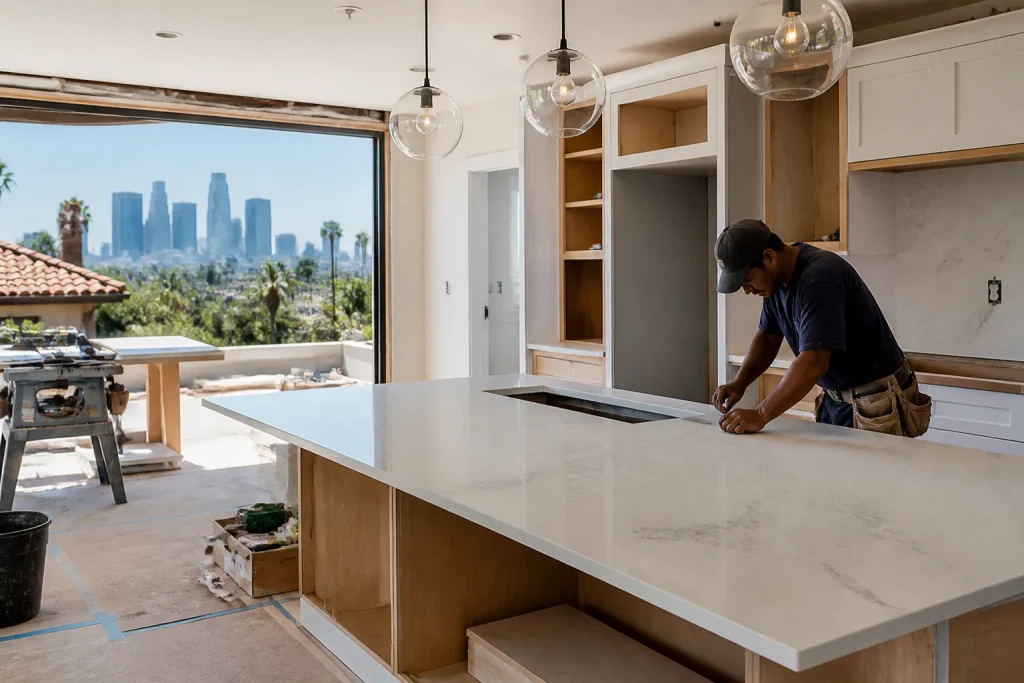
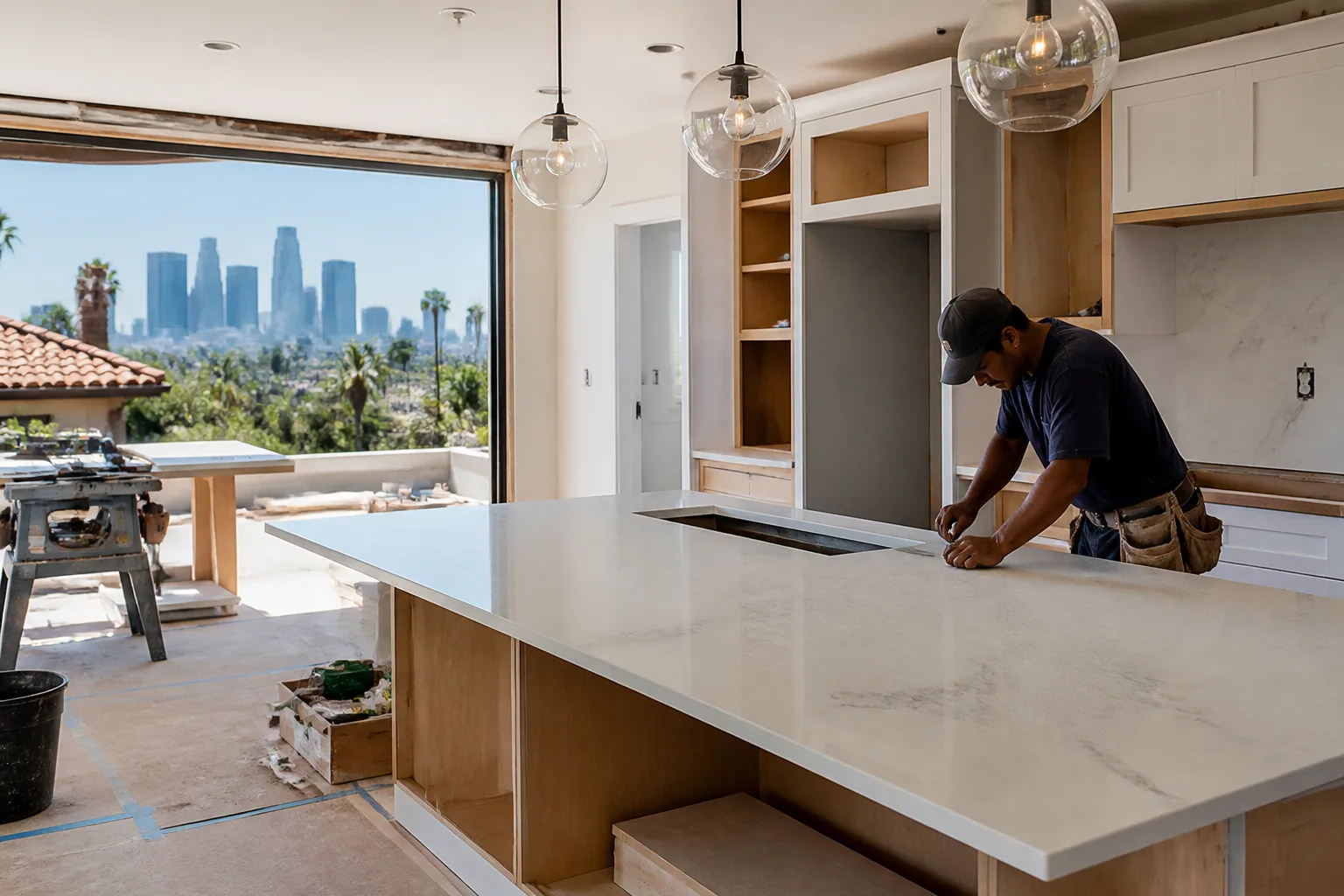
Silestone General Contractor in Los Angeles: A Homeowner’s Guide
Most Silestone problems in Los Angeles homes start the same way: a general contractor treats the countertop like run-of-the-mill engineered quartz. Silestone’s HybriQ line is a hybrid mineral and recycled glass product, not standard quartz, and it moves, seals, and wears differently than the slab your neighbor installed in 2019. Here’s what we tell every homeowner before their Silestone project starts.
Three Questions That Separate a Silestone-Savvy GC From a Pretender
Los Angeles has no shortage of contractors who will nod along when you say “Silestone” and then treat the job like a prefab laminate swap. Before you sign anything, ask the GC these three questions. The answers will tell you more than a portfolio gallery will. In our experience, the ones who hesitate here are the ones guessing on your dime.
- What adhesive do you specify for HybriQ seams, and why? Standard quartz adhesives cure too rigidly for HybriQ’s thermal expansion coefficient. It expands and contracts about 30% more than conventional quartz under Los Angeles temperature swings, especially in kitchens with heavy western sun exposure. The right answer is a hybrid polymer adhesive with some give. A blank stare is your cue to keep looking.
- Will you coordinate the Cosentino-authorized fabricator or leave that to me? Cosentino requires an authorized fabricator for its warranty to remain valid. Our scope always names the fabricator and pulls the fabrication date. If a GC says they’ll “take care of it” without naming a specific shop, you’re handing an expensive material to unknown hands.
- What do you do at the seam between the Silestone slab and my backsplash? Probably the most common gap we find in Los Angeles remodel walkthroughs. If the answer is “caulk it,” you’ve found a contractor who’s never read Silestone’s installation documentation. The right answer is a food-safe, neutral-cure sealant specified for use with acrylic and mineral surfaces. Not silicone bathroom caulk. We’ve pulled the wrong stuff out of more than one otherwise well-built kitchen over in Sherman Oaks.
What Silestone HybriQ Actually Changes at the Installation Level
Here’s what’s different about HybriQ when tools hit the job site. This isn’t marketing copy; these are issues that affect whether your countertop lives up to its 25-year warranty.
- Thermal expansion behavior. Because HybriQ includes recycled glass and a hybrid resin system, fasteners and adhesives that work on standard quartz can telegraph through the slab as surface stress lines. We cut expansion-tolerant seams instead of butting the slab tight against walls or cabinet tops. If a Los Angeles GC doesn’t allow for this, the first hot pan on a shaded patio can turn into an ugly popped seam six months later.
- N-Boost surface care requirements. N-Boost is Silestone’s semi-polished, low-sheen finish. It resists fingerprints and stains, but after install, the slab needs a documented cleaning and sealing process to bring out the finish correctly. Some acids and harsher degreasers will dull N-Boost’s sheen prematurely; we tell every homeowner to throw away the bottle of citrus degreaser and use a neutral-pH cleaner instead. That’s a ten-second conversation that saves a $4,000 countertop.
- Seam adhesive compatibility. Because HybriQ’s resin matrix is different, your fabricator’s normal seam adhesive can cure to a visibly different color than the slab. We confirm the adhesive brand and color-match test with the authorized fabricator before a single slab is cut. Cheap GCs skip this step because they don’t know it exists.
If you’d rather skip the homework and hand the whole thing to a crew that runs a tight Silestone scope, call (903) 568-7222. We’ll send you a written price before any work starts.
The GC Scope Items Specific to Silestone: Warranty, Substrate Prep, and Inspection
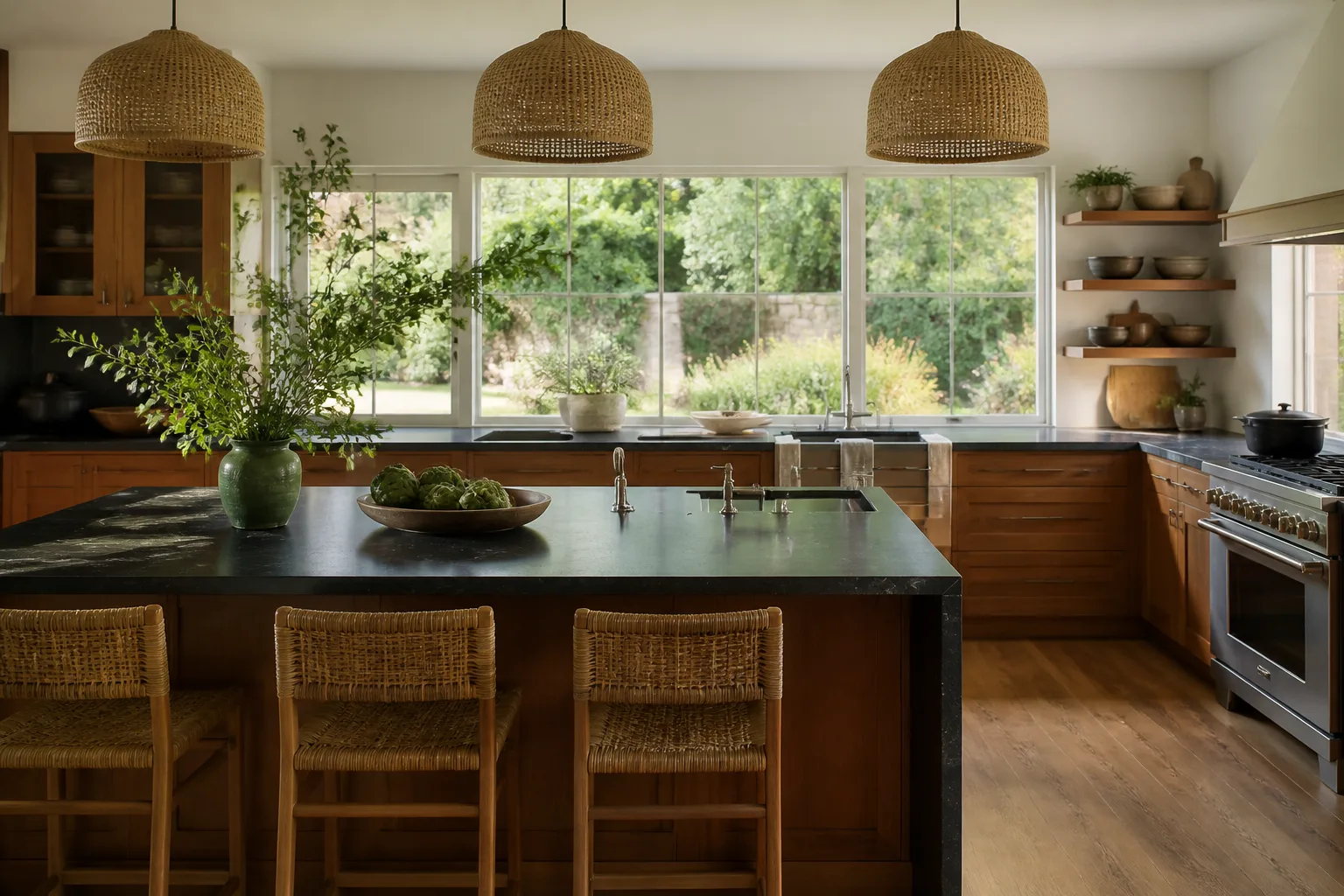
Here’s the part most homeowners don’t know: your countertop warranty from Cosentino has conditions the general contractor must meet. If your GC’s substrate work ignores those conditions, your Silestone warranty is dead on arrival, and you’ll never know until you file a claim.
The GC’s substrate leveling tolerance must meet Cosentino’s spec before the slab is templated. We shoot for a tolerance of no more than 1/8 inch over any 10-foot span. If an existing plywood base in a Los Angeles mid-century kitchen has bowed with age, we replace or plane that base before the fabricator arrives. The slab itself carries a manufacturer warranty, but the GC’s structural work is what keeps that warranty valid. This is one reason our General Contractor in Los Angeles scope includes substrate inspection as a named line item, not a nice-to-have.
After the slab is set, the inspection should cover seam flatness (run your fingertip across the seam; any step more than a hair’s width is a defect), edge profile consistency, and the sink cutout reveal. We knife through those points with you on the final walkthrough so nobody’s guessing what “done” means.
Silestone’s Surface Chemistry vs. What Your GC Caulks With
Silestone markets HybriQ as bacteriostatic, which means the surface itself resists bacterial growth. That property does not survive wet, seeping caulk at the backsplash junction. If your GC uses an off-the-shelf silicone caulk at that seam, water gets behind the slab and under the caulk, and that’s where grime and bacteria grow regardless of what Silestone says about the slab. The caulk and grout choices your GC makes at that junction are the weak link in the system, not the Silestone itself.
We specify a food-safe, neutral-cure sealant at every backsplash junction and run the bead clean after the slab has settled into its adhesive bed. This isn’t a “we prefer this product” situation. It’s a “specify it in writing or don’t install it” situation. When you get your written scope, it should say exactly which sealant goes at that junction. No sealant, no warranty protection, no reason to think your kitchen won’t grow something behind the slab three years from now.
How to Read a GC’s Silestone Experience During the Estimate Meeting
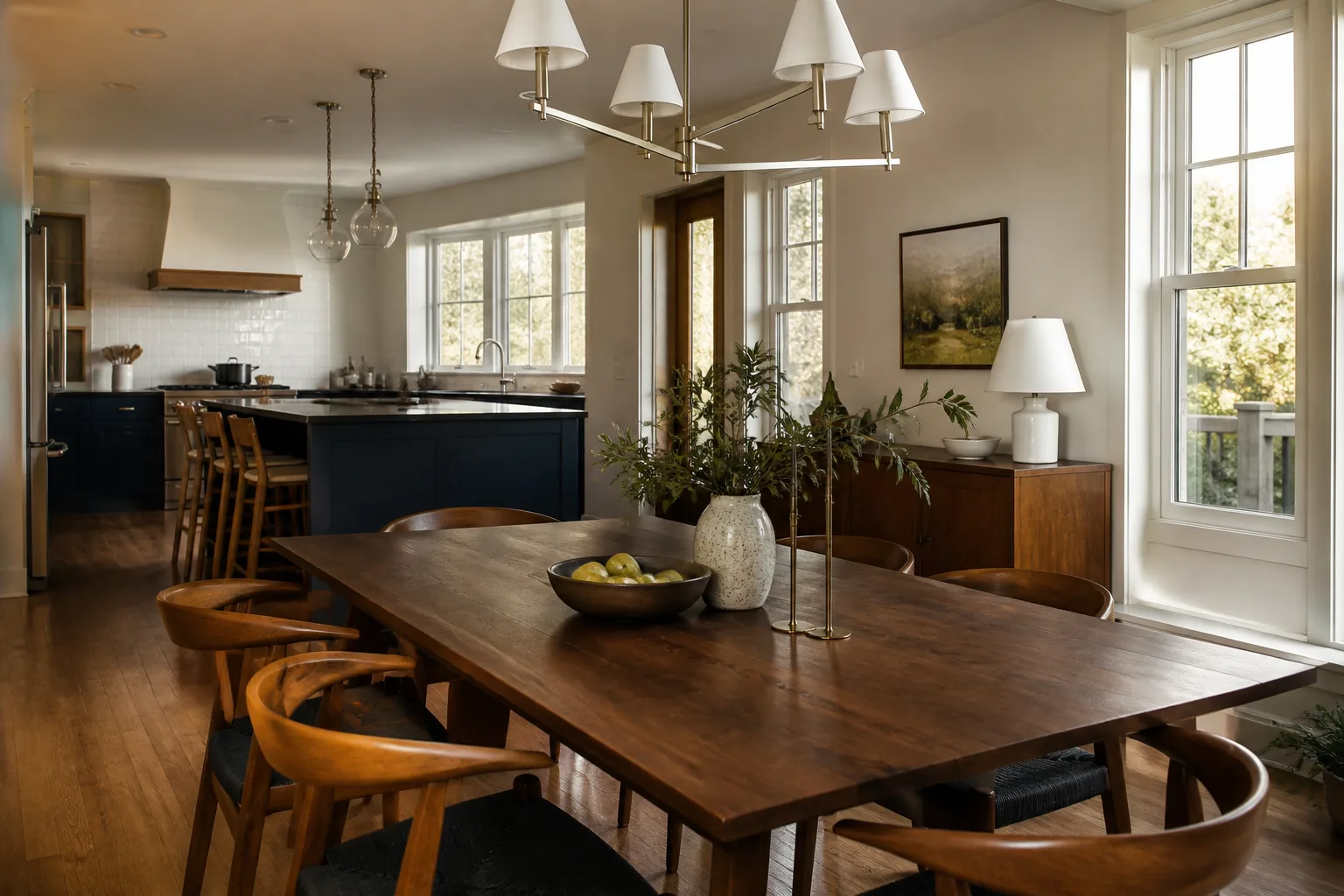
Here’s the uncomfortable truth about Los Angeles remodeling: most general contractors haven’t done more than one or two Silestone installs, and their estimate won’t tell you that. The estimate meeting will. Watch for these tells.
- They ask you to “just pick a color” from a brochure. A contractor who’s worked with Silestone in the past will tell you that N-Boost finishes vary slightly across slab lots. A GC who says “the brochure is fine” has never ordered from an authorized fabricator. Every reputable Silestone job starts with a physical slab inspection at the fabricator’s yard. If they haven’t offered to set that up, they’ve never done it.
- They don’t mention the induction cooktop cutout. Silestone slabs are thinner than granite and more sensitive to heat at the cutout edges. The cutout for an induction cooktop needs edge reinforcement, and most GCs miss it. We reinforce every cooktop cutout on HybriQ. If the GC isn’t talking about this, the guy is installing your cooktop on a slab he hasn’t thought about.
- They don’t ask about your existing cabinet structure. Silestone is heavy enough that bowed cabinet boxes will telegraph through the slab as stress cracks over time. A proper GC walks your cabinets before you ever pick a color. Ours does. Because in a 1965 Los Angeles kitchen with water-damaged particle board bases, that’s where the extra $500 in materials belongs, not in the GC’s pocket.
This is exactly the kind of stuff our Kitchen Remodeling in Los Angeles crew flags before the slab is cut. It’s not complicated, but it’s the difference between a Silestone top that looks great in the photo and one that still looks great in five years.
What Bradford’s Written Scope Covers on a Silestone Job
Here’s what you should see in writing before you sign anything. Ours includes all of these as line items, not verbal promises.
- Demolition and disposal of the existing countertop, including old caulk removal down to clean substrate. No shortcutting; we pull the old adhesive off, not just scrape over it.
- Substrate prep and leveling to Cosentino spec, documented so there’s no he-said-she-said if a warranty issue ever comes up.
- Template coordination with the Cosentino-authorized fabricator. We schedule the fabrication date and the slab inspection so you don’t end up with a color you didn’t approve.
- Seam adhesive specification in writing, with the specific product name and color matched to your slab.
- Sink and cooktop cutout reinforcement. Every HybriQ slab we install gets edge reinforcement at the cutouts, not just the big boxes.
- Caulking and sealant at every junction, specified in writing. No guessing.
- Final seam inspection, flatness check, and edge profile check with you on the walkthrough.
Which warranty items are Cosentino’s responsibility? The slab’s structural integrity, the biological protection in the HybriQ formula (when installed per spec), and any manufacturing defect in the material itself. Which are Bradford’s? The substrate prep, the seam work, the adhesive, the caulk, the cutout reinforcement, and everything we touch after the slab goes down. The Done Right Promise covers the workmanship: if something fails within that year, we come back and fix it at no charge. We take responsibility for our part in writing, and Cosentino handles their part if the slab itself fails.
Need an example? We pulled a Silestone slab out of a kitchen over in the Fairfax district where the previous contractor had used construction adhesive under the slab and no sealant at the backsplash. The homeowner thought her warranty covered the cracked seam near the range. It didn’t, because the substrate was out of spec. When the scope is written right, that kind of surprise doesn’t exist.
When to Call a Pro

If your GC can’t answer the three questions we covered at the top of this page in one meeting, do not hand them your Silestone project. That material deserves better. If you’re in Los Angeles and want a written scope for a Silestone countertop or a full kitchen remodel built around it, call (903) 568-7222 for a free estimate. We’ll put every price in writing before a single tool comes out.
Related services in Los Angeles: Home Remodeling in Los Angeles works with the same documented material standards and written scopes across whole-home projects.
The Bottom Line
Silestone HybriQ is a great surface, but it’s a terrible material to let someone learn on. Every Silestone project in Los Angeles deserves a GC who addresses thermal expansion, adhesive compatibility, substrate leveling, cutout reinforcement, and the sealant at the backsplash. If your written scope doesn’t mention these items specifically, you’re paying premium money for a generic installation. Bradford Remodeling home has run Silestone scopes the right way, because a premium slab on a sloppy prep job is a $150-per-square-foot mistake you never get back.
Call (903) 568-7222 for your free estimate. We’ll send the written price before work starts, every time.
Frequently Asked Questions
For many Los Angeles homeowners, yes, if the installation is right. HybriQ’s recycled glass content and N-Boost finish give you better stain and fingerprint resistance than standard quartz, but those properties only hold if the GC uses compatible adhesive, proper substrate prep, and the right sealant at the backsplash. A bad install nullifies most of what you paid for. Call (903) 568-7222 if you want a written scope that covers those specifics.
Most Silestone countertops go from template to done in five to ten business days, depending on slab availability and fabrication scheduling. The authorization process with Cosentino’s fabricator adds a day or two on the front end. You’ll get a written schedule in your scope so you’re not guessing. We coordinate the fabricator, the template appointment, and the installation day in one pass.
We handle the coordination and make sure the fabricator and substrate work meet Cosentino’s installation standards, which is what keeps the warranty valid. The warranty itself is between you and Cosentino; our job is to make sure our work doesn’t void it. The Done Right Promise covers our workmanship separately. If something fails in that first year, we come back and fix it at no charge.
Often yes, but not always. Silestone is heavy, and older Los Angeles cabinet boxes with water-damaged particle board bases can flex under the load and cause stress cracks over time. We inspect the cabinet structure before the slab is templated and tell you honestly if reinforcement is needed. It’s usually a few hundred dollars, which is less than replacing a cracked slab later. Call (903) 568-7222 for a free estimate, and we’ll walk your cabinets first.
Written by the team at Bradford Remodeling.
Need Construction Help?
Call Bradford Remodeling - licensed & insured, here with fast after-hours help in Los Angeles.
(903) 568-7222