


Kitchen Remodeling: Repair or Replace? How Los Angeles Homeowners Decide
The repair-or-replace call comes down to one comparison most Los Angeles homeowners never make. They weigh the cost of a repair against the sticker price of a full remodel, when the honest comparison is repair cost versus what that specific component actually returns in your neighborhood’s resale market. In most mid-tier LA neighborhoods, a full cabinet gut running $15,000 to $30,000 returns less than 70 cents on the dollar at resale. The smarter play is deciding component by component: cabinets, countertops, appliances, each on its own math.
If you’d rather not work through the numbers yourself, call (903) 568-7222 and Curtis will walk you through it in plain terms.
Key Takeaways
- Refacing cabinets costs roughly 30 – 50% of full replacement and makes sense when the cabinet boxes are still square and solid.
- Countertop replacement requires a substrate inspection before you pick a material, not after.
- Appliances are almost always a homeowner decision; the GC’s job is accommodating the rough-in, not recommending the brand.
- LA’s ADU and rental market shifts the calculation for homeowners who may convert the kitchen’s use within a few years.
- Every Bradford estimate documents the repair option and the replace option side by side, in writing, before work starts.
Why Most Homeowners Get the Repair-or-Replace Call Wrong
Here’s the pattern we see in Los Angeles kitchens every month. A homeowner looks at dated cabinet doors, a tired backsplash, and a cooktop that’s seen better decades. They call three contractors. Two of them quote a full gut remodel, because that’s where the margin lives and it’s easier to sell than a surgical repair. The third quotes a partial scope, but the homeowner has already anchored on the big number and assumes that’s what the job costs.
What gets skipped is the component-level math. Your cabinet boxes might have another fifteen years in them while the doors and drawer fronts are the only things that look worn. Your countertop might be solid but sitting on a substrate that failed because of a decade of sink leaks. Your appliances might be fine, but their rough-in locations don’t match any layout you’d actually want. These are separate decisions with separate price tags and separate returns. Treating them as one gut-level vote is how LA homeowners overspend by $20,000 on a kitchen that didn’t need half the work.
Bradford Remodeling’s approach is to break the scope into its component parts and price each one honestly. We’re a General Contractor in Los Angeles, and part of the job is telling you when the kitchen doesn’t need us as badly as the sales pitch suggests. The Garrison Standard demands a written price before any work starts, which means we have to get the scope right on paper, not pad it to cover uncertainty.
The Cabinet Decision: Refacing, Refinishing, or Full Replacement
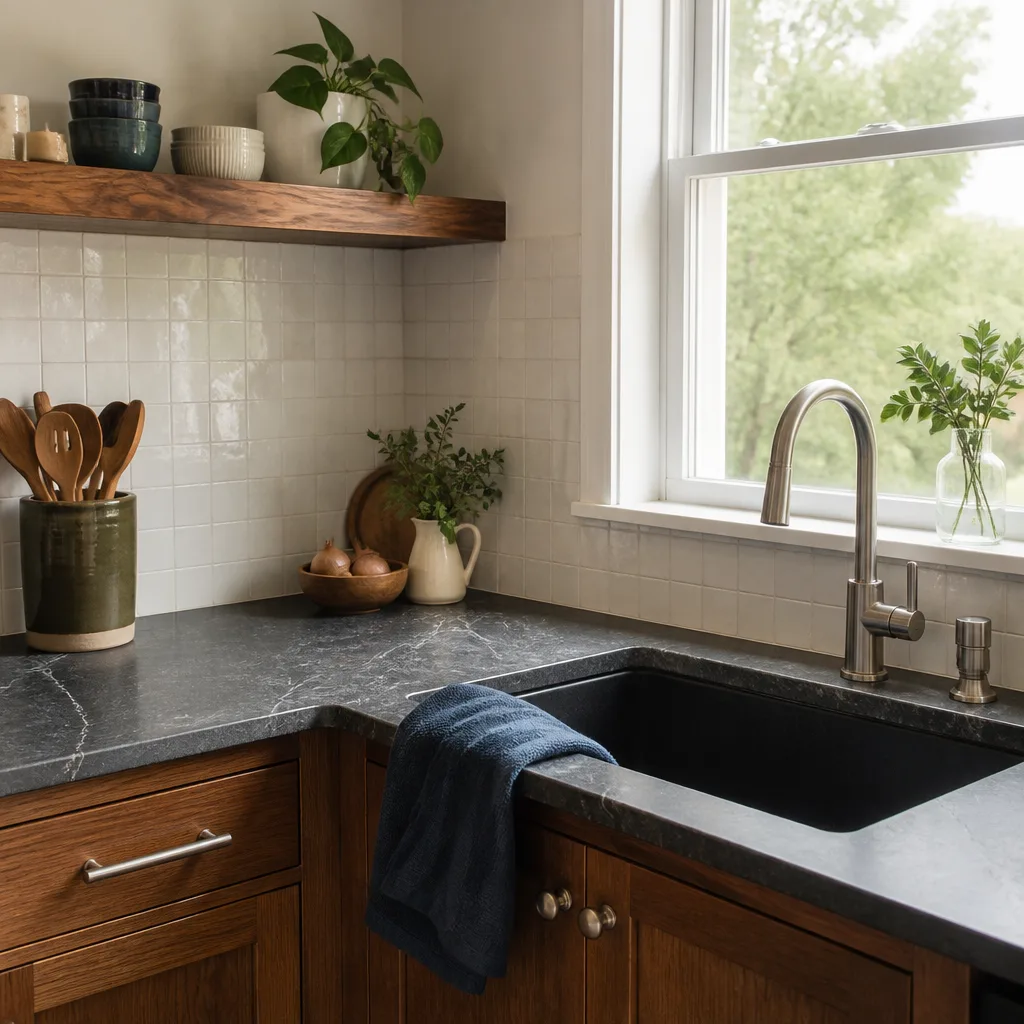
First, the numbers. Full cabinet replacement in a typical Los Angeles kitchen runs $15,000 to $35,000 depending on linear footage, material, and whether you’re dealing with stock, semi-custom, or custom boxes. Refacing – new doors, drawer fronts, and veneer on the visible box faces – runs $6,000 to $12,000 for the same kitchen. Refinishing, which is sanding and re-coating the existing doors, runs $2,500 to $5,000. Those are the three doors you’re choosing between.
The decision hinges on the cabinet boxes, not the doors. Here’s what we inspect before recommending anything:
- Box squareness: If the boxes have racked or twisted out of square, no amount of new doors will hang right. We check with a level and a framing square.
- Joinery integrity: Stapled particleboard boxes from the 1980s fail at the corner joints. Dovetailed hardwood boxes from the 1960s are usually still tight.
- Water damage: The sink base cabinet tells the truth. If the floor of that box has swelled, darkened, or gone soft, that’s structural damage, not cosmetic wear.
- Hardware bore patterns: If the existing hinges are European cup hinges in standard 35mm bores, refacing is clean. If they’re surface-mounted butt hinges from the Eisenhower administration, you’re filling and re-drilling every door – which pushes the refacing price closer to replacement.
In our experience, roughly half the Los Angeles kitchens we look at are solid refacing candidates. The other half have box damage, usually water-related, that makes refacing a short-term fix over a long-term problem. If the boxes are sound and the layout works for you, refacing with doors from a millwork shop gets you 90% of the visual update at 40% of the full-replacement cost.
One more thing: if you’re in an older Los Angeles home, check what’s behind the cabinets before you decide. We’ve pulled cabinets off walls in Highland Park and found knob-and-tube wiring, rotted studs from old roof leaks, and plumbing that needed a full re-rough. If the wall behind the cabinet needs remediation, that’s the moment to replace the cabinets too, because you’re already paying for the mess.
The Countertop Decision: Check the Substrate Before You Shop the Slab
Homeowners pick countertops backward. They walk into a slab yard, fall in love with a Cambria or Caesarstone color, and decide the material first. Then the GC comes out and finds the substrate is shot, and suddenly the “simple countertop swap” needs new plywood underlayment, new cabinet bracing, and possibly structural work on the cabinet run.
Here’s the correct order for a Los Angeles kitchen:
- Inspect the substrate first. The substrate is the layer under your existing countertop – usually plywood or particleboard. If it’s delaminating from years of sink splash or steam, it has to come out. That’s the moment you learn whether the cabinets under it are still sound.
- Check the overhang specs. If you’re moving from a thick granite to a thin quartz, or changing the overhang for bar seating, the cabinet tops may need additional support framing.
- Settle the sink reveal. Undermount, flush-mount, or drop-in changes the edge fabrication, which changes the cost per linear foot. Decide this before the template appointment.
- Then pick the material. Natural stone, engineered quartz, solid surface, butcher block, stainless. Each has different requirements for substrate flatness, seam tolerance, and sealing.
In Los Angeles kitchens we’re seeing more engineered quartz than anything else, partly because it doesn’t need periodic sealing and partly because the price has come down to roughly $75 – $120 per square foot installed for mid-range product. Natural stone like marble runs higher and demands more maintenance. But none of that matters if the substrate under it fails – which is why Bradford’s written estimate always includes a substrate inspection line item. It’s a small cost that prevents a big surprise.
If your countertop is cracked or the seams have opened, that’s often a substrate failure, not a stone failure. Replacing the slab without fixing what’s underneath means doing the job twice. We’ve seen that happen in Encino, in Mar Vista, in Pasadena. The second job costs more than the first one would have if the substrate had been checked before the slab was ordered.
The Appliance Question: Almost Never a GC Recommendation
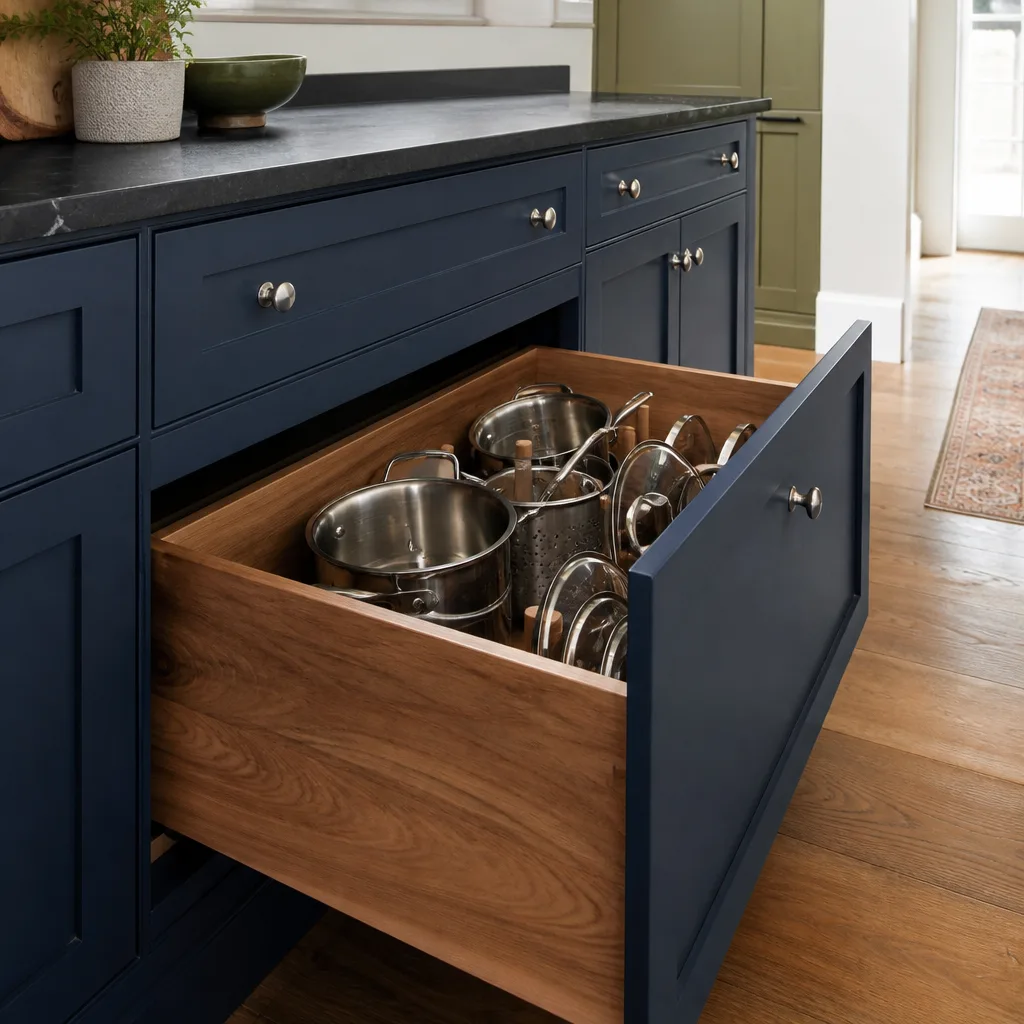
Appliances are the one component where the general contractor should mostly stay out of the decision. We don’t carry appliance brands, we don’t commission on them, and we’re not going to tell you which refrigerator to buy. What we will tell you is what your appliance choice does to the GC scope.
Here’s how appliance decisions affect the construction work in a Los Angeles kitchen remodel:
- Rough-in locations: Gas ranges need a gas line at the right height and depth. Wall ovens need dedicated 240V circuits. Induction cooktops need 40 – 50 amp circuits. If your new appliance needs a rough-in that isn’t there, that’s an electrical or plumbing line item.
- Panel sizing: Integrated or panel-ready appliances – refrigerators, dishwashers – need cabinet panels cut to manufacturer spec. Get the spec sheet before the cabinet order goes in.
- Ventilation runs: A 400 CFM hood over a slide-in range is one thing. A 1200 CFM hood over a 48-inch dual-fuel range needs a bigger duct run, possibly a make-up air system per California building code, and a roof or wall penetration that changes scope.
- Floor loading: A 700-pound built-in refrigerator sits where a 200-pound freestanding unit used to be. Engineered floor systems in LA hillside homes sometimes need joist reinforcement.
The short version: pick your appliances before the rough-in phase, and give your contractor the spec sheets. It saves a change order and a lot of frustration. We install what you choose, within the documented brand set Bradford works with, and we’ll tell you if your selection needs a scope adjustment before the work starts, not after.
How LA’s ADU and Rental Market Changes the Math
Los Angeles is not a typical remodeling market. The city’s ADU boom and the long-standing rental market mean a kitchen that serves a single-family home today might serve a rental unit or an accessory dwelling in six years. That shifts the repair-or-replace calculation in ways most remodeling advice ignores.
If there’s a plausible future where your kitchen becomes a rental kitchen, a few things change:
- Durability outranks aesthetics. Laminate countertops that would look wrong in a primary kitchen start making sense in a rental unit. They’re cheaper to replace and they don’t etch.
- Code compliance matters more. A rental kitchen in Los Angeles has to meet current electrical, plumbing, and ventilation code at the time of permitting. If you’re doing a major repair or remodel, you may be required to bring the whole kitchen up to current code. That’s not a contractor upcharge – it’s the city’s requirement.
- Ventilation is often undersized. If a future ADU conversion or rental use means more frequent cooking by more occupants, the hood that’s fine for a couple is undersized for a tenant family. Code minimums are based on the cooking surface, not the occupant count.
- Cabinet box quality matters. Rental cabinets take a beating. Cheap particleboard boxes that look fine in a showroom will swell and fail under tenant use. This is the one place where replacement may be the honest call even when the boxes look okay.
If you’re planning a kitchen with a possible ADU or rental conversion down the line, tell your contractor that up front. We spec differently for that future, even if the immediate work is a repair.
Bradford’s Written Estimate Format: Both Options, Side by Side
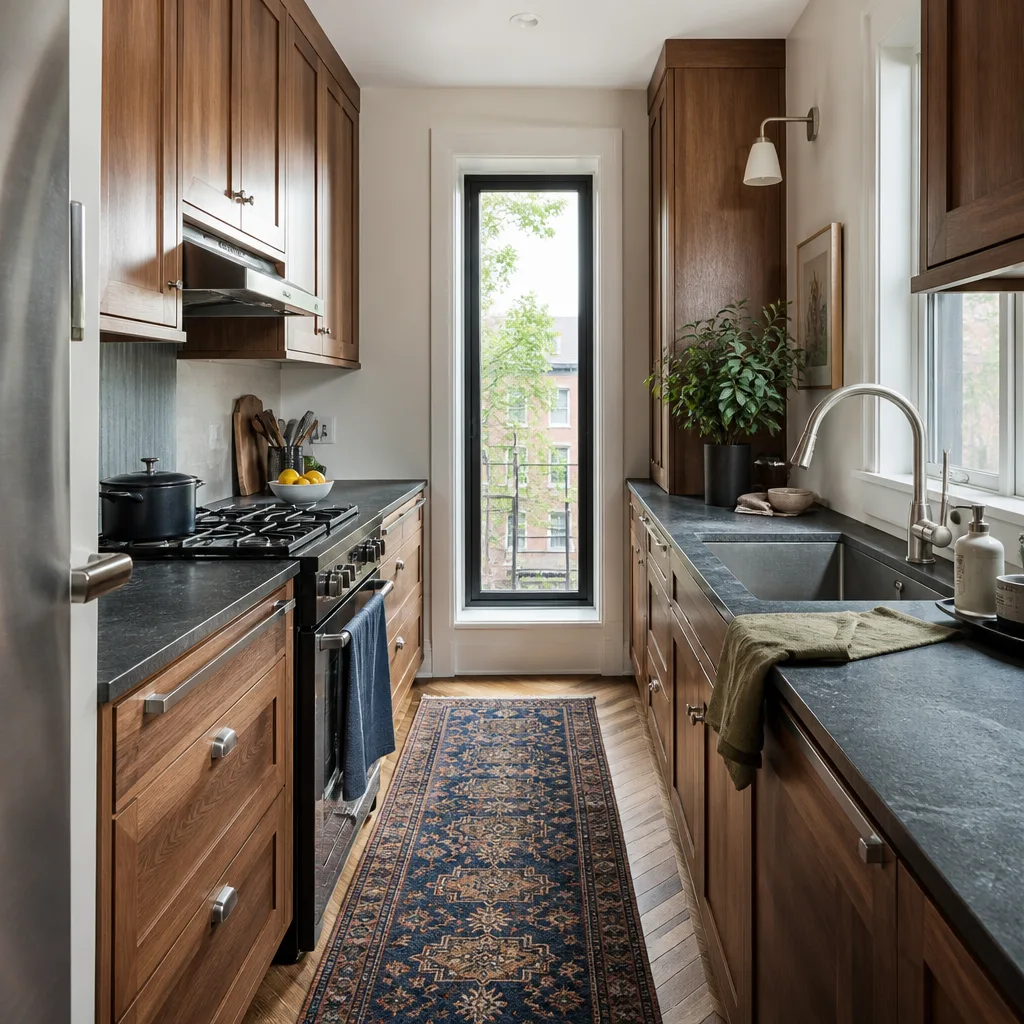
Most contractors hand you one price for one scope. Usually the scope they prefer. That’s not an estimate, it’s a sales preference.
Bradford Remodeling documents both paths. Every kitchen scope decision we quote includes a repair option and a replacement option, line by line, on the same page. Here’s what that looks like on a typical Los Angeles kitchen:
- Cabinet line: Refacing scope with door count, hinge replacement, and veneer at $X. Full replacement scope with box count, material, and installation at $Y.
- Countertop line: Substrate inspection, then the material cost per square foot for both your preferred option and one lower-cost alternative.
- Plumbing and electrical: What’s needed for each option, if anything changes.
The Garrison Standard governs how the estimate is written. The price is in writing before any work starts. The scope is documented. The materials are named by brand – we work with a documented roster including KraftMaid and Wellborn cabinetry, Cambria and Caesarstone surfaces, and Kohler and Moen fixtures, among others – so you know what the line item references. And every completed project carries the Done Right Promise: if the work fails within the year, we come back and correct it at no charge. That promise is in writing too, signed and handed to you at close.
Not a verbal promise. A written guarantee, part of The Garrison Standard, that’s been the backbone of every job.
When to Call a Pro
You can inspect your own cabinet boxes with a level and a flashlight. You can look for water staining under the sink. But when you’re not sure whether what you’re seeing is cosmetic or structural, that’s the moment to get a professional assessment. A good GC will tell you honestly whether your kitchen needs a repair, a reface, or a full replacement – and will put it in writing with numbers attached.
We did a repair assessment last month in a Canoga Park kitchen where the homeowner was sure she needed $40,000 of work. The boxes were square, the substrate was intact, and the only real failures were two cabinet doors and a cracked backsplash. Her actual repair scope came to just under $4,800. She spent the other $35,000 on a bathroom addition instead. That’s the difference the component-level approach makes.
Related services in Los Angeles: Kitchen Remodeling in Los Angeles and Home Remodeling in Los Angeles.
The Bottom Line
The repair-or-replace decision is not one decision. It’s three or four separate decisions stacked on top of each other, and each one has its own math, its own inspection points, and its own honest answer. Los Angeles homeowners who treat the kitchen as one big gut-level vote overspend. The ones who check the cabinet boxes, inspect the substrate, and think through the appliance rough-ins make the call that holds up.
If you’re in Los Angeles and want a straight assessment with both options documented in writing, Bradford Remodeling offers free estimates. Call (903) 568-7222. Curtis or a member of the team will walk you through what we see and put the numbers on paper, no pressure, no surprise invoices.
Frequently Asked Questions
Repair and refacing are almost always cheaper than full replacement – refacing typically runs $6,000 to $12,000, while full replacement runs $15,000 to $35,000. But repair only makes sense when the cabinet boxes are still square and structurally sound. If the boxes have water damage or failed joinery, refacing is money spent on a short-term fix. Call (903) 568-7222 and we’ll inspect the boxes and tell you honestly which path makes sense.
You find out by inspecting it, which means pulling a section of the existing countertop and checking the plywood or particleboard underneath for delamination, rot, and flatness. This inspection has to happen before you order the new material. A countertop installed over failing substrate fails within months. Bradford includes a substrate inspection line item in every countertop estimate.
Yes, and in many kitchens the appliances don’t need replacing at all. What matters is whether the existing rough-in locations – gas, electrical, ventilation – work with your planned layout. If they don’t, keeping the appliances may still be fine, but the scope changes. We’ll build the plan around the appliances you want to keep and tell you if any rough-in adjustments are needed.
A reface or repair scope typically runs one to three weeks, while a full kitchen remodel in Los Angeles usually runs six to twelve weeks depending on permitting and material lead times. The difference is mostly in demolition, rough-in work, and inspections. If you’re living in the house during the work, a repair scope is far less disruptive. Call (903) 568-7222 for a written timeline specific to your kitchen.
Written by Bradford Remodeling at Bradford Remodeling home, serving Los Angeles.
Need Construction Help?
Call Bradford Remodeling - licensed & insured, here with fast after-hours help in Los Angeles.
(903) 568-7222