
Preparing Your Home’s Construction for Winter in Los Angeles
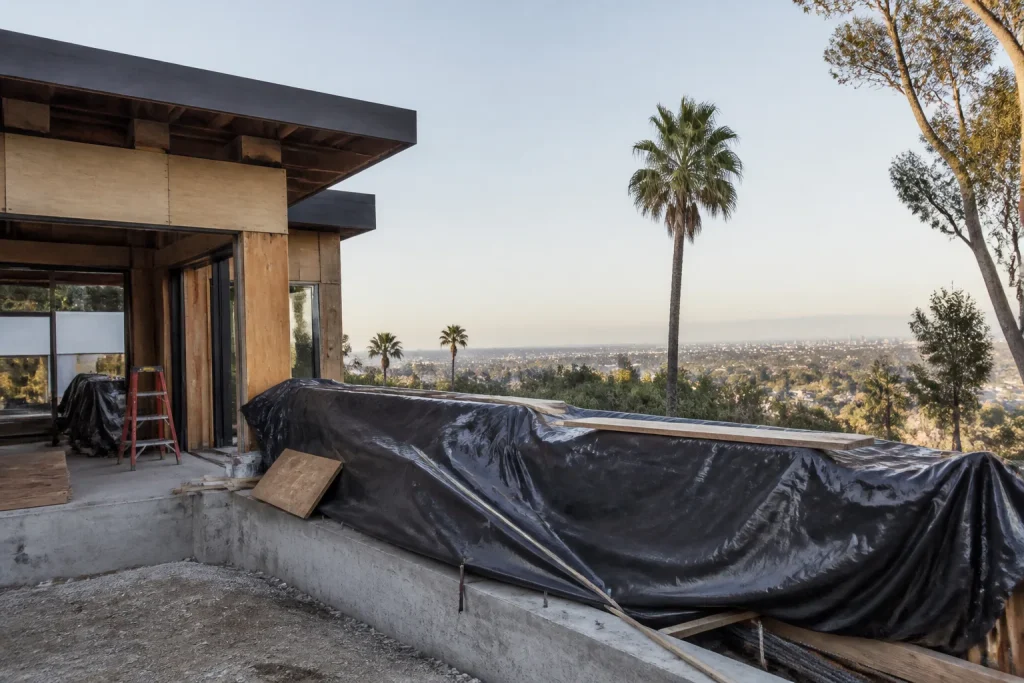
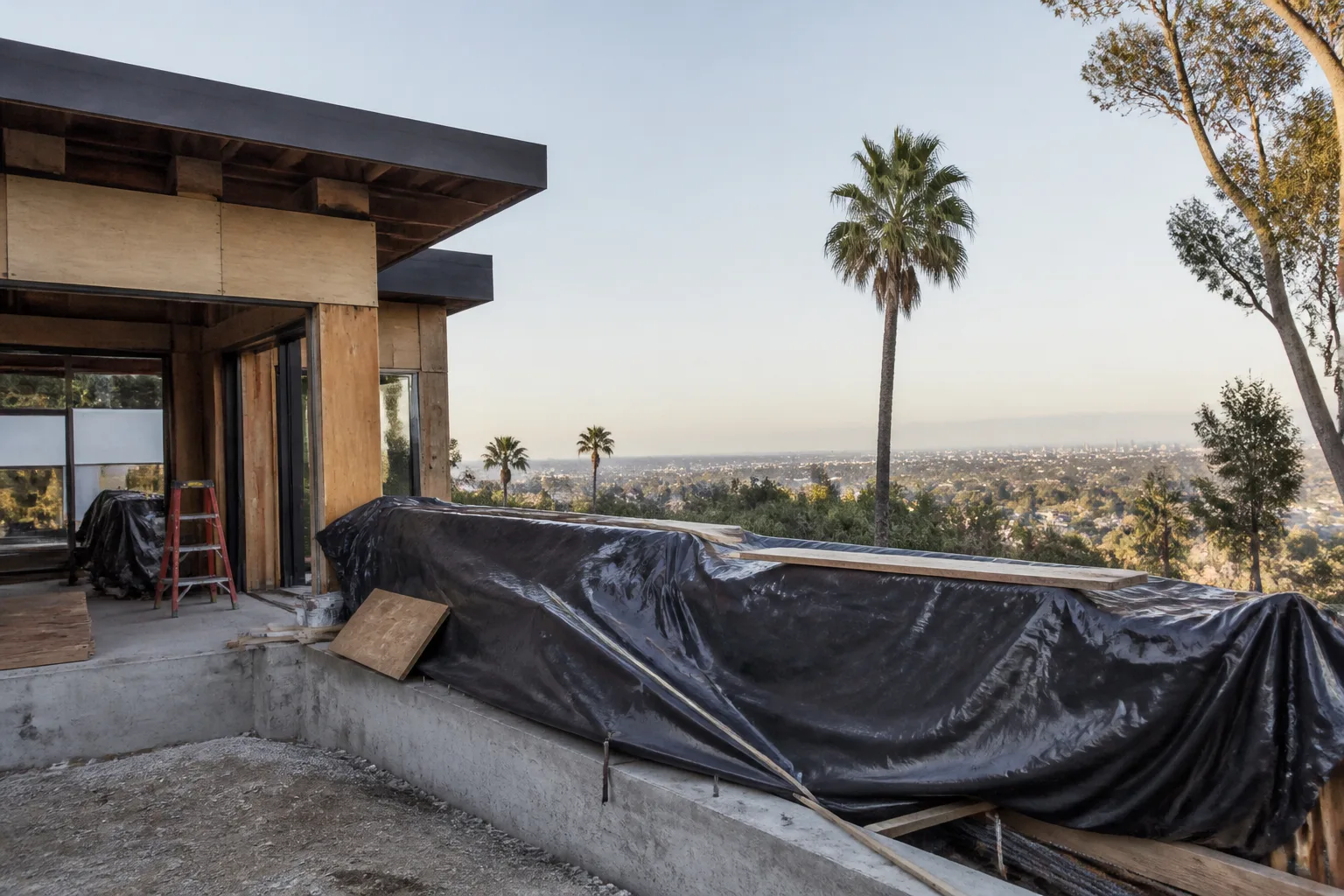
Winter construction preparation in Los Angeles comes down to protecting open work from rain, wind, and temperature swings that most homeowners don’t see coming. The real risks aren’t snow and ice. They’re atmospheric river events that can drop two inches of rain in a morning, Santa Ana winds that turn loose materials into projectiles, and rapid temperature shifts that crack fresh concrete before it reaches strength. If you’ve got open framing, exposed stucco, or an active remodel heading into November, the single most important move is getting a written weather-protection plan into your contract scope before the first storm hits.
If you’d rather not sort through weatherproofing details yourself, call (903) 568-7222 and we’ll walk you through it.
What LA Winter Weather Actually Does to Open Construction
Los Angeles averages 14 inches of rainfall annually, and most of it lands between November and March. That’s not a drizzle pattern. Our rain arrives in concentrated bursts, often through atmospheric rivers that stall over the county for days. An exposed roof deck or open wall cavity doesn’t need a hard freeze to fail. It needs sustained moisture against unprotected lumber and sheathing.
Here’s what we see in Los Angeles neighborhoods every winter:
- Santa Ana wind events (October through February): Sustained gusts of 40 to 60 mph turn stacks of plywood, insulation batts, and roof tiles into hazards. More importantly, wind-driven dust and grit work into fresh paint, wet stucco, and open mechanical rough-ins before they set.
- Freeze-thaw at elevation: Hillside neighborhoods like Mount Washington, La Cañada, and parts of the Hollywood Hills regularly drop near freezing on clear winter nights. When daytime temperatures swing 25 to 30 degrees, any water that worked its way into a small crack in fresh concrete or stucco expands slightly overnight. Repeat that cycle a dozen times and hairline cracks become visible failures.
- Morning condensation: Even without rain, winter mornings in Los Angeles bring heavy dew. Open framing surfaces stay damp for hours, and that moisture moves into the substrate if exterior finishes aren’t sealed in the right sequence.
These are not exotic scenarios. At Bradford Remodeling home service area jobs, we’ve pulled open walls in February and found moisture that started as condensation back in December. The damage was entirely preventable with a tarp and a cure-time extension.
What a Winter Protection Plan Should Include in Your Contract
The phrase “weatherproofing as needed” doesn’t belong in a construction contract. Neither does “contractor will protect materials from weather.” Those are vague enough to mean nothing when a storm rolls through at 2 a.m. A legitimate scope of work for any Los Angeles project running from November through March needs specific line items.
We put the following in writing, every time, through what we call The Garrison Standard: a written price before work begins, documented scope, and a guarantee that holds for a full year after completion. The 365-Day Done Right Promise means if the work fails inside that window, we come back and correct it at no charge. That standard applies to winter prep as much as it applies to cabinet installation.
Here’s what a proper winter construction protection plan includes:
- Temporary weatherproofing: Reinforced tarps rated for wind, fastened with battens, not just draped over openings. All window and door openings get an exterior-grade covering that can hold against a 50 mph gust.
- Cure-time extensions: Concrete and stucco have standard cure windows when temperatures hold above 50°F. In Los Angeles winter, hillside jobs regularly dip below that at night. The contract should state a longer cure schedule, and it should be priced in, not treated as a surprise.
- Material storage requirements: Lumber, drywall, insulation, and millwork need to be off the ground, covered, and stored in a way that allows airflow. A flat stack of drywall sitting on a garage floor in El Segundo in January will wick moisture from the slab and bow within weeks.
- A written stop-work trigger: The contract should name the specific conditions where work halts and who decides. We use National Weather Service thresholds, detailed below.
If your contractor resists putting weather protection in writing, that’s a red flag. A written price before any work starts is non-negotiable at Bradford Remodeling, and the same discipline applies to how we handle winter conditions.
Reading a National Weather Service Advisory: When Work Stops and When It Doesn’t
Los Angeles County gets several types of winter weather alerts. Not all of them mean the site shuts down. Homeowners tend to overreact to a wind advisory and underreact to a flash flood watch, so it’s worth knowing the difference.
- Wind Advisory (20-30 mph sustained, gusts to 50): Work continues, but loose materials get secured. Roofing, crane work, and any exterior lifts stop if gusts hit the upper end. Open tarps get inspected at the end of the day.
- High Wind Warning (sustained 40+ mph or gusts 58+): Exterior work stops. No one should be on scaffolding. Materials get double-secured or moved. This is the call you make before Santa Ana conditions peak, not during.
- Flash Flood Watch: Work continues, but site drainage gets checked. Any trenching or below-grade work should be reviewed by the contractor the same day.
- Flash Flood Warning: Work stops. This means flooding is happening or imminent. No one is hauling drywall through that.
The smartest contractors in Los Angeles check the NWS Los Angeles/Oxnard office forecast every morning, and the LADBS inspection calendar gets factored in at the same time. More on that in the permit section below.
One job we ran over in Sherman Oaks last January taught us to take wind advisories more seriously than most crews do. A gust took a sheet of plywood off a stack and into a neighbor’s fence. It wasn’t a warning-level event. It was a routine advisory morning. Since then, every job gets a morning materials check whenever any wind advisory is active. That’s the difference between a disciplined crew and a lucky one.
Stucco in Winter: The Cure Window Nobody Talks About
Fresh exterior stucco applied in Los Angeles winter conditions needs a minimum cure window before painting. The Portland Cement Association’s own guidance for stucco, and the standard we follow, is a full 28 days at temperatures above 50°F for traditional three-coat work. When nighttime temps at your hillside home drop below 50, that window extends. Some jobs in the canyons need 35 to 40 days before the finish coat gets paint.
What happens if the paint goes on too early? The stucco hasn’t fully hydrated. Moisture is still moving through the substrate. Trapping that moisture under a coat of paint leads to efflorescence, the chalky white mineral staining that shows up a few months later. In severe cases, the bond between finish coat and paint fails in patches, and the whole wall needs remediation. That’s a five-figure correction on a large enough exterior.
We’ve also seen contractors rush stucco work with accelerators to push past cold nights. That’s a shortcut, and it usually shows up as map cracking within the first year. Our approach at Bradford Remodeling is simpler: extend the schedule, document the cure window in the contract, and explain to the homeowner why the paint is waiting a few extra weeks. A written schedule with a cure-time extension is part of the price, not an add-on.
If you’re working with fiber cement siding instead, James Hardie products have their own installation specs for cold and wet conditions. The manufacturer’s gap and flashing requirements are explicit, and a legitimate contractor installs to those specs, not to whatever the crew feels like that day. That’s why we document brands like James Hardie in the scope: the manufacturer’s warranty and installation guidelines back up our own 365-Day Done Right Promise.
Permit Reality: LADBS and LA DWP Slow Down in Winter
Here’s a fact that doesn’t show up in most winter-prep articles: the Los Angeles Department of Building and Safety and the Los Angeles Department of Water and Power both run inspection and scheduling backlogs that get worse between November and February. Rain delays city inspections. Flooded trenches delay utility tie-ins. Holiday staffing reduces available inspection windows.
If your remodel contract doesn’t account for winter inspection delays, your completion date is fiction from day one. A kitchen remodel that was quoted at eight weeks in September may realistically run ten or eleven if framing and rough-in inspections both hit rain-delay weeks.
A legitimate General Contractor in Los Angeles builds this into the schedule and tells you about it up front. The Garrison Code, the operating framework behind every Bradford Remodeling job, treats schedule honesty as a core requirement. You get a written timeline that names the inspection dependencies, and when the city pushes a date, you get told the same day, not the week after.
The same principle applies to material lead times. Premium therma-Tru exterior doors, Cambria stone slabs, and therma-foil cabinet lines all run longer factory lead times in the winter months. A contractor who quotes the same material timeline in January as he quoted in June is estimating, not planning.
What a Squared-Away Winter Job Site Looks Like
We use the phrase “squared away” internally because it’s specific. A squared-away winter job site in Los Angeles has the following, every single day:
- A covered and ventilated materials area, with nothing sitting directly on the ground
- All openings either closed with temporary weather barriers or covered with wind-rated tarps
- A site drainage plan that moves water away from the foundation, not toward it
- Daily checks of all temporary coverings when any wind advisory is active
- A written log of cure-time monitoring for any concrete or stucco placed within the previous 30 days
When the job closes, that same standard applies. Clean site, documented scope, and a signed written guarantee in the homeowner’s hand. The 365-Day Done Right Promise states it plainly: if the work fails inside one year, we return and correct it at no charge. That’s true whether the failure came from a winter storm, a material defect, or an installation error.
Winter in Los Angeles is not a season that forces construction to stop. It’s a season that punishes contractors who don’t plan. If you’re looking at a remodel in Los Angeles and need home remodeling work that accounts for rain, wind, and city inspection realities, put it in the contract before the first storm. If your contractor won’t do that, find a different contractor.
The Bottom Line
Los Angeles winter construction risks are real, specific, and manageable with the right scope. The threats are Santa Ana winds, concentrated rain events, temperature swings that affect cure times, and a city inspection calendar that slows every winter. A legitimate contract names these risks, prices the protections, and documents cure-time extensions before work starts.
If you’re in Los Angeles and need help preparing your home’s construction for winter, Bradford Remodeling offers free estimates. We’re part of the Garrison Partners family, established in 2004, and every job runs on written pricing and a one-year written guarantee. Call (903) 568-7222 to schedule your free estimate. A live person answers, 24 hours a day.
Frequently Asked Questions
Temporary weatherproofing for an active remodel in Los Angeles typically adds $800 to $2,500 depending on the size of the openings and the length of exposure. The larger variable is cure-time extensions on stucco and concrete, which can add two to five weeks to a schedule without necessarily adding much material cost. Call (903) 568-7222 for a written line-item quote on your specific project, estimates are free.
Not at Bradford Remodeling. The written price includes winter weatherproofing and cure-time extensions before any work begins. If a storm causes damage that requires additional work beyond the agreed scope, you get a written change order with its own price before anything is done. The original contract number doesn’t move at the door.
Yes. Bradford Remodeling handles LADBS permits and inspections as part of the scope, and the schedule accounts for winter inspection delays. We don’t ask homeowners to pull their own permits, and we don’t work without them. If you’re looking at a kitchen remodeling project in Los Angeles that runs through winter, the permit timeline gets written into your contract before we start.
Traditional three-coat stucco needs a minimum of 28 days at temperatures above 50°F before painting. In Los Angeles hillside neighborhoods where winter nights drop below 50°F, the cure window extends to 35 or 40 days. Rushing paint before the cure completes traps moisture and leads to efflorescence or finish coat failure. Call (903) 568-7222 if you want an exact assessment of your project’s cure schedule.
Written by Curtis Lane, Owner at Bradford Remodeling, serving Los Angeles since 2004.
Need Construction Help?
Call Bradford Remodeling - licensed & insured, here with fast after-hours help in Los Angeles.
(903) 568-7222