


Blanco General Contractor in Los Angeles: A Homeowner’s Guide
Blanco undermount sinks require a minimum cabinet box depth that is often one inch deeper than the builder-standard 24-inch base cabinet, and that fact almost never appears in a remodeling contract until the cabinets are already built. A Blanco installed under a countertop that was templated for a shallower sink means either a costly cabinet modification after the fact or a different sink entirely. We’re writing this guide so Los Angeles homeowners can confirm the right dimensions before cabinetry is ordered, because by the time the countertop crew shows up, it’s too late to fix the cabinet box without tearing something out.
Key Takeaways
- Blanco undermount sinks need cabinet box depths that often exceed the standard 24 inches, so confirm the model’s spec sheet before ordering cabinets.
- SILGRANIT material is not granite, not quartz, and not cast iron. It mounts differently, and your countertop fabricator needs to know which Blanco model you’ve chosen before templating.
- Blanco faucet hole patterns can conflict with a fabricator’s default drilling positions, and that has to be specified in writing, not left to the shop floor.
- Blanco’s warranty covers manufacturing defects, not installation errors. Documenting correct installation at completion is what keeps the warranty intact.
- Coordinating the sink, faucet, and countertop across three separate parties means one written spec sheet, not three phone conversations.
What a Blanco Sink Actually Demands From Your Cabinetry
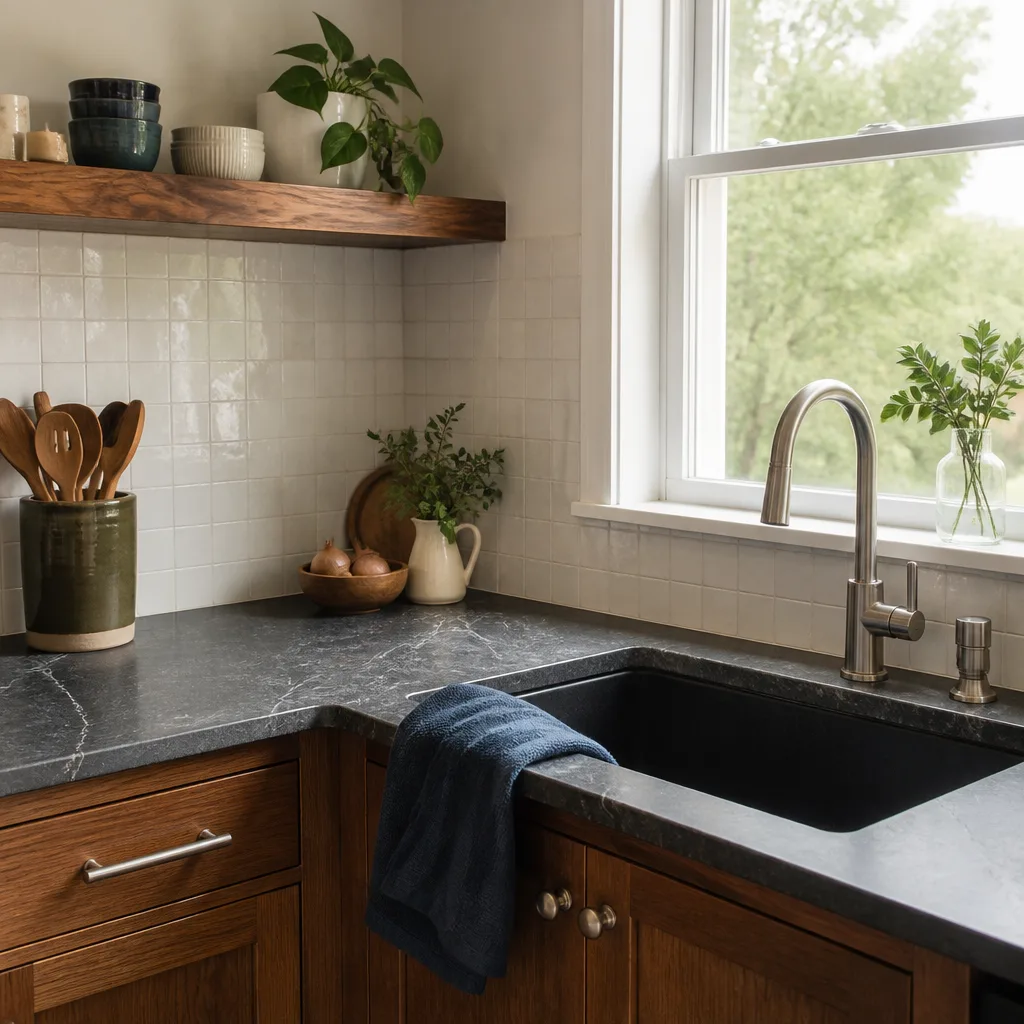
A Blanco undermount sink is not a drop-in. The rim sits under the countertop, which means the countertop fabricator cuts a hole slightly smaller than the sink’s outer edge and the sink hangs from the underside. That hanging hardware, plus the sink bowl itself, has to fit inside the cabinet box. Here’s the part most Los Angeles kitchen remodels miss: a standard 24-inch base cabinet often has an interior clear dimension of about 22.5 inches after you account for the face frame and the cabinet walls. Many Blanco undermount models, especially the larger single-bowl and farmhouse-style units, need an interior clear width and depth that a 24-inch box simply does not provide. We’ve had to reorder cabinet boxes in neighborhoods like Sherman Oaks and Westchester because someone ordered the sink after the cabinets were already in production. Confirm the minimum cabinet box size in Blanco’s printed specification sheet, not the marketing brochure, and get that number to your cabinet supplier in writing before the order goes in.
Beyond the box depth, you need to check the cutout template. Blanco publishes specific cutout dimensions for every model, and those templates are not interchangeable between models or between brands. A fabricator who templates for a generic undermount sink and then tries to fit a Blanco is going to have gaps, bad reveal lines, or a cutout that’s the wrong radius at the corners. The countertop overhang matters too. A code-compliant seal at the sink’s perimeter depends on the right reveal, usually around an eighth of an inch, and the fabricator needs that number before the stone is cut. If you’re working with a General Contractor in Los Angeles, this is the kind of coordination that should be their job, not yours.
SILGRANIT Is Not Quartz, and Your Fabricator Needs to Know That

Blanco’s SILGRANIT material is a composite of granite stone and acrylic resin. It’s not natural granite, it’s not engineered quartz like Cambria or Silestone, and it’s not cast iron. That matters for installation because SILGRANIT mounts with a specific set of undermount clips and brackets that Blanco supplies with the sink. The mounting hardware for a quartz sink or a stainless sink will not fit a SILGRANIT bowl the same way. The clip pattern, the number of clips, the tightening sequence, and even the adhesive compatibility all differ. If your countertop fabricator has never mounted a SILGRANIT sink, they’re going to reach for the wrong hardware, and you won’t know until the sink starts to pull away from the stone six months later.
We tell every Los Angeles homeowner the same thing: hand the fabricator the Blanco installation guide that ships in the box, not just the sink itself. The guide shows the clip locations, the mounting orientation, and the torque specs. A fabricator who has mounted hundreds of stainless undermounts can still get a SILGRANIT wrong the first time. In our experience around Los Angeles, the fabricators who do the best work with SILGRANIT are the ones who admit up front that the material is different and who want the printed instructions taped to the sink before templating day. That’s a good sign, not a red flag. Also worth knowing: SILGRANIT is heavy. A large single-bowl model can weigh 40 pounds or more before water and dishes. The cabinet structure underneath has to carry that load, and a box assembled with staples and glue from a flat-pack supplier may sag over time. Build the support into the cabinet order.
Faucet Hole Patterns: The Conflict Nobody Puts in the Contract
Blanco faucets and many Blanco sink models are designed with specific pre-drilled hole patterns, and those patterns sometimes conflict with what countertop fabricators drill by default. A fabricator who is not given explicit instructions will often drill a single center hole or a standard three-hole spread. A Blanco faucet that requires a single hole is fine. But a Blanco faucet with a side sprayer, a soap dispenser, or a filtered water tap needs a four-hole or five-hole pattern, and the spacing between holes is specified by the faucet manufacturer. If the fabricator drills a three-hole spread and the faucet needs four holes, the stone is already cut. Drilling an additional hole in a quartz countertop on-site is not something you want to watch happen. It can crack the slab, and even when it works, the hole edges will not be finished the same way as factory-cut holes.
The fix is simple and it is entirely paper-based: write the hole count, the hole spacing, and the faucet model number on the countertop fabrication order. Same for the sink cutout template. If the order says “customer-supplied sink to be templated on-site” and nothing else, you’re trusting the fabricator to guess. Some will guess right. Some won’t. Los Angeles has enough countertop fabricators that you don’t have to accept a shop that won’t take written specifications. On the plumbing side, the faucet’s supply line connections and the water pressure requirements should also go to the plumber before rough-in. It’s a small note on a spec sheet, but it prevents a return trip after the countertops are set. If you’re already working through a Kitchen Remodeling in Los Angeles, that spec sheet should be part of the written scope from the start, not an afterthought at trim-out.
Blanco’s Warranty: What It Covers, What It Doesn’t, and How to Document It
Blanco warrants its sinks and faucets against manufacturing defects under normal residential use. The warranty terms vary by product line and by purchase date, but the common pattern is a limited warranty on the sink material itself, often for a longer term, and shorter coverage on moving parts like faucet cartridges and sprayer heads. What Blanco’s warranty does not cover is damage from improper installation. If the sink was mounted with the wrong clips, if the cutout was too large and the seal failed, if the faucet was cross-threaded or over-torqued, that’s an installation failure. Blanco is not responsible for a plumber’s mistake or a fabricator’s miscut. The homeowner eats that cost, or whoever installed it does, and good luck getting a fabricator to admit fault six months after the job is done.
This is where documentation matters. When the sink and faucet are installed, take photos of the mounting clips in place, the silicone seal bead, the faucet connections, and the finished reveal. Keep the installation guide that shipped with the sink. Keep the purchase receipt with the model number and date. If a warranty claim ever comes up, that documentation is the difference between a smooth replacement and a denied claim. We recommend asking the installer to sign off on a one-page completion form that lists the Blanco model number, the cabinet box dimensions, the cutout template used, and the date of installation. That single page does more to protect the warranty than any verbal assurance. If you’re coordinating through a Home Remodeling in Los Angeles project, put the documentation requirement in the contract before work starts, and ask for the signed form at final walkthrough.
Coordinating Three Separate Parties Without Losing Your Mind
The cabinet supplier, the countertop fabricator, and the plumber are three separate businesses with three separate schedules and three separate sets of assumptions. The cabinet supplier assumes the sink is a standard undermount. The fabricator assumes the faucet is a standard single-hole. The plumber assumes the rough-in lines are already in the right place. When those assumptions collide, the homeowner is the one standing in the kitchen looking at a sink that doesn’t fit and a cabinet that has to be rebuilt. Los Angeles remodeling jobs go sideways exactly this way all the time, and it’s not because anyone is incompetent. It’s because no single person owned the spec sheet.
The solution is a written fixture schedule. One page that lists the Blanco sink model number, the faucet model number, the cabinet box dimensions, the cutout template reference, the hole pattern, the plumbing connection requirements, and the warranty documentation checklist. Every trade gets a copy. The cabinet supplier orders to the schedule. The fabricator templates to the schedule. The plumber roughs in to the schedule. When a change gets made, the schedule gets revised and redistributed, and the change gets priced in writing before anyone does the work. That’s what we mean when we talk about putting things in writing. It’s not trust as a feeling. It’s trust as a document. This is the part of the job where a general contractor earns their fee, and where a homeowner trying to self-manage three trades from a group chat usually learns why the fee exists.
We pulled a Blanco out of a garage in Culver City last year where the homeowner had ordered the sink online, bought the cabinets from a big-box store, and hired the countertop fabricator separately. The sink was a SILGRANIT farmhouse model that needed a 33-inch cabinet box, and the cabinets were already assembled in the garage with a 30-inch sink base. The homeowner’s options were to return the sink, which had been unboxed for three months, or rebuild the sink base. Neither was cheap. That job is the reason this guide exists. Before cabinetry is ordered, before templating is scheduled, before the first countertop slab is cut, someone has to check the Blanco spec sheet against the cabinet order. One page of numbers prevents all of it. If you’d rather not manage that coordination yourself, call (903) 568-7222 and we’ll walk you through it.
Why the Right Countertop Partner Matters More Than the Brand
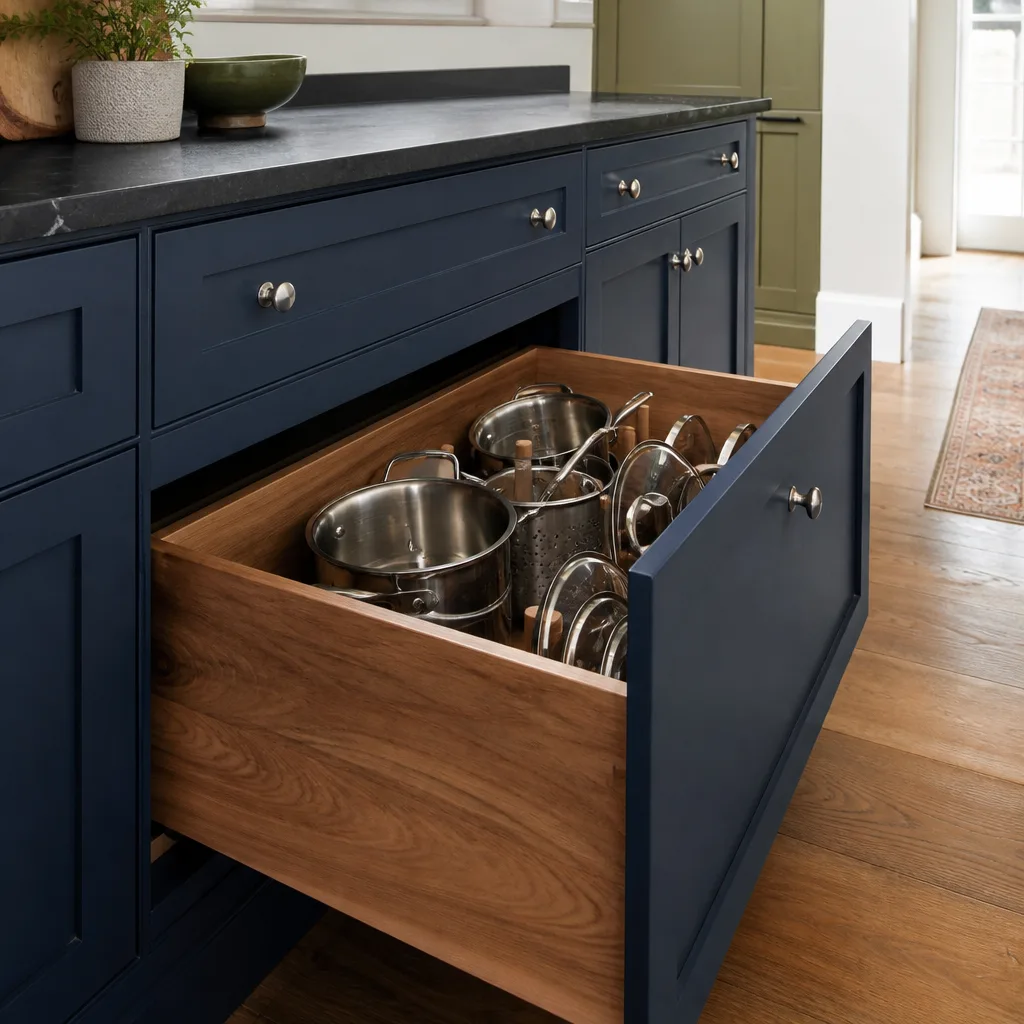
Blanco sinks work with nearly any countertop material, but the installation details change depending on what’s going on top. Quartz options like Caesarstone and Silestone are dense and dimensionally stable, which makes them good candidates for the tight reveals that Blanco undermounts call for. A fabricator who regularly cuts quartz for undermount sinks will be comfortable with a one-eighth-inch reveal and will template the cutout from the actual sink, not from a library template. That’s the standard to insist on: template from the physical sink, not from a database. We’ve seen database templates drift out of date, and a fabricator cutting from an old template is cutting a sink-shaped hole that doesn’t match the sink you actually bought.
Your countertop material choice also affects the faucet hole drilling. Quartz can be factory-drilled with precision, but the order has to specify the exact hole pattern from the Blanco faucet spec. Natural stone is more fragile at the edges and the drilling has to be done with more care. Porcelain and ceramic slabs are becoming more common in Los Angeles kitchens, and they bring their own drilling requirements that some shops haven’t fully figured out yet. Whichever material you choose, the rule from earlier stands: the hole count, spacing, and faucet model number go on the fabrication order in writing. No verbal specs, no “standard pattern,” no assumptions. The fabricator who pushes back on written specs is the one you shouldn’t use.
When to Call a Pro
Coordinating a Blanco sink installation across cabinetry, countertops, and plumbing is not a handyman-level job. If you’re replacing a sink in an existing cabinet and the cabinet already fits the model you’re buying, and you’re keeping the same faucet configuration, that’s manageable for a competent plumber. But if you’re changing sink sizes, moving the faucet, altering the cabinet box, or doing a full kitchen remodel where the cabinets are being ordered from scratch, the coordination risk is real and the cost of a mistake is measured in thousands of dollars. That’s when a general contractor who runs the fixture schedule makes sense. The fee you pay for coordination is usually less than the cost of reordering one wrong cabinet.
Related services in Los Angeles: General Contractor in Los Angeles, Kitchen Remodeling in Los Angeles, Home Remodeling in Los Angeles.
The Bottom Line
A Blanco sink is a good product, but it is not a forgiving product from an installation standpoint. The cabinet box has to be sized to the spec sheet. The countertop fabricator has to template from the actual sink and drill the faucet holes to the printed pattern. The plumber has to connect to the right rough-in. Every one of those steps can fail silently until the day the sink goes in, and by then the fixes are disruptive and expensive. The entire risk can be managed with one written fixture schedule that every trade receives before ordering or cutting anything. If you’re in Los Angeles and need help, Bradford Remodeling offers free estimates and we’ll put the spec sheet together for you. Call (903) 568-7222.
Frequently Asked Questions
Often, yes. Many Blanco undermount models require a cabinet box depth or width that exceeds the standard 24-inch builder base cabinet, especially the larger single-bowl and farmhouse-style units. Check the printed spec sheet for your specific model and confirm the minimum cabinet dimensions with your cabinet supplier before ordering.
Not confidently. SILGRANIT is a granite-acrylic composite with its own mounting clip pattern and hardware, and a fabricator who has only mounted stainless undermounts can make costly mistakes. The fix is to hand the fabricator the printed Blanco installation guide that ships with the sink and to specify the cutout template in writing before templating. Call (903) 568-7222 for help specifying one.
Blanco’s warranty covers manufacturing defects under normal residential use. It does not cover damage from improper installation, including wrong clips, oversized cutouts, failed seals, or incorrect faucet mounting. Documenting the installation with photos, the model number, and a signed completion form is the best way to protect your warranty claim if something goes wrong.
A straight sink replacement in an existing cabinet where the new Blanco fits without modification typically runs $350 to $900 for labor, but that’s the simple version. Most Blanco installations happen as part of a larger kitchen remodel, so the real cost is tied up in the cabinet order, countertop fabrication, and plumbing coordination. Written line-item pricing before work starts is the only way to know what you’re paying, and a free estimate from a Los Angeles contractor should give you exactly that. Call (903) 568-7222 for a written quote.
Written by Curtis Lane, Owner at Bradford Remodeling, serving Los Angeles since 2004.
Need Construction Help?
Call Bradford Remodeling - licensed & insured, here with fast after-hours help in Los Angeles.
(903) 568-7222