
General Contractor: Repair or Replace? How Los Angeles Homeowners Decide
Repair or replace comes down to one calculation: cost per year of remaining life. If a repair buys you five more years for a quarter of replacement cost, repair wins. If replacement resets the clock entirely at a per-year cost lower than the repair, replace wins. Most Los Angeles homeowners never see this math because the contractor recommending replacement hasn’t been asked to show it. If you’d rather skip the back-and-forth and get a written price on both options, call Bradford Remodeling at (903) 568-7222.
If a contractor recommends replacement in the first five minutes of a walkthrough, before he’s pulled anything apart, that’s a margin conversation, not a diagnostic one. We’ve watched this play out hundreds of times across Los Angeles. The homeowner gets a confident-sounding verdict, the contractor gets a bigger invoice, and nobody ever put a pencil to what the repair option actually costs per year. So let’s walk through the framework we use internally at Bradford Remodeling. It’s not complicated, but it changes the decision.
The Cost-Per-Remaining-Year Framework
Here’s the math we run on every ambiguous scope decision before we write a single number. You take the total cost of the repair, divide it by the number of years that repair will realistically hold, and you get a cost per year. Then you do the same for replacement: total cost divided by the expected lifespan of the new component. The lower number wins.
Let’s run it on a real Los Angeles example. Say a subfloor section under a bathroom has rot from a slow toilet leak. The repair is cutting out the damaged section, sistering new joists where needed, and laying fresh plywood in that area. That’s $1,800 to $2,400 in most LA homes, and it buys you 10 to 15 years if the leak is fully resolved. Cost per year: roughly $140 to $240.
Replacement of the entire bathroom subfloor is $5,500 to $8,000 depending on square footage and what’s underneath. You get 30 to 50 years. Cost per year: $110 to $270. Now the decision gets interesting. If the rot is localized and the leak is confirmed fixed, repair is the better buy. If the rot is widespread or the joists are compromised, replacement’s per-year cost drops below repair’s, and replacement is the disciplined call.
The contractors who push replacement when repair pencils out are often working a margin problem, not a diagnosis problem. Their markup lives in materials. Yours shouldn’t.
Where Repair Almost Always Wins
Some scopes get recommended for replacement because they’re easy to sell, not because the math supports it. Here are the areas where we regularly tell Los Angeles homeowners to repair and move on.
- Localized subfloor rot where the joists are sound and the moisture source is confirmed fixed. Repair cost per year almost always beats replacement unless the damage spans more than a few sheets of plywood.
- Cracked tile with intact substrate. If the tile cracked from impact and the substrate, the layer underneath the tile, is solid, you’re replacing a tile, not a floor. That’s a repair under $500 in most LA homes.
- Sticking windows with solid frames. A window that sticks but has no rot in the frame or sill usually needs hardware adjustment or track cleaning. $150 to $400 versus $800 to $1,500 per window for replacement.
- Cosmetic drywall cracks in homes built before 1980. Los Angeles has thousands of older homes with plaster over lath. Hairline cracks there are seasonal, not structural. Patch and repaint is the right call.
The common thread: the underlying failure is addressed, and the remaining component has documented life left. When a general contractor in Los Angeles recommends replacement on these without showing you the repair option in writing, that’s a red flag.
Where Replacement Is the Disciplined Call
Now the other side. Some components reach a point where repair is throwing money at a depreciating asset. Here’s where we recommend replacement in Los Angeles homes, and why.
Electrical panels. Los Angeles has a massive stock of homes built in the 1950s and 1960s, and many still run on Zinsco or Federal Pacific panels. Those breakers have a documented history of failing to trip on overload. If your panel is Zinsco, Federal Pacific, or any brand with known failure rates, a repair on one circuit doesn’t address the real hazard. Replacement is the only responsible recommendation. This is an area where a general contractor in Los Angeles should be direct, not diplomatic.
Window frames with active rot. Once rot gets into the frame, not just the sill, the structural integrity is compromised. Epoxy repair on a rotted frame is a temporary patch. In LA’s marine-layer neighborhoods, the moisture cycle will have it back within two to three years. Replacement at $800 to $1,500 per window is the better per-year buy than a $400 epoxy job twice a decade.
Subfloor with compromised joists. If termite damage or long-term moisture has taken the joists past the point of sistering, you’re not repairing a floor, you’re rebuilding structure. Replacement is the only option that doesn’t leave a liability under your tile.
HVAC ductwork from the 1970s. If ducts are original to a 1970s Los Angeles home and you’re losing 20 to 30 percent of conditioned air through leaks, sealing helps but doesn’t fix degraded insulation. Replacement ductwork pays back in efficiency over five to seven years at LA’s utility rates.
How Title 24 Changes the Math in Los Angeles
California’s Title 24 energy code is the wildcard in every repair-or-replace conversation. It’s not optional, and it doesn’t care what your budget is. When you touch certain systems, Title 24 triggers mandatory upgrades that change the per-year math.
The most common one we see in Los Angeles: replacing windows. If you replace windows, the new units must meet current Title 24 energy standards. That means dual-pane, low-E glazing at minimum. If your home has original single-pane windows, the repair option (reglazing, weatherstripping) has no Title 24 trigger. But the replacement option jumps in cost because you’re buying compliant units, not just any window off the shelf.
Here’s the nuance. If you’re replacing one window in a home where all others are original single-pane, Title 24 may not require you to upgrade them all. But if you’re replacing more than a certain percentage of the glazing area, you may trigger a whole-house compliance path. That’s a five-figure difference, and a general contractor in Los Angeles who knows the code will flag it before you sign. One who doesn’t will hand you a surprise change order.
The same applies to lighting in kitchen remodels, insulation levels in wall cavities you’ve opened, and ventilation requirements in bathrooms. Title 24 is why the written price matters so much. A contractor who quotes replacement without factoring the compliance cost is quoting a number that won’t hold.
What to Ask a GC Before Accepting a Replace Recommendation
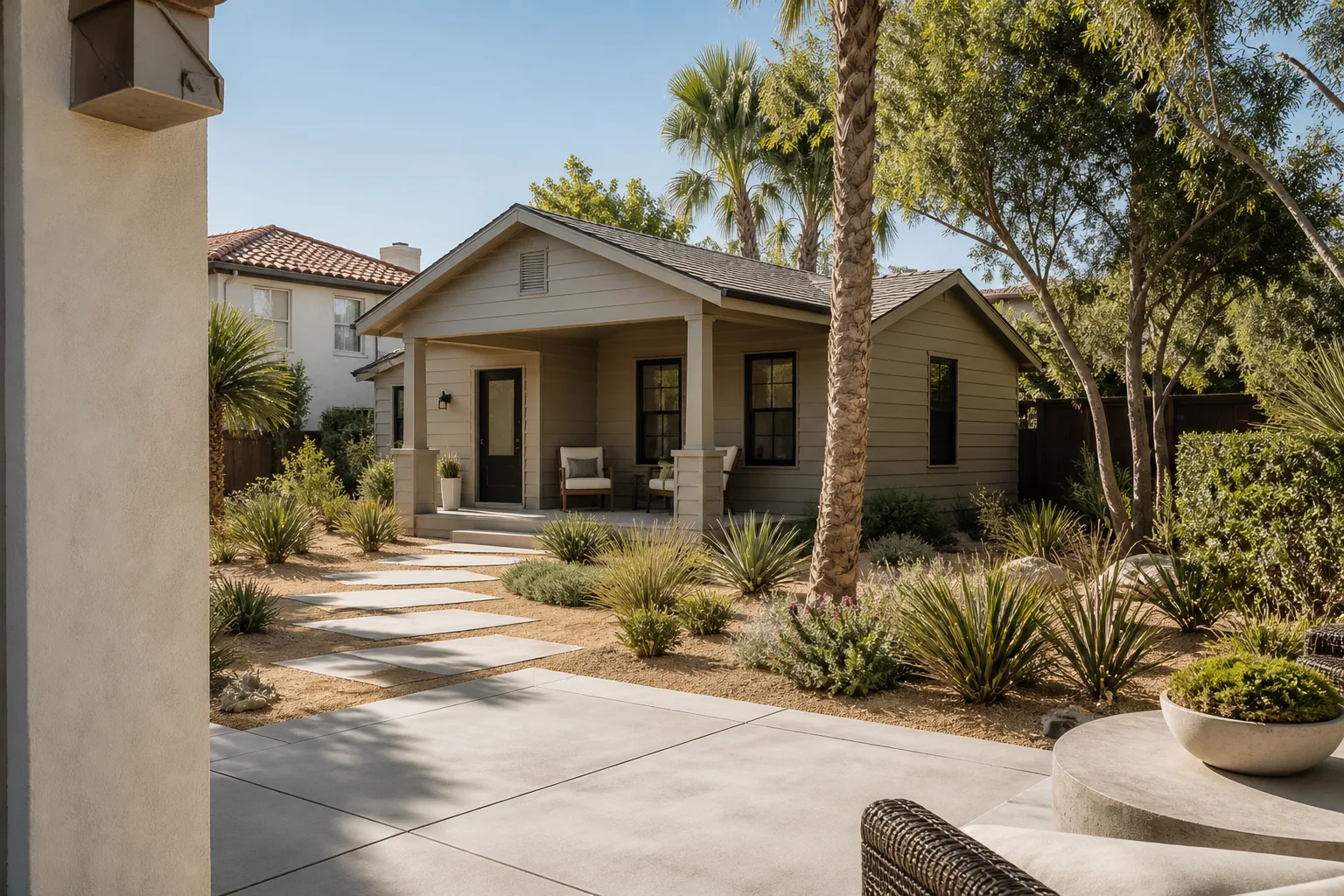
When a general contractor recommends replacement, you’re entitled to see the decision in writing. Not a verbal explanation. A written breakdown that lets you run the per-year math yourself. Here’s what to ask for.
- The diagnostic finding. What exactly is failing? A photo of the damage, a moisture reading, an amperage test on the panel. If the contractor can’t show you the failure, the recommendation is opinion, not diagnosis.
- The repair option with its cost. Every honest GC can scope the repair, even if they recommend against it. If they won’t price the repair, they’re not offering you a choice, they’re giving you a verdict.
- The replacement option with its cost. This should include materials, labor, permitting if required, and the Title 24 compliance cost if applicable. In Los Angeles, the permit line item is not optional when it’s legally required.
- The expected lifespan of each option. Without this, you cannot run the cost-per-remaining-year calculation. A contractor who recommends replacement but can’t tell you the expected service life of the new component is guessing.
- The warranty on each option, in writing. Repair warranty and replacement warranty should be stated with terms, not a handshake.
At Bradford Remodeling, we put both options in the written estimate on any scope where the decision is genuinely ambiguous. That’s not a sales tactic. It’s the Garrison Standard: every price and every guarantee in writing before a single tool comes out. When a homeowner chooses the repair and the repair fails inside the guarantee window, the Done Right Promise means we’re back out to correct it at no charge. That promise is why we don’t push replacement when repair is sufficient. We’d just be buying our own callback.
We pulled a kitchen remodel out of a home in Sherman Oaks last year where the previous contractor had recommended full subfloor replacement on a six-foot section of water damage. The joists were sound. The moisture source was a dishwasher supply line, already fixed. Repair cost was $2,100. Replacement would have been $6,800. The repair has been down for 14 months with no movement. That’s the difference between a diagnostic decision and a margin decision.
When to call a pro: If the repair-or-replace question involves an electrical panel, a gas line, or structural framing, stop reading and call someone licensed. These are not DIY decisions, and a bad call on a panel or a load-bearing wall in a Los Angeles home has consequences that cost far more than the contractor visit.
Related services in Los Angeles: This framework applies to every scope we handle. If you’re weighing a Kitchen Remodeling in Los Angeles or a broader Home Remodeling in Los Angeles project, the same written-price discipline applies. And if you’re not sure whether your project needs a specialist or a General Contractor in Los Angeles, we can help you make that call.
Materials Matter When You Replace
When replacement is the right call, the materials you specify determine whether the per-year math holds. A bargain window that fails in eight years destroys the calculation that justified replacing it in the first place. This is why Bradford Remodeling works from a documented roster of name-brand materials: KraftMaid and Wellborn cabinetry, Cambria and Caesarstone surfaces, Kohler and Moen fixtures, GAF and James Hardie exterior products, Therma-Tru doors, and Belgard hardscaping, among others. Every one of those names comes with manufacturer specs and warranties that back our own guarantee.
For Los Angeles homeowners specifically, exterior products have to survive a climate that cycles between marine-layer moisture and triple-digit inland heat. James Hardie siding and Belgard hardscaping hold up in that cycle in a way cheaper products don’t. The per-year math on replacement only works if the replacement actually lasts the years you divided by. Using documented, specified materials is how you keep the calculation honest.
The Bottom Line
Repair or replace is a math problem, not a gut call. Run the cost-per-remaining-year calculation on every ambiguous scope. Ask your general contractor in Los Angeles to put the diagnostic finding, the repair cost, the replacement cost, and the expected lifespan of each in writing. Factor in Title 24 compliance on any system it touches. If the contractor won’t show you both options, that’s information. Use it.
Bradford Remodeling has been part of the Garrison Partners family, and we’re held to the Garrison Standard: a written price before any work starts, every time. Our Done Right Promise covers every completed project with a full-year written guarantee. If the work fails inside that window, we’re back out to correct it at no charge. No numbers that move at the door. No surprise invoices. If you’re in Los Angeles and need help running the repair-or-replace math on your project, Bradford Remodeling home offers free estimates. Call (903) 568-7222.
Frequently Asked Questions
Most general contractors in Los Angeles charge $200 to $500 for a diagnostic visit, though that fee is often credited toward the project if you proceed. Bradford Remodeling’s estimates are free, and the written estimate includes both the repair and replacement options when the scope is ambiguous. Call (903) 568-7222 to schedule one.
Replace when the component’s failure is systemic, not localized. That means Zinsco or Federal Pacific electrical panels, window frames with active rot, subfloor with compromised joists, and ductwork from the 1970s that’s losing 20 percent or more of your conditioned air. If the failure is isolated and the underlying cause is corrected, repair usually pencils out on a per-year basis.
It can. Replacing windows triggers Title 24 energy standards, which means dual-pane, low-E units at minimum. Replacing a large percentage of a home’s glazing may trigger a whole-house compliance path. A general contractor in Los Angeles who knows the code will flag these triggers in the written estimate before you sign, not after the work starts.
Not with Bradford Remodeling. The written price you receive before work begins is the price you pay, unless you approve a change order in writing. That’s not a courtesy, it’s the Garrison Standard. If the repair fails within the Done Right Promise window, we return and correct it at no charge. Call (903) 568-7222 for a free estimate and a written price.
Written by the team at Bradford Remodeling.
Need Construction Help?
Call Bradford Remodeling - licensed & insured, here with fast after-hours help in Los Angeles.
(903) 568-7222