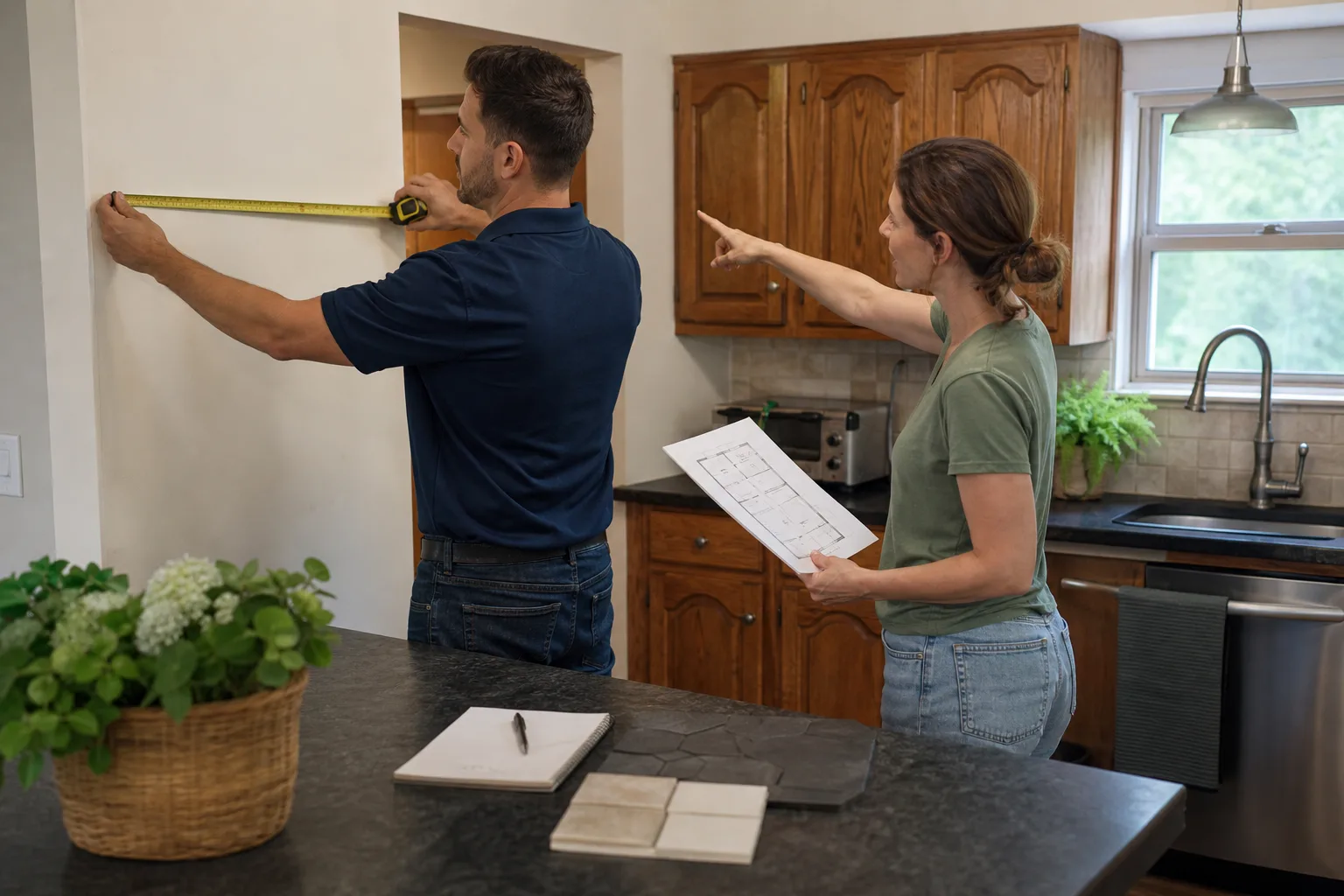
Free written scope consultation - allowances, timeline, and change-order rules on paper before a single trade is scheduled
Cambria Kitchen Remodeling: The Los Angeles Owner’s Guide
Cambria kitchen remodeling in Los Angeles typically runs $16,520 to $53,100 installed, depending on slab count, edge profile, and what the substrate needs. Most Cambria-specific work we handle falls between $23,600 and $35,400 when it involves pulling cabinets, re-leveling, and setting new quartz with a proper seam layout. The usual call comes in one of two ways: a homeowner who’s tired of looking at a cracked counter or delaminated cabinet face, or one who just bought a slab and found out the existing cabinet boxes won’t carry it.
Cambria is quartz, not granite, and not a laminate. That distinction drives almost every failed-install call we fix. Quartz is heavy, dimensionally stable, and non-porous, but it does not forgive a bad substrate. When a Los Angeles homeowner sees hairline cracks along a seam or hears a hollow knock under the slab, the problem is almost never the Cambria itself. It’s the cabinet deck underneath, the seam placement, or an edge profile cut too thin for the overhang. Curtis Lane has pulled enough failing Cambria installs across the Basin to know that quartz gets blamed for framing mistakes all the time. Fixing the surface without fixing the deck is just renting time.
We’re an independent Los Angeles remodeling contractor. We are not affiliated with Cambria, and we say that plainly because it matters for warranty work. What we are is a crew that stocks Cambria-compatible substrates, seam epoxies, and sink-cutout tooling, and installs the material to the manufacturer’s published support specs. If you need the surface replaced, re-seamed, or re-supported, we write a price before the first cut.
Which Cambria Models This Applies To
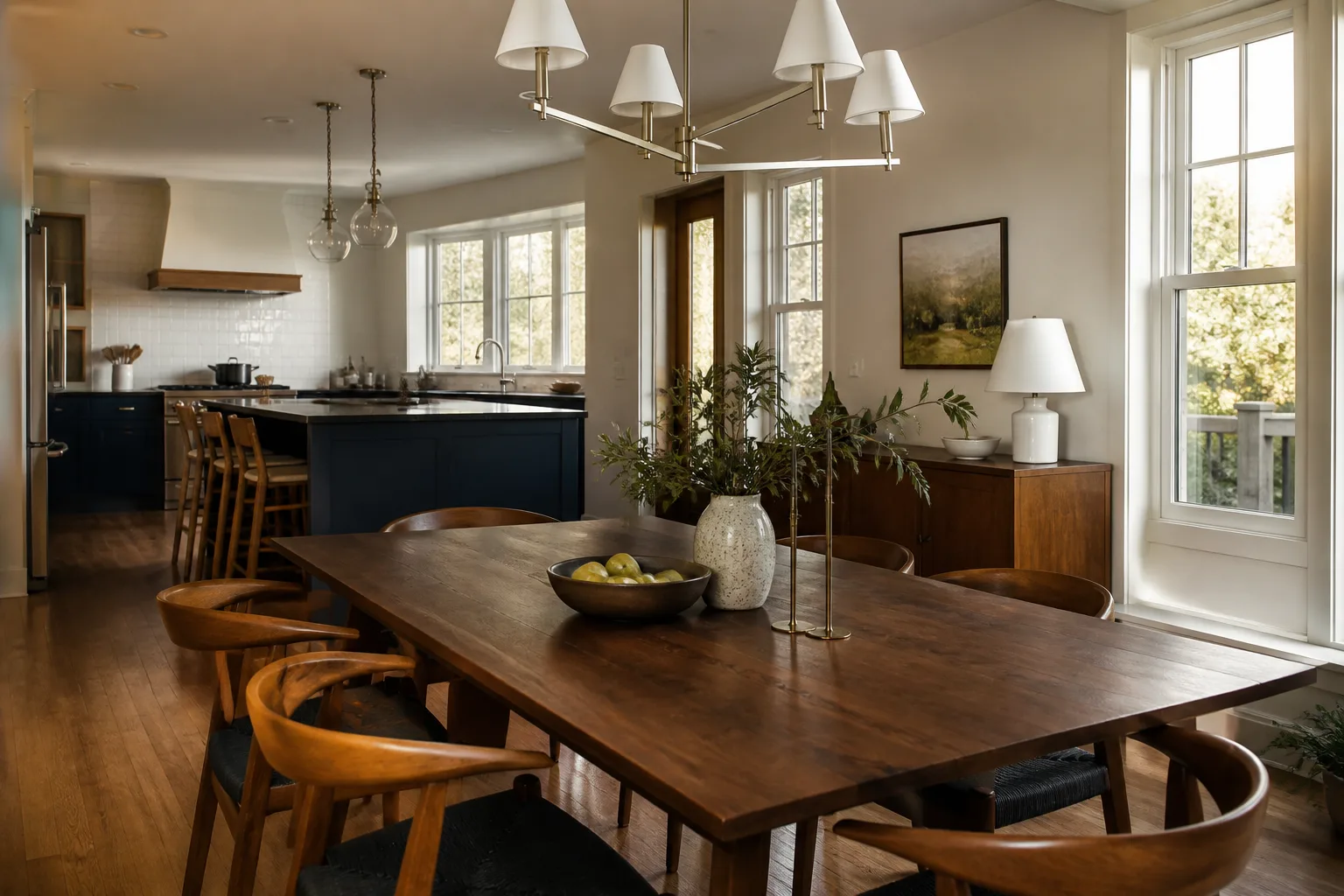
Cambria’s design palette spans more than 130 colors across their standard series, but from a parts-and-install standpoint, what matters is thickness and finish. Cambria slabs come in 1 cm, 2 cm, and 3 cm profiles in Los Angeles, with 3 cm dominating kitchen counter jobs. If you’re matching an existing island and the homeowner’s edge profile is a waterfall, the slab was almost certainly 3 cm. That measurement tells us what sort of underlayment and miter reinforcement you need.
The compatibility gotcha most Los Angeles homeowners never hear about until a seam fails: Cambria’s quartz doesn’t take a heat gun or chemical seam fill the way solid surface does. Seams are filled with a two-part polyester-epoxy color matched in the field, but the slabs themselves can’t be “melted” back together. If a seam has opened more than a hairline and the gap is wider at the front than the back, the deck settled. That’s not a re-seam job. That’s deck correction, and anyone who sells you a re-seam without checking level is selling the same crack twice.
For homeowners trying to identify their exact Cambria color, the slab often has a printed lot label on the underside or a barcode sticker from the fabricator. Take a photo of the edge profile and the underside. We match to the Cambria color name, not a “close enough” box-store sample. If the original installer left the cutoffs, keep them. A 6-inch cutoff strip lets us match the color for any patch or rebuild without guesswork.
Styles & brands we work with


Signs Your Cambria Kitchen Remodeling Is Failing
- Hairline cracks running from the sink cutout to the front edge. This is the classic signal that the cabinet deck is flexing, often because the cutout corners weren’t radiused to Cambria’s minimum 3/8-inch spec, or because the cabinet below lost its center support after a garbage disposal pull-out. The crack is the symptom. The deck is the problem.
- A seam that catches your fingernail. Cambria seams should sit flush within the epoxy’s tolerance. If one side has lifted even a 16th of an inch, the slab is moving. Los Angeles houses settle constantly, especially hillside builds in Echo Park or Silver Lake that sit on clay. That movement shows up at seams first.
- Water staining at the cooktop or sink reveal. Cambria is non-porous, so water shouldn’t penetrate. If you see a dark ring blooming around the faucet deck, it’s not the quartz. It’s failed caulk or a sink clip that’s pulled loose, letting water wick under the slab into the MDF substrate, which swells and pushes the stone.
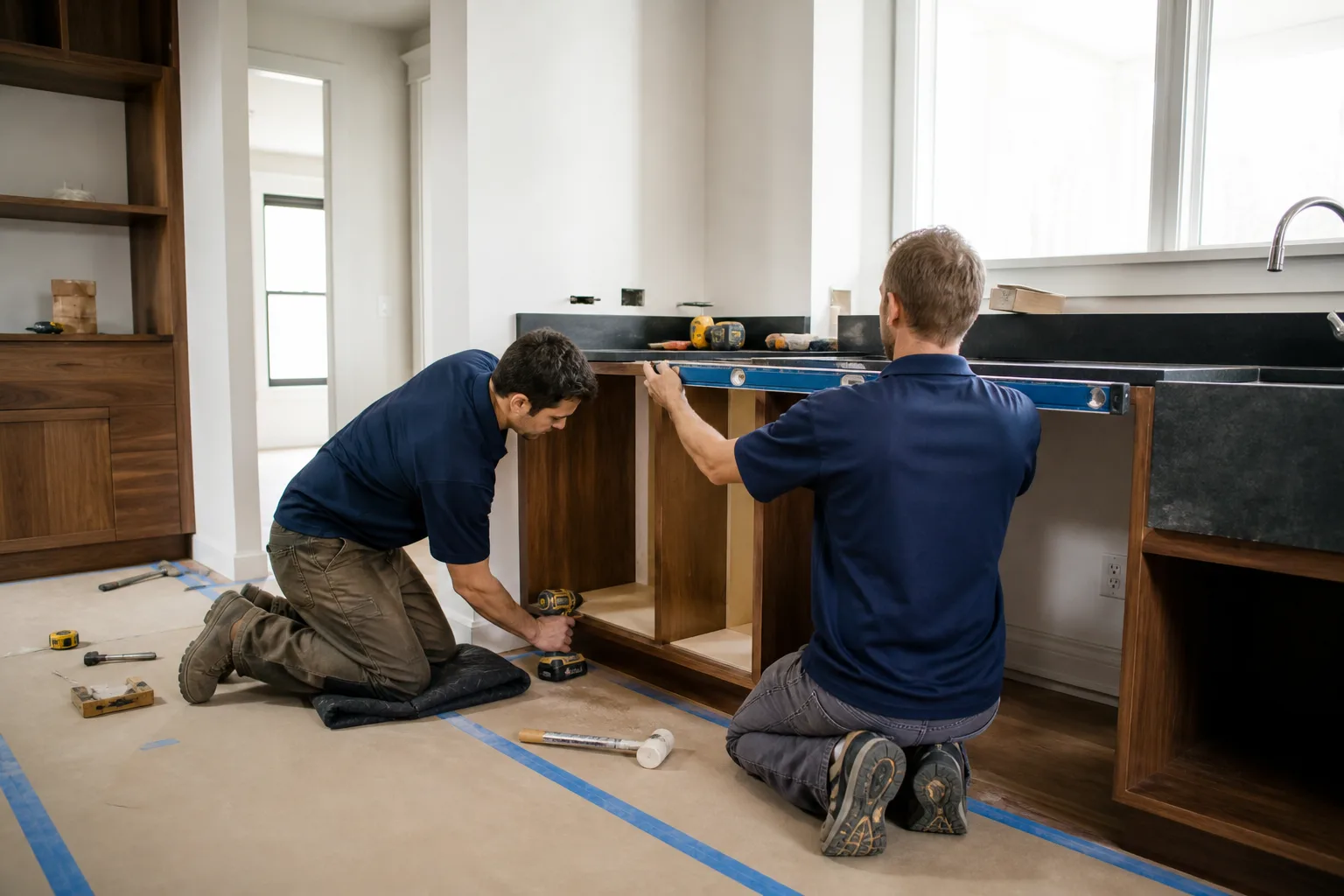
- A hollow sound when you knock on the counter. That’s the tell for a bad adhesive set or undersized cementitious support. On a 3 cm slab, Cambria specs full perimeter support and cross-bracing under spans. If the install was a “glue and go,” hollow spots are where the slab will eventually crack.
- The overhang flexes when you lean on it. Any unsupported overhang beyond 6 inches needs corbels or a steel channel. Leaning should feel like leaning on a masonry wall. If it bows, the channel is missing or undersized, and that slab is under tension every time someone sets a Dutch oven down.
Replacement Cost & What’s Included
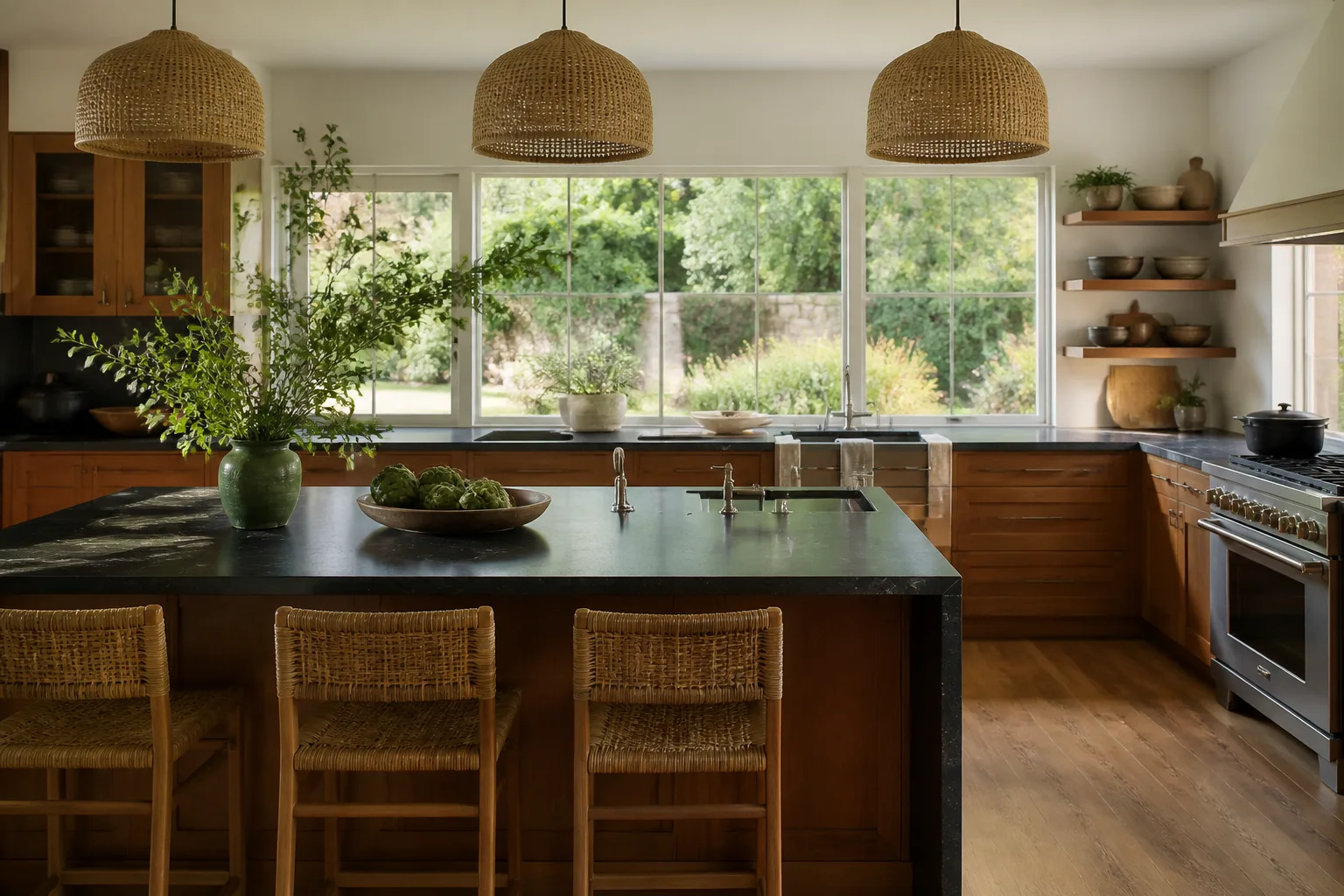
A full Cambria kitchen remodel in Los Angeles runs $16,520 to $53,100 installed, with the spread driven by square footage, edge profile complexity, deck condition, and whether we’re doing a straight counter swap or a full cabinet-down rebuild. Small kitchen remodels with Cambria, where we’re keeping the existing footprint and only replacing counters plus face frames, land between $10,620 and $23,600. Countertop-only Cambria installation runs $2,360 to $7,670.
Bradford Remodeling writes a fixed price before work starts. That price includes the material, fabrication, removal and disposal of the old surface, substrate correction if needed, seam work, sink and faucet re-set, and haul-off. It doesn’t change at the door. If the deck inspection reveals rot we couldn’t see before demo, we stop, show you the rot, put the change in writing, and reschedule on your call. Nothing moves without your signature.
Every Cambria install we complete carries our 365-Day Done Right Promise in writing. If the seam opens, the deck sags, or the slab shifts within a year of close, we come back and correct it at no charge. That’s the Bradford guarantee, handed to you in a signed document when the site is clean and the scope is closed.
See the difference
 Before
 After
After Before
 After
After Before
 After
AfterDIY or Call Us?
Some things on a failing Cambria kitchen are worth checking yourself. Pull the caulk bead along the backsplash and look for gaps. Put a level across the slab in three places. Open the cabinet doors under the sink and look for water damage or a sagging deck. Those checks cost you nothing and they tell us a lot when you describe them over the phone.
What you shouldn’t do is attempt to re-seam a Cambria slab, lift and reset the stone, or sister in cabinet supports without pulling the top. The slab alone weighs 18 to 20 pounds per square foot. A 30-square-foot island section is a 550-pound panel. One wrong lift and you’re not fixing a counter; you’re fixing a back, a floor, and a broken slab. The resins and seam tools are trade-specific. If you try a box-store epoxy and miss the color, the seam becomes the permanent focal point. Call us at (903) 568-7222. We’ll tell you over the phone whether you’re looking at a repair or a replacement, and we’ll put the number in writing before you commit.
FAQs
Cambria quartz carries a lifetime warranty from the manufacturer against manufacturing defects, and a properly supported 3 cm slab should outlast the cabinets it sits on. In Los Angeles, the failure we see is rarely the stone. It’s the deck, the seam placement, or UV-driven expansion on south-facing windows that pull the seam epoxy apart. Build the support right and the surface will be the last thing you replace.
Hairline cracks at a seam can sometimes be re-filled and color-matched if the slab underneath is still sound and level. Cracks running through the field of the slab, or any crack wider than a dime’s edge, generally can’t be repaired in a way that holds structural load. Call (903) 568-7222 and describe the crack. We’ll tell you straight which one you have.
Countertop-only replacement with substrate correction typically runs 2 to 4 working days including template, fabrication, and set. A cabinet-down full kitchen remodel with Cambria surfaces runs 3 to 6 weeks, with sequencing scheduled so the kitchen isn’t torn open longer than it needs to be. We give you a written timeline at contract.
We stock the installation-side parts: Cambria-spec substrate, seam epoxies color-matched to the slab, sink cutout tooling, and corbels for overhang support. Slabs are ordered from Cambria’s fabrication network per project, which keeps the lot consistent. We also handle compatible cabinet and fixture lines, including KraftMaid, Silestone, and Kohler, so the full kitchen specs correctly.
Call Bradford Remodeling for a Free Los Angeles Estimate
If your Cambria surface is cracking, seamed poorly, or sitting on a deck that’s already failing, call Bradford Remodeling at (903) 568-7222. You’ll get a live person, a straight number, and a written scope before any saw blade comes out. We’ll match the Cambria, correct the deck, and stand behind the work for a full year under the 365-Day Done Right Promise. Straight number, real scope, no surprises at the punch list.
Written by Curtis Lane, Owner, Bradford Remodeling at Bradford Remodeling, serving Los Angeles and nearby areas.