Last updated October 9, 2026




Free written scope consultation - allowances, timeline, and change-order rules on paper before a single trade is scheduled
DIY vs Professional Construction: The Los Angeles Homeowner’s Decision Guide
Most homeowners who get burned on a DIY project don’t fail at the building part. They fail at the paper part. A permit pulled under California’s homeowner-builder exemption puts your name on the legal record as the responsible party for code compliance, and that record follows the house into every future sale. This guide walks through the exact line where Los Angeles home projects cross from weekend work into exposure you don’t want, drawing the line where California law draws it, not where ego or a YouTube tutorial does.
Styles & brands we work with




Quick Answer
In Los Angeles, the DIY vs Professional General Contractor: What’s Safe to Do Yourself decision comes down to one question: does the work require a permit that you will sign your name to? For finish work like painting, trim, and non-wet-area tile, DIY is genuinely fine. For anything structural, electrical, plumbing, or load-bearing, hiring a licensed contractor protects your insurance coverage, your resale value, and your legal exposure under California’s contractor licensing law. A professional remodel costs more upfront, but a botched owner-builder permit can cost far more at closing.
Table of Contents
- What California Law Actually Says About DIY Work
- The Homeowner-Builder Exemption: What It Covers and What It Costs You
- The Project Matrix: Genuinely DIY vs. Legally Professional
- The Insurance Gap: How Self-Performed Structural Work Affects Coverage
- What DIY Actually Costs: A Real Calculation Method
- The Resale Disclosure Obligation: What You Must Tell Buyers
- Permits in Los Angeles: What the City Requires
- Common Mistakes to Avoid
- When to Call a Professional
- Frequently Asked Questions
- The Bottom Line
What California Law Actually Says About DIY Work
California Business and Professions Code Section 7048 draws a bright line around what a homeowner can legally do without a contractor’s license. The law is not about skill. It is about accountability. If you own and occupy the home, you can perform work yourself. If you hire anyone else and the total project cost exceeds $500 in labor and materials combined, that person must hold a California contractor’s license in the correct classification.
That $500 threshold catches more homeowners than you might expect. Hire a handyman to move a wall, and the handyman is working illegally the moment the job value crosses that mark. This matters because Los Angeles code enforcement has become more active in recent years. Complaints from neighbors about construction noise, debris, and unpermitted dumpsters trigger inspections. When an inspector finds unlicensed work in progress, the homeowner is the one left holding the stop-work order.
For a general contractor in Los Angeles, this legal structure is the baseline for every job. Licensed contractors carry workers’ compensation insurance, which shifts injury liability off the homeowner. An unlicensed worker who gets hurt on your property can file a claim against your homeowner’s insurance, and carriers are increasingly likely to deny coverage for claims arising from unlawful construction activity.
The practical takeaway: California protects homeowners who follow the licensing rules and exposes those who do not. The law assumes that anyone charging for construction work is a professional, and professionals carry the burden of licensure, insurance, and bonding. When you step outside that framework to save money, you absorb the burden yourself.
The Homeowner-Builder Exemption: What It Covers and What It Costs You
The homeowner-builder exemption in California allows you to pull permits on your own property without holding a contractor’s license. You attest, in writing, that you own the home, that you intend to live there, and that you are performing the work yourself or acting as your own general contractor with properly licensed subcontractors. This exemption exists so that legitimate owner-occupants can improve their homes without paying a general contractor’s markup. It is not a loophole for avoiding licensed trades on complex work.
But the attestation has teeth. When you sign the permit application, you become the party responsible for code compliance on that work. If an inspector flags a deficiency and you cannot correct it competently, you are in a bind that a licensed contractor would have carried through their own license and liability coverage. In Los Angeles, the city’s Department of Building and Safety (LADBS) can red-tag a project that stalls in a non-compliant state. A red-tagged property cannot be sold or refinanced until the situation is corrected, which means hiring a licensed contractor afterward to fix the problem anyway.
What many homeowners do not realize is that the homeowner-builder exemption also has resale implications. California Civil Code Section 1102 requires sellers to complete a Transfer Disclosure Statement (TDS), which includes a specific question about whether any work was performed by someone who was not a licensed contractor. An owner-builder remodel that was pulled legally and completed skillfully is still a disclosure item. A buyer’s inspector sees the owner-builder permit history and applies more scrutiny to that framing, that electrical rough-in, that foundation work, because there is no contractor’s warranty standing behind it.
Using the exemption improperly, such as pulling the permit as an owner-builder and then hiring unlicensed workers to do the actual labor, is the real trap. California courts have ruled that this arrangement is essentially unlicensed contracting, and the homeowner can be held liable for the difference between what was paid and what the work was worth, plus exposure for defects and injuries. The savings disappear the first time an unlicensed laborer makes a workers’ compensation claim against your homeowner’s policy.
The Project Matrix: Genuinely DIY vs. Legally Professional
The honest line between DIY vs Professional Home Remodeling: What’s Safe to Do Yourself in Los Angeles is not courage. It is consequence. Here is a practical matrix that reflects how we see projects go right and wrong across LA’s housing stock, from the 1920s Spanish-style homes of West Adams to the 1960s ranches in the Valley.
Genuinely DIY-Viable Work
- Interior painting: No permit required, reversible if done poorly, and the material costs are modest. Prep work matters more than technique.
- Finish carpentry: Baseboards, crown molding, and door casing are low-risk. If a miter joint fails, the fix is cosmetic.
- Tile in non-wet areas: Backsplash tile, fireplace surround, and a dry entry floor are fair DIY territory. The substrate matters, but a tile failure here is unsightly, not structural.
- Drywall patching and texture: Small holes, nail pops, and minor water stains are manageable for a careful homeowner. The goal is invisible, and the stakes are low.
- Cabinet hardware and fixture swaps: New pulls, hinges, and faucets are designed for homeowner installation. Shutoff valves should be checked before the faucet swap.
Legally Professional Work
- Structural changes: Removing or modifying load-bearing walls, foundation repair, seismic retrofitting, and roof framing replacement all require permits and engineering. This work affects life safety, and California’s earthquake exposure makes it non-negotiable in Los Angeles.
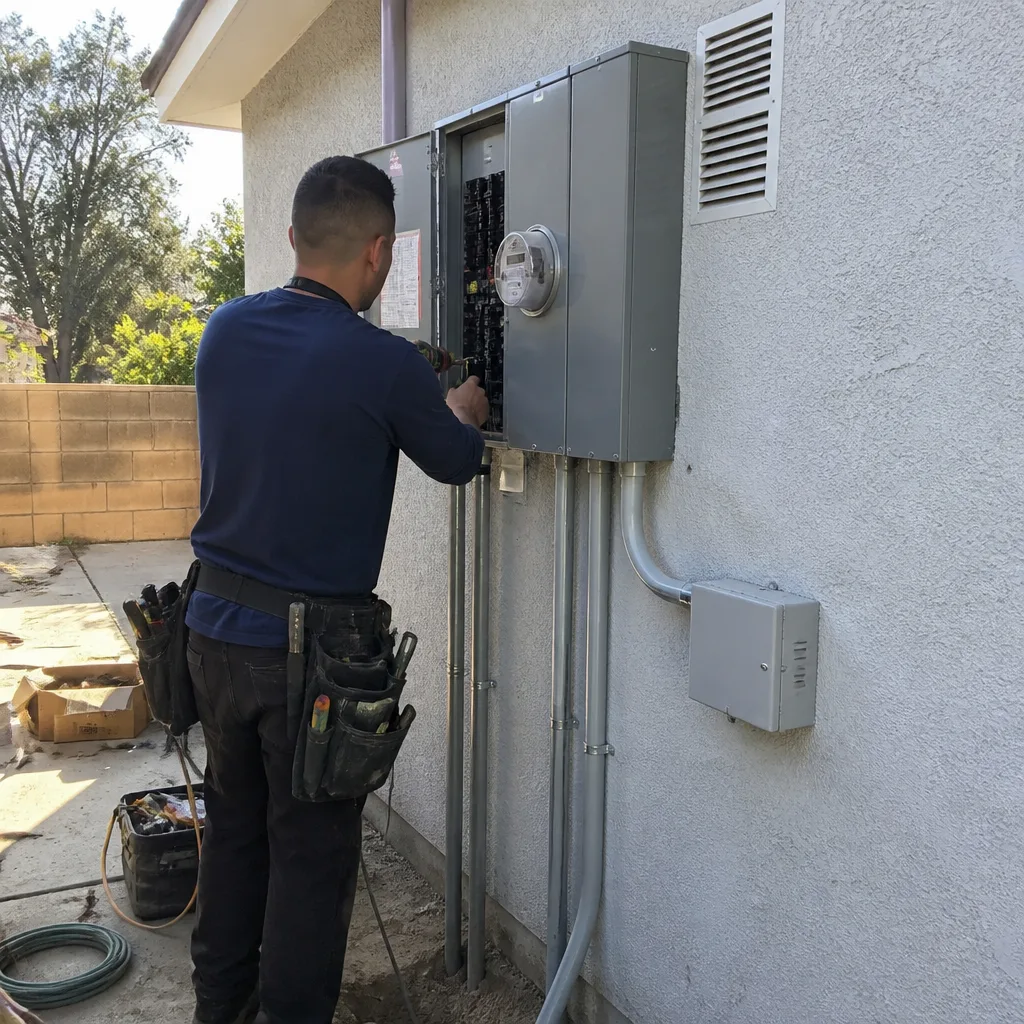
- Electrical panel work and rewiring: California law requires a licensed electrical contractor for any work on service panels, branch circuits, or wiring inside walls. The city’s older housing stock often has knob-and-tube or aluminum wiring that complicates even a simple receptacle swap.
- Plumbing beyond fixture replacement: Moving drain lines, repiping, water heater installation, and anything touching gas lines requires a licensed plumber. Gas work in Los Angeles also falls under additional local inspection requirements.
- Window and door replacement that changes rough openings: A straight insert replacement is sometimes DIY-viable, but any change to the rough opening, header, or exterior waterproofing requires a permit and skilled flashing work. Therma-Tru and similar premium door systems carry manufacturer warranties that are only honored when installation is done to spec.
- Any work on multi-unit buildings: The homeowner-builder exemption does not apply. If you own a duplex or larger property, any work beyond simple cosmetic touches requires licensed contractors.
The Insurance Gap: How Self-Performed Structural Work Affects Coverage
Here is a scenario we see regularly. A homeowner in Hancock Park removes a wall themselves, does not pull a permit, and frames a new opening without engineering. Two years later, a water leak originates in that area and damages the newly finished space. The homeowner files a claim. The insurance adjuster investigates, finds the unpermitted structural modification, and denies the claim on the grounds that the loss arose from work performed outside the policy’s permitted-construction coverage.
This is not a rare edge case. California homeowner’s policies typically exclude coverage for damage caused by faulty, inadequate, or defective workmanship, and unpermitted work creates an additional exclusion trigger. The carrier does not need to prove the work was actually defective. The absence of a permit and inspection record is enough to give the adjuster grounds for denial. The homeowner is then fighting the carrier while also facing the repair cost.
Even when a claim is paid, owner-performed electrical or plumbing work can trigger a rate increase or a non-renewal notice. Carriers use claim history and property inspection data to price risk. A home in Los Angeles with a history of self-performed electrical work is a higher underwriting risk than a comparable home where permits and licensed contractors are on record.
The insurance calculus also extends to liability. If a guest is injured in your home and the injury traces back to a DIY modification, your personal liability coverage may not respond the way you expect. An injury tied to a handrail you installed without a permit, a deck that lacks code-compliant attachment hardware, or an electrical outlet that was never inspected becomes a legal liability problem very quickly.
Bradford Remodeling carries this burden for our clients. Every project we complete includes the permit file, the inspection record, and the home remodeling in Los Angeles work backed by written documentation. That paper trail is what insurance carriers and future buyers want to see.
What DIY Actually Costs: A Real Calculation Method
Most homeowner cost comparisons look something like this: the contractor bid is $32,000, materials are $14,000, so DIY saves $18,000. That math is wrong in three directions at once, and it is worth walking through the real calculation method.
Step 1: Tool Acquisition
List every tool you do not already own that the job requires. A self-performed kitchen remodel in Los Angeles typically requires a tile saw ($300 to $800 if you buy a passable one, more for a good wet saw), a demolition hammer rental for removing old tile ($75 to $150 per day), a laser level ($150 to $400), a miter saw ($200 to $600), and an assortment of smaller tools that add up faster than expected. If you already own the tools, this line item is small. If you do not, it can erase $2,500 to $4,000 from the savings immediately.
Step 2: Material Waste Rate
A professional tile setter orders 10 percent extra tile and ends with 5 percent waste. A first-time tile installation commonly runs 15 to 20 percent waste from bad cuts, layout mistakes, and breakage. On a $6,000 tile material budget, that is an extra $600 to $900 in material cost versus a pro. The same logic applies to lumber, drywall, and trim. Waste is the quiet killer of DIY budgets.
Step 3: Time Value and Corrections
This is the one homeowners resist, but it belongs in the calculation. A professional crew completes a kitchen remodel in six to eight weeks. A homeowner working nights and weekends commonly takes five to seven months. If you value your time at anything above zero, that difference is real. Add the cost of correcting mistakes: the wall that had to be re-skimmed, the plumbing rough-in that an inspector made you redo, the cabinet template that did not fit. These corrections are common on first-time major remodels and can add 10 to 15 percent to the material budget.
The rough formula: DIY cost = materials + waste + tools + time value + likely corrections. Run that math honestly and the savings gap narrows considerably. Sometimes DIY still wins, especially for smaller finish projects. For a DIY vs Professional Kitchen Remodeling: What’s Safe to Do Yourself project in Los Angeles, the realistic savings is often half of what the naive comparison suggests, and you have taken on liability and schedule risk in the bargain.
The Resale Disclosure Obligation: What You Must Tell Buyers
California’s Transfer Disclosure Statement is not optional. When you sell a home in Los Angeles, you must answer a series of questions about the property, and the answers carry legal weight. One of those questions asks whether any work was done by someone who was not a licensed contractor. Another asks about permits, code compliance, and known defects.
If you performed a DIY remodel under a homeowner-builder permit, you disclose it. Failure to disclose is a fertile ground for post-sale litigation in California, where buyers have up to three years to bring a claim for fraud or concealment in many cases. The buyer’s inspector will pull the permit history anyway. The LADBS database is public, and any competent Los Angeles home inspector checks it before writing the report.
The market effect is what catches sellers off guard. A kitchen remodel completed by a licensed contractor with a permit file and a transferable warranty adds value close to its cost, sometimes more. The same remodel performed as an owner-builder project draws a different level of scrutiny. Buyers in Los Angeles’s current market have become more litigious and more careful. A buyer’s agent who sees an owner-builder permit on a structural modification will often flag it in the negotiation, leading to a repair request, a price reduction, or both.
There is also the insurance angle for the buyer. Some carriers ask about permit history before binding coverage. An owner-builder structural project can make a buyer’s insurance more expensive or harder to place. Sophisticated buyers know this and price it into their offer.
Permits in Los Angeles: What the City Requires
Los Angeles permits work through the LADBS, and the city is stricter than most California jurisdictions on certain items. The 2023 update to the Los Angeles Existing Building Code added requirements for seismic retrofit triggers on many older homes. The city’s Hillside Ordinance affects properties in neighborhoods like Silver Lake, Echo Park, and Mount Washington. Properties in a Historic Preservation Overlay Zone, such as Hancock Park or Angelino Heights, require additional review before any exterior or structural changes.
The permit process in Los Angeles is not fast by most standards. Plan check for a structural remodel routinely takes four to eight weeks at LADBS, longer if the project is complex or hits engineering review. Working without a permit is common, but it is not invisible. LADBS has inspectors who respond to complaints, and unpermitted work is a frequent discovery in the course of a sale or an insurance claim.
For a kitchen remodeling in Los Angeles project, the permit typically covers the electrical rough-in, plumbing changes, any wall modification, and ventilation requirements. Bradford Remodeling has carried hundreds of Los Angeles permit packages through the system, and we know which projects will sail through and which will need engineering before the application is even filed. That front-end knowledge prevents the stop-work orders and red tags that stall self-managed projects.
Common Mistakes to Avoid
- Using the homeowner-builder exemption to cover hired unlicensed labor. This is the most expensive mistake we see in Los Angeles. The permit looks legitimate, but the legal exposure is the same as unlicensed contracting, and your homeowner’s insurance may not cover injuries to workers on the job.
- Assuming drywall hides structural defects. Los Angeles homes built before 1940 often have unreinforced masonry or cripple-wall foundation conditions. A wall that is not load-bearing on paper may still be part of the home’s lateral resistance. Engineering exists because guessing is dangerous.
- Skimping on waterproofing in showers and exterior details. Los Angeles is dry, but when it rains, it pours. Improper flashing around a DIY window replacement or a poorly built shower pan leads to rot and mold. These failures are slow and expensive, and they are exactly what the 365-Day Done Right Promise exists to prevent when a contractor does the work.
- Trusting online estimates for Los Angeles labor without checking permit costs. LADBS fees on a significant remodel can run from $1,000 to $5,000 or more depending on valuation. If the DIY budget does not include permit fees, the savings calculation is wrong before the first cut.
- Underestimating the time-value cost on a six-month DIY kitchen. A kitchen out of commission for half a year costs money in meals out, lost convenience, and household stress. A professional crew finishes in a fraction of that window. We schedule around the homeowner’s life, not the other way around.
- Starting structural work without a written scope and a fixed price. This is where re-pricing at the door happens. Bradford Remodeling writes the scope and price before any work starts. A DIY project has no such discipline unless you create it yourself, and most homeowners do not know enough to write a complete scope.
When to Call a Professional
Call a licensed contractor when the work touches structure, electrical service, plumbing rough-in, gas lines, or exterior waterproofing. Call when the project needs a permit and you are not prepared to be the responsible party on that permit for the life of the home. Call when the work has to be done right the first time because inspection failure or red tags would cost more than the labor you saved. Call when you want someone else to carry the liability, the insurance, and the warranty. Bradford Remodeling offers free estimates in Los Angeles. Call (903) 568-7222 and a live person answers, no voicemail tree.
Frequently Asked Questions
Yes, if you own and occupy the home, California’s homeowner-builder exemption allows you to pull permits and perform work yourself. The exemption requires you to attest that you are doing the work or acting as your own general contractor with licensed subcontractors, and it makes you personally responsible for code compliance on that work.
A mid-range kitchen remodel in Los Angeles typically runs $35,000 to $75,000 depending on scope, finish level, and the condition of the underlying structure. A full gut renovation with premium cabinetry, stone surfaces, and structural changes can run $90,000 to $150,000 or more. These are labor and materials combined, including permits.
Yes. California homeowner’s policies typically exclude or limit coverage for damage arising from unpermitted construction, especially structural, electrical, or plumbing work. Insurance adjusters investigate permit history during claims, and the absence of permits gives grounds for denial regardless of whether the work was actually defective.
Interior painting is the clearest winner for DIY. Material costs are low, no permit is required, and a wrong color or imperfect edge is a cosmetic issue, not a structural one. The savings typically run $4,000 to $8,000 on a full interior versus hiring a professional painting crew in Los Angeles.
Yes. California’s Transfer Disclosure Statement requires sellers to disclose any work performed by unlicensed individuals, including owner-builder work. Failure to disclose creates post-sale litigation exposure, and the permit history is public information that any buyer’s inspector will find anyway.
Plan check through LADBS for a kitchen remodel with structural or electrical changes typically takes four to eight weeks. Simple fixture replacements or like-for-like work may move faster. Bradford Remodeling builds the permit timeline into the project schedule so the work does not stall waiting on the city. Call (903) 568-7222 for a specific timeline on your project.
The Bottom Line
DIY is a legitimate choice for Los Angeles homeowners on finish work that does not touch structure, electrical, plumbing, or waterproofing. The line moves when a permit is required and your name goes on it as the responsible party. On structural work, a licensed contractor carries engineering, insurance, workers’ compensation, and a paper trail that protects your home’s value. Bradford Remodeling offers more guides & resources and was built on putting that protection in writing before any tool comes out, from the written price to the 365-Day Done Right Promise. In Los Angeles, the question is not whether you can do the work. It is whether you want to carry the exposure if something goes wrong.
Written by Curtis Lane, Owner at Bradford Remodeling, serving Los Angeles since 2004.
See the difference
 Before
 After
After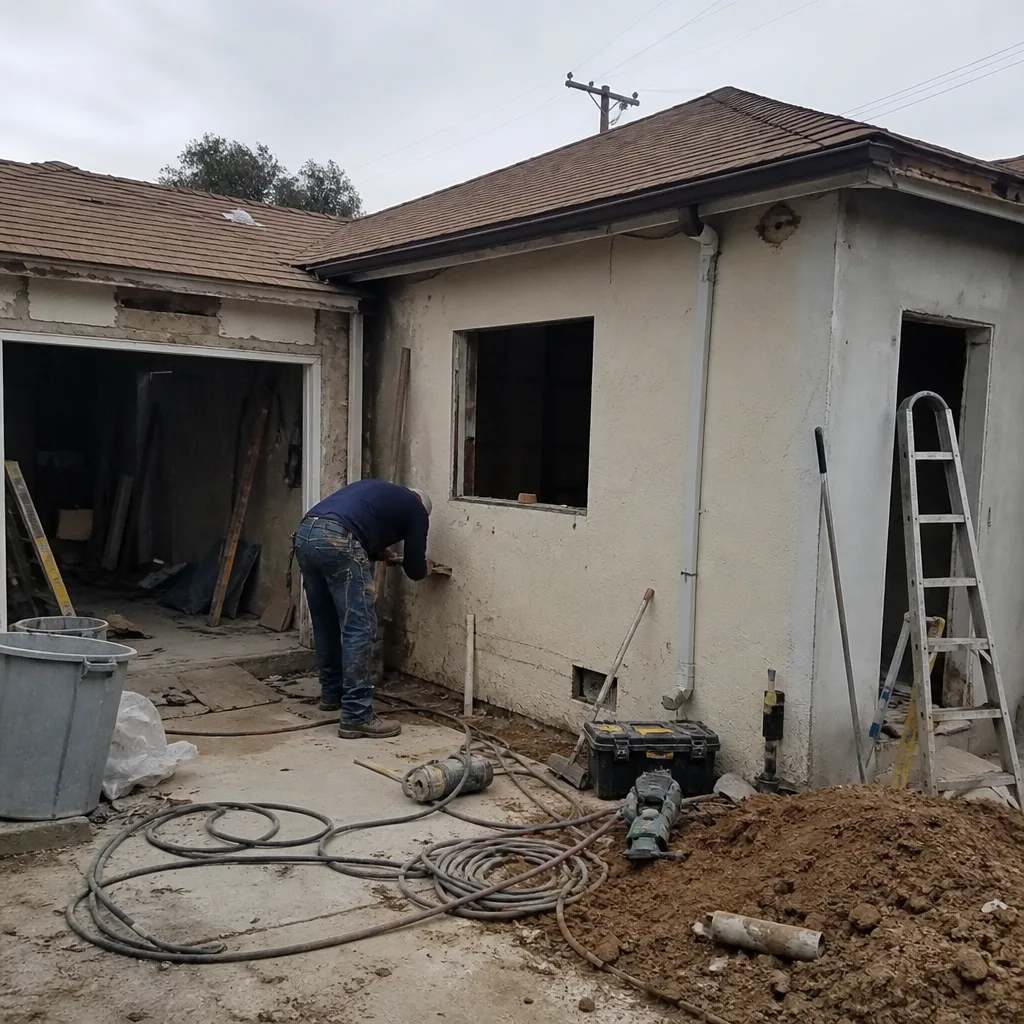 Before
 After
After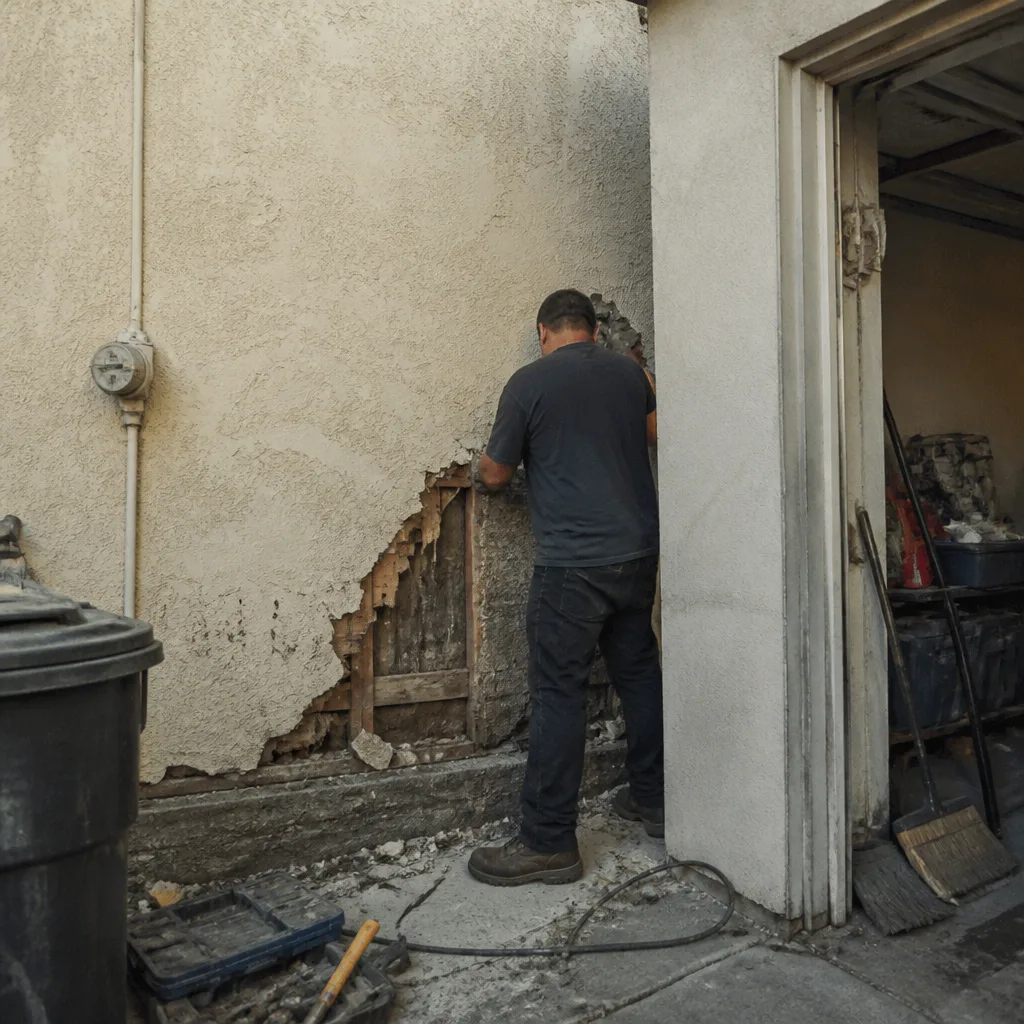 Before
 After
After