Last updated October 9, 2026




Free written scope consultation - allowances, timeline, and change-order rules on paper before a single trade is scheduled
DIY vs Professional General Contractor: What’s Safe to Do Yourself
Here’s a sobering fact most homeowners in Los Angeles never hear until it’s too late: if unpermitted electrical or structural work causes a fire or earthquake loss, your insurer can deny the claim outright. They don’t have to warn you first, and they don’t have to give you a chance to fix it. The DIY vs Professional Home Remodeling: What’s Safe to Do Yourself question is rarely about whether you can swing a hammer. It’s about permit exposure, insurance liability, and what happens to your homeowner’s policy when unpermitted work fails. This guide draws the legal line, not just the skill line, so you know exactly where do-it-yourself ends and licensed contracting begins in Los Angeles.
Styles & brands we work with




Quick Answer
In Los Angeles, you can legally do cosmetic finish work yourself: painting, trim, flooring, cabinet hardware, and fixture swaps that don’t touch plumbing or electrical rough-in. However, any project involving load-bearing walls, electrical panel changes, gas line work, or drainage-waste-vent plumbing requires a California licensed contractor by statute. The dangerous middle ground is unpermitted structural or mechanical work, which can void your insurance and create liability when you sell.
Table of Contents
- California Permit Thresholds: Where DIY Legally Stops
- Homeowner-Builder Permits: What They Actually Allow
- Load-Bearing Walls, Electrical Panels, Gas Lines, and DWV
- The Insurance Exposure Most DIY Guides Skip
- The Real Cost Comparison: DIY vs Fixed-Price Contractor
- Finish-Level Work That’s Genuinely Safe After the Rough-In
- How to Sequence DIY Finish Work Correctly
- Common Mistakes to Avoid
- When to Call a Professional
- Frequently Asked Questions
- The Bottom Line
California Permit Thresholds: Where DIY Legally Stops
California Business and Professions Code Section 7048 sets the legal boundary clearly: any construction project valued at $500 or more in combined labor and materials requires a licensed contractor, with one critical exception. That exception is the owner-builder provision, which allows a homeowner to act as their own contractor on their own residence under specific conditions we’ll cover next.
The practical line in Los Angeles is even sharper. The Los Angeles Department of Building and Safety (LADBS) requires permits for a defined list of work, and once a permit is required, a licensed contractor is required to pull it unless you qualify as an owner-builder. Here’s what that means in plain terms:
- Work under $500 total that is purely cosmetic generally needs no permit and no contractor.
- Any structural change to walls, floors, roofs, or foundations requires a permit and a licensed contractor under normal circumstances.
- Electrical work beyond replacing a switch or outlet requires a permit, and panel work specifically requires a licensed electrical contractor.
- Plumbing beyond replacing a faucet or toilet wax ring requires a permit, and anything touching the drainage-waste-vent system requires a licensed plumber.
- Gas line work of any kind requires a licensed contractor with the proper certification. Full stop.
The $500 threshold trips up more Los Angeles homeowners than any other rule. A bathroom vanity replacement that requires moving a drain line two inches technically crosses it. A kitchen refresh that involves rerouting one electrical circuit crosses it. When in doubt, the statute is the authority, not a YouTube tutorial.
Homeowner-Builder Permits: What They Actually Allow
California does let you pull your own permits as an owner-builder. The law exists so a homeowner can build or remodel their own primary residence without hiring a licensed contractor. But the law also contains a disclosure requirement that most people never hear about until a lawyer explains it.
When you sign an owner-builder permit application in Los Angeles, you certify under penalty of perjury that you will either do the work yourself or hire your own employees, and that you will not hire an unlicensed contractor. More importantly, you assume full legal and financial liability for the project. Here’s what that means in practice:
- You are the general contractor. You schedule inspections, manage subcontractors if you hire them, and carry the responsibility for code compliance.
- Your homeowner’s insurance may not cover you. Many policies exclude owner-builder work or require a rider. You have to call your insurer and ask directly.
- Workers’ compensation is on you. If you hire anyone, even day laborers, and they get hurt, you can be personally liable if you didn’t carry workers’ comp.
- Resale disclosure is mandatory. When you sell, California law requires you to disclose unpermitted work and owner-builder projects. Buyers’ lenders can refuse financing on unpermitted additions or remodels.
- The permit does not make the work safe. A permit means the work was inspected. It does not mean the work was done well if you skipped inspections or the inspector missed something.
We’ve seen owner-builder projects in Los Angeles neighborhoods like Silver Lake and Van Nuys turn into six-figure corrections because the homeowner didn’t understand the liability they’d signed onto. The owner-builder route can work for a truly skilled person doing a small project, but it is not a loophole to avoid hiring a licensed contractor on complex work.
Load-Bearing Walls, Electrical Panels, Gas Lines, and DWV
These four categories are where DIY legally and practically stops in Los Angeles. Each one has statute, code, or physics behind it that no amount of skill can override without a license.
Load-bearing walls. Removing or altering a load-bearing wall changes the structural load path of your house. Getting it wrong means sagging floors, cracked drywall, or progressive collapse in an earthquake. Los Angeles sits in Seismic Design Category D, which has the strictest structural requirements in the country. Even if you know which walls are load-bearing, the seismic retrofit requirements for any alteration require engineered drawings and inspection. This is not a skills gap issue; it’s a licensing and liability issue.
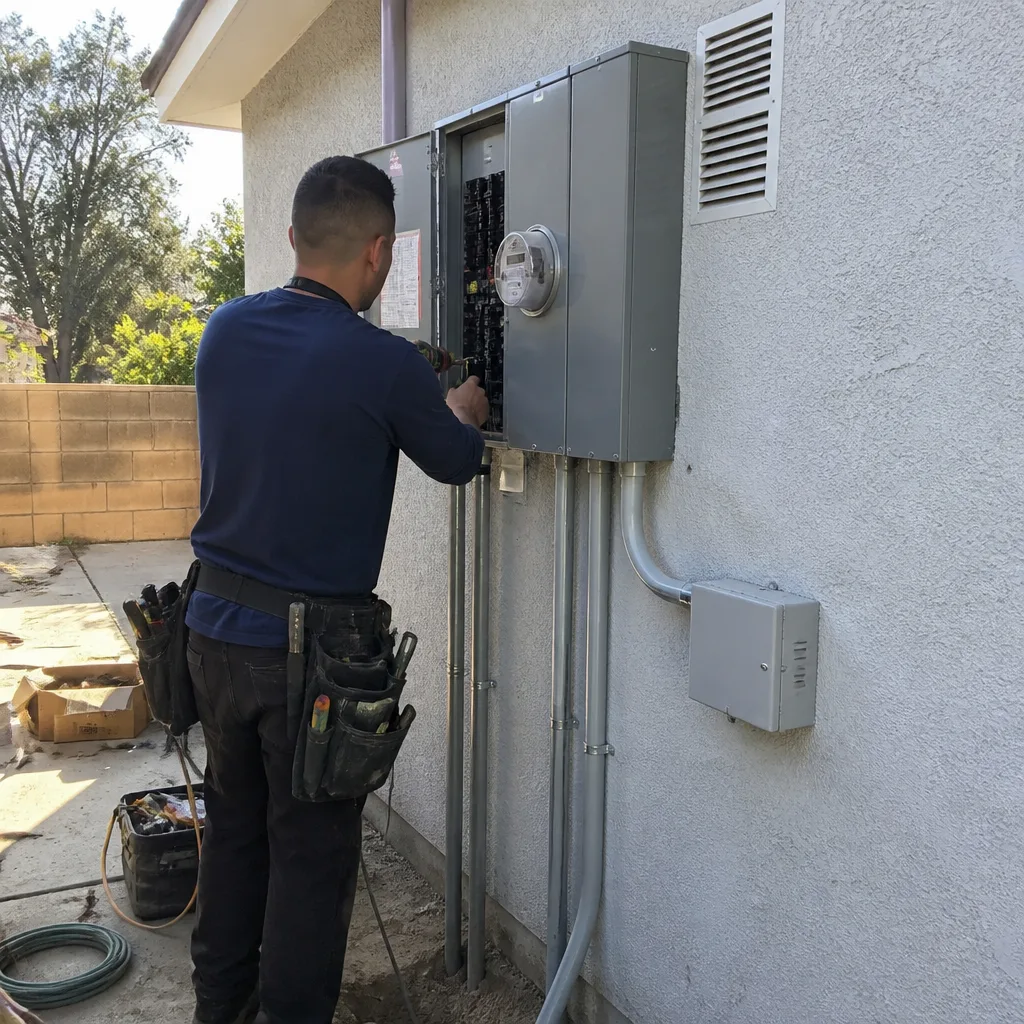
Electrical panels. Panel replacement, service upgrades, and any work inside the panel enclosure requires a California licensed electrical contractor. The hazard is real: a loose connection in a 200-amp panel can arc, and an arc at that amperage can start a fire inside the wall before a breaker trips. We’ve walked into Los Angeles homes where a homeowner’s DIY panel work had char marks behind the dead front. The homeowner’s insurer was not kind.
Gas lines. Any gas line work, including moving a stove or adding a gas dryer connection, requires a contractor with proper certification. A gas leak doesn’t announce itself. It accumulates. In a closed Los Angeles house during winter, one slow leak from an improperly flared fitting can be fatal. This is not fear-mongering; it’s the reason the state regulates gas work so tightly.
DWV systems. Drainage, waste, and vent piping does more than carry water away. The vent portion equalizes pressure so traps don’t get siphoned dry. If your venting is wrong, sewer gas enters the house through fixture drains. That’s methane, and it’s not just unpleasant, it’s a health hazard. Moving a toilet, adding a bathroom, or rerouting drain lines requires a licensed plumber and a permit, whatever your skill level.
The Insurance Exposure Most DIY Guides Skip
Here’s the scenario that motivates this guide. A homeowner in Los Angeles decides to finish a basement or convert a garage into an ADU without permits. They run new circuits, move walls, install a bathroom. The work looks fine. Three years later, a fire starts in the ceiling near a spliced junction box. The fire department report notes unpermitted electrical work. The insurer investigates, finds no permit record with LADBS, and denies the claim.
That homeowner has now lost a house, its contents, and any equity they had, because the policy they paid premiums on for years contains a clause that excludes losses caused by unpermitted work. The insurer doesn’t warn you. The exclusion is in the policy language, and courts have upheld it.
The same logic applies to earthquake damage in Los Angeles. If you remove a shear wall during a remodel without permits and an earthquake later damages the house, the insurer can point to the unpermitted structural change as the reason the house failed. Your liability extends beyond your own house, too: if unpermitted work you did causes damage to a neighbor’s property, you can be personally liable.
The insurance angle is the reason we at Bradford Remodeling put permits and inspections at the center of our process. The Garrison Standard, the operating framework behind our projects, requires that every job that needs a permit gets one, and every inspection gets documented. A signed permit card and final inspection record are the two pieces of paper that protect you from an insurer looking for a reason to deny a claim.
The Real Cost Comparison: DIY vs Fixed-Price Contractor
The DIY vs Professional Kitchen Remodeling: What’s Safe to Do Yourself cost argument usually sounds like this: the contractor wants $40,000 for the kitchen, and the materials are $18,000, so I’ll save $22,000 by doing it myself. That math leaves out the costs that only show up later. Here’s the honest comparison model for Los Angeles.
DIY costs people forget:
- Tool rental or purchase. A tile saw, wet saw, floor jack, or drywall lift costs $40 to $200 per day to rent. A project that stretches over four weekends adds up.
- Permit fees. LADBS permit fees run from a few hundred dollars for a small electrical change to several thousand for structural work. Owner-builders pay these out of pocket.
- Inspection failures. Each failed inspection costs a re-inspection fee and the time to correct the work. We regularly see owner-builder projects fail framing or rough-in inspections because the work didn’t meet California code, which is stricter than most other states.
- Redo time. Bad tile work means tearing it out and starting over. Bad drywall work means sanding for days. Bad waterproofing means a shower that leaks into the wall cavity.
- The value of your time. If you make $50 an hour, a 300-hour kitchen remodel costs you $15,000 in your own time, not counting the toll on your family and your patience.
Contractor costs people forget to compare:
- Written fixed price. Bradford Remodeling gives a written price before work starts. Numbers don’t move at the door. That means the $40,000 is $40,000, not $52,000 by the end.
- Warranty coverage. Our 365-Day Done Right Promise covers every completed project for a full year. If something we did fails in that window, we come back and correct it at no charge. A DIY project has no warranty except your own future labor.
- Insurance coverage during construction. A licensed contractor carries liability insurance and workers’ comp. If a worker gets hurt on your property, you’re not personally liable. That’s not true on a DIY job with hired help.
- Materials at trade pricing. We install name-brand materials like KraftMaid cabinets, Cambria quartz, Kohler fixtures, and GAF roofing. These brands come with manufacturer warranties that back our own guarantee. DIY material purchases from big-box stores often don’t carry the same warranty terms.
The real comparison isn’t $40,000 versus $18,000. It’s $40,000 of fixed, warranted, permitted work versus $18,000 of materials plus permit fees, tool costs, inspection failures, redos, your own time, and the ongoing liability of unpermitted work. In our experience across Los Angeles, the DIY savings evaporate fast once the real numbers hit the table.
Finish-Level Work That’s Genuinely Safe After the Rough-In
There’s a version of DIY that works, and it doesn’t involve touching anything structural or mechanical. After a licensed contractor completes the rough-in, inspections are passed, and the walls are closed, several finish tasks are genuinely safe for a careful homeowner.
Safe finish work after professional rough-in:
- Painting. Interior walls, ceilings, trim, and exterior surfaces. Preparation matters more than application, and there’s no code or permit requirement for painting.
- Flooring. Engineered hardwood, laminate, luxury vinyl plank, and tile over properly prepared substrate. The key word is substrate: the surface below the flooring has to be flat and sound, which is a rough-in-level concern. Once that’s right, click-lock flooring is within reach of a patient DIYer.
- Trim and millwork. Baseboards, casing, crown molding, and wainscoting. Miter joints take practice, but mistake means scrap wood, not a structural failure.
- Cabinet hardware. Knobs, pulls, and soft-close hinges. Straightforward, reversible, and satisfying.
- Fixture swaps that don’t touch rough-in. Replacing a light fixture using the existing junction box, or swapping a faucet using the existing shutoff valves. The moment you need to move a box or a valve, the work leaves DIY territory.
- Landscape and hardscape borders. Planting beds, paver walkways on prepared base, and decorative gravel. Belgard hardscaping systems have strong DIY-friendly product lines for simple applications, though full paver patios with proper base compaction are often better left to crews with the right equipment.
The phrase to remember is “after the rough-in.” The moment you open a wall, touch a wire, move a pipe, or cut a framing member, you’re no longer in DIY-safe territory. The rough-in is the mechanical and structural skeleton. Finish work is the skin. Skin is safe to touch.
How to Sequence DIY Finish Work Correctly
Sequencing is where DIY projects fall apart even when the individual tasks are safe. The order of operations matters because one task can destroy the work already completed if done out of order.
- Complete all permitted rough-in and inspections first. Nothing DIY should happen until the contractor’s structural, plumbing, and electrical rough-in is done and the LADBS inspector has signed off. Closing walls over uninspected work compounds every problem.
- Prime and paint ceilings and walls before flooring. Paint drips and roller splatter are easier to clean off a subfloor than finished flooring. Paint first, floor second.
- Install flooring before trim. Baseboard and casing cover the expansion gaps that flooring manufacturers require. Trim goes on top of the finished floor, not the other way around.
- Install cabinetry before countertops. Countertops are templated to the installed cabinets. If cabinets move after templating, the stone doesn’t fit.
- Install trim and millwork after flooring and paint. This is the finish line. Touch-up paint comes after trim is nailed and caulked.
- Install fixtures and hardware last. Light fixtures, faucets, cabinet pulls, and switch plates get installed after all messy work is done so they don’t get scratched, painted, or covered in dust.
The sequence works because each step protects the step before it. Reversing the order means redoing work. In Los Angeles, where remodeling costs run high, redoing work is the most expensive mistake a homeowner can make.
Common Mistakes to Avoid
- Pulling an owner-builder permit and hiring an unlicensed worker. This is the single most common and most dangerous mistake we see in Los Angeles. The permit makes you responsible, and hiring an unlicensed worker makes you personally liable if they’re injured. The worker is not your employee, and your insurance won’t cover them.
- Closing walls before the rough-in inspection. The inspector has to see the wiring and plumbing before drywall goes up. If you close the wall, the inspector makes you open it. Every time.
- Assuming “it looked simple on YouTube” means it’s safe. YouTube demonstrates technique, not code compliance. California code is stricter than what most tutorial creators work under.
- Treating unpermitted work as “what happens before I sell” instead of “what the insurer can use now.” The insurance denial hits long before the resale disclosure. Both consequences are real, but the insurance one happens first and hurts more.
- Skipping the structural engineer on any wall removal. In Los Angeles’s seismic zone, even a non-load-bearing partition can be doing shear work. An engineer’s letter is cheap compared to a cracked foundation or a denied claim.
- Believing the $500 threshold doesn’t apply to you. The threshold applies to everyone. A $600 electrical change done without a licensed contractor is a statutory violation, whether or not the work is good.
- Choosing the cheapest bid without a written scope. A low bid that doesn’t specify materials, permit responsibility, and change-order rules isn’t a deal; it’s an opening offer. Bradford Remodeling puts the full scope and price in writing before work starts, which is why our projects don’t end with surprise invoices.
When to Call a Professional
Call a licensed General Contractor when the project touches structure, electrical panels, gas lines, DWV plumbing, or anything requiring a permit you’re not prepared to carry as an owner-builder. Call when the work is beyond a single trade, because coordinating electricians, plumbers, and inspectors is a general contractor’s daily job. Call when you want the work warranted. Call when you want the permit history clean for your insurer and for the next buyer. Bradford Remodeling offers free estimates in Los Angeles. A written price and a clear scope of work costs nothing to get, and it gives you a real number to compare against the DIY cost model. Reach us at (903) 568-7222.
Frequently Asked Questions
You can legally do cosmetic finish work under $500 in value without a contractor: painting, trim, flooring, cabinet hardware, and fixture swaps that use existing plumbing and electrical connections. Any work that requires an LADBS permit for structural, electrical, plumbing, or gas changes legally requires a licensed contractor unless you qualify and file as an owner-builder.
No, replacing a sink or faucet using the existing shutoff valves and drain connection does not require a permit. The moment you move the drain line, relocate the water supply, or touch the venting, the work requires a permit and a licensed plumber. For a full kitchen remodel, call (903) 568-7222 to get a written scope and price.
Your insurer can deny the claim if the loss is tied to unpermitted work. The policy exclusion is standard in California, and insurers actively look for permit gaps after a fire or earthquake. The denial can include the entire structure, not just the unpermitted portion, if the insurer can connect the loss to the unpermitted work.
Yes, under the owner-builder provision, but you become the general contractor of record and assume full legal and financial liability. You must certify that you’re doing the work yourself or hiring your own employees. If you hire unlicensed workers and they get injured, you can be personally liable for their injuries.
Rarely, once you account for tool rental, permit fees, inspection failures, redos, and the value of your time. A licensed contractor provides a fixed written price, carries insurance, and warrants the work. Bradford Remodeling’s written price and 365-Day Done Right Promise eliminate the cost overruns that make DIY look cheaper on paper.
Electrical panel work is the most dangerous because the failure mode is a fire behind the wall, not an immediate shock. Gas line work is a close second because leaks are invisible and accumulate. Both require licensed contractors in Los Angeles by statute, and for good reason: these are the projects that kill people and burn houses down.
The Bottom Line
The DIY-versus-pro decision is not about skill; it’s about statute, insurance, and liability. For more guides & resources on navigating Los Angeles remodeling, explore our blog. Los Angeles homeowners can safely paint, lay flooring, install trim, and swap fixtures after a licensed contractor completes the rough-in and inspections. Anything structural, electrical, gas, or DWV-related legally requires a licensed contractor, and unpermitted work in those categories puts your insurance coverage and your financial future at stake. The Garrison Standard ensures every Bradford Remodeling project carries a written price, proper permits, documented inspections, and a 365-Day Done Right Promise. Get a free estimate at (903) 568-7222, and get the real numbers before you decide.
Written by Curtis Lane, Owner at Bradford Remodeling, serving Los Angeles since 2004.
See the difference
 Before
 After
After Before
 After
After Before
 After
After