Last updated October 9, 2026



Free written scope consultation - allowances, timeline, and change-order rules on paper before a single trade is scheduled
Construction Emergency Preparedness Guide for Los Angeles Homes
After the February 2024 atmospheric river storms, thousands of Los Angeles homeowners did the same thing: they hired the first contractor who knocked on their door within 48 hours. Many of them overpaid. Some got work that failed inspection. A few got taken entirely. California’s Business and Professions Code specifically prohibits door-to-door contractor solicitation in declared disaster zones and caps post-emergency price increases, but those protections only work when homeowners know they exist. This guide covers what Los Angeles homeowners actually need to know before the next earthquake, fire, or storm hits: how to document damage, what structural distress looks like, and when state law gives you leverage against predatory contractors. For Construction Warning Signs: A Los Angeles Homeowner’s Reference Guide, see our companion post.
Quick Answer
Construction emergency preparedness for Los Angeles homeowners means three things: knowing what structural damage looks like after an earthquake, fire, or flood so you can make safe re-entry decisions; documenting that damage in a sequence that maximizes your insurance claim and gives contractors a defensible scope; and understanding Construction Permits, Codes & Inspections in CA: What You Need to Know, including solicitation bans and price gouging prohibitions. The highest-value preparation steps you can take before an event are installing a seismic shut-off valve, documenting your home’s pre-event condition with dated photos, and retrofitting cripple walls and anchor bolts if your home predates modern seismic code.
Styles & brands we work with


Table of Contents
- Post-Earthquake Structural Assessment: What to Check Yourself vs. What Needs an Engineer
- Fire Damage Documentation Protocol: The Sequence That Protects Your Claim
- Water Intrusion vs. Ongoing Moisture: The 72-Hour Mold Window
- California Disaster Zone Contractor Laws: What You Can Enforce
- Pre-Event Preparation Checklist: Construction-Specific Steps
- Structural Retrofits That Actually Reduce LA Risk
- Selecting a Contractor After a Disaster: Written Price Before Work Starts
- Common Mistakes to Avoid
- When to Call a Professional
- Frequently Asked Questions
Post-Earthquake Structural Assessment: What to Check Yourself vs. What Needs an Engineer
Most Los Angeles homes are wood-frame construction with stucco exterior, and that’s actually good news. Wood flexes. It absorbs seismic energy in ways that unreinforced masonry does not. But that same flexibility means earthquake damage often hides in places homeowners don’t think to look. We’ve walked into Los Angeles homes after moderate quakes where the drywall showed nothing, but the foundation told a different story.
Here’s what you can safely evaluate yourself before calling anyone:
- Foundation cracking patterns. Hairline cracks (less than 1/8 inch wide) in a vertical or stair-step pattern along the foundation are common and usually cosmetic. Horizontal cracks, cracks wider than 1/4 inch, or cracks that offset (one side of the crack sits higher than the other) are red flags that warrant a structural engineer.
- Door and window racking. After an earthquake, walk through your home and open and close every exterior door and window. If a door that closed fine last week now sticks, binds, or swings open on its own, the frame has shifted. That shift usually traces back to foundation movement or cripple wall failure.
- Chimney separation. Stand back and look at your chimney from the street or yard. A gap between the chimney and the main house structure, or visible cracking in the mortar at the roofline, means the chimney moved independently of the house. Chimneys are heavy, brittle, and the single most common point of structural failure in a California earthquake.
- Stucco spider-webbing. Stucco is rigid. When the frame underneath shifts, stucco cracks. Fine, shallow cracking over a wide area is usually cosmetic. Deep cracks that run diagonally from window or door corners, or cracks that expose the mesh underneath, indicate frame movement.
What requires a licensed structural engineer before you re-enter or begin repairs: any horizontal foundation crack, any offset crack, separation between the house and its foundation (visible gap at the sill plate), a leaning or partially collapsed cripple wall in a crawlspace, or a chimney that has separated more than 1/2 inch from the house. If you see any of these, do not begin remodeling work until an engineer has assessed the structure. A general contractor in Los Angeles should require this documentation before touching a post-earthquake repair, and if they don’t, that’s a warning sign.
Fire Damage Documentation Protocol: The Sequence That Protects Your Claim
Wildfire and structure fire damage claims fail most often not because the damage wasn’t real, but because the homeowner documented it in the wrong order. Insurance adjusters work from evidence, and the evidence needs to tell a chronological story. The sequence matters.
Here is the documentation protocol we recommend to every Los Angeles homeowner, and it applies whether the damage is from a wildfire that ember-burned your eaves or a kitchen fire that damaged a wall:
- Exterior photos first. Before you clean anything, before you move anything, photograph every affected area from at least three distances: wide shot showing the whole wall or roofline, medium shot showing the specific damage area, and close-up showing texture and depth of char, smoke staining, or melted materials. Do this in daylight if possible. Turn off your flash for close-ups; it washes out the detail adjusters need to see.
- Interior photos with a measurement reference. Every interior damage photo should include a tape measure, ruler, or a common object of known size (a dollar bill works) in the frame. This prevents disputes about whether a scorched area is 6 inches or 2 feet across. Photograph every room, even rooms that appear unaffected, because smoke migrates and leaves residue that may not be visible for days.
- Written inventory with dimensions. Go room by room. Write down what was damaged, the dimensions of the damaged area, the material (drywall, stucco, framing lumber, insulation), and whether the material is charred, smoke-stained, heat-warped, or water-damaged from fire suppression. Be specific: “8 linear feet of baseboard, charred” is a defensible scope item. “Some wood burned” is not.
- Preserve samples before disposal. If any material must be removed immediately for safety, cut a sample and bag it before disposal. This applies to charred framing, melted vinyl siding, smoke-damaged insulation. Label each bag with the date and location.
- Get a written contractor scope, not a verbal estimate. A written scope of work with line-item measurements and material specifications gives your adjuster something to approve against. Verbal estimates create gaps. At Bradford Remodeling, every fire repair bid includes a written, line-item scope with prices attached before any work begins. That document becomes part of your claim file.
Wildfires in Los Angeles create a specific additional hazard: ember intrusion through attic vents. Even if your home’s structure is intact, embers can enter through soffit vents and smolder in insulation for hours or days after the main fire passes. After any nearby wildfire, have your attic inspected. Look for charred insulation, soot staining on rafters, or melted vent screens. This is not a DIY inspection; attic spaces after a fire event can contain compromised structural members.
Water Intrusion vs. Ongoing Moisture: The 72-Hour Mold Window
Atmospheric river storms hit Los Angeles hard, and the damage pattern is predictable: water comes through roofs at flashing points, through foundation cracks at the slab edge, and through window and door penetrations where sealant has aged out. What many homeowners don’t understand is the difference between a water intrusion emergency and ongoing moisture damage, and that difference has a financial consequence: mold remediation is a separate line item on most policies, and the 72-hour window determines whether you need it.
Water intrusion is an emergency when water enters the home through a breach: a section of roof membrane failed, a window flashing gave way, a foundation crack opened under hydrostatic pressure. You see standing water, active drips, or wet drywall. The fix is to stop the water, remove saturated materials, and dry the cavity. Done within 72 hours, this is typically a straightforward repair.
Ongoing moisture damage is what happens when water has been entering slowly for weeks or months through a failed seal, a clogged weep hole, or a cracked stucco skin. The drywall might feel slightly soft. You might smell must but see no stain. The substrate (the structural material behind your finished surface, usually plywood or OSB) has been wet long enough for mold to colonize. Mold remediation means containment, negative air pressure, HEPA filtration, and removal of colonized materials, and it adds substantial cost to a project that started as a leak repair.
The practical rule for Los Angeles homeowners: if you can see standing water or active dripping, that’s an emergency intrusion. If you can smell must or feel soft drywall but see no active water, that’s ongoing moisture. In both cases, the clock is running. Mold germination begins at 48 to 72 hours of continuous moisture. If you catch the intrusions within that window, you likely avoid a separate remediation cost. After that window, the scope changes.
What you can do immediately: shut off water at the main if the source is a plumbing failure, tarp any roof breach from inside the attic if you can reach it safely, and photograph everything before you move anything. Then call a contractor who will open the wall or ceiling cavity, identify the full extent of saturation, and give you a written scope of what needs to come out and go back in.
California Disaster Zone Contractor Laws: What You Can Enforce
After a declared state of emergency, California law changes the rules for contractors. Most Los Angeles homeowners don’t know these protections exist, and the contractors who count on that ignorance are exactly the ones the law was written to stop.
First, door-to-door solicitation. Under California Business and Professions Code Section 7159 and related disaster-response statutes, it is illegal for a contractor to solicit repair work door-to-door in a declared disaster area. If a contractor knocks on your door after a declared emergency offering repair services, that solicitation itself is a violation. You can report it to the Contractors State License Board (CSLB).
Second, price gouging. California Penal Code Section 396 prohibits increasing the price of repair services, construction materials, and emergency supplies by more than 10% above pre-disaster prices during and for 30 days after a declared emergency. This applies to contractors, material suppliers, and anyone selling goods or services in a designated disaster zone. A repair quote that would have been $10,000 before the storm cannot legally be $15,000 the week after.
Third, your right to a written contract. California requires any home improvement contract over $500 to be in writing, and that contract must include a detailed scope of work, a total price, a payment schedule that does not exceed 10% or $1,000 upfront (whichever is less), and the contractor’s license number. In a disaster zone, contractors sometimes demand large deposits. That is a red flag and often a violation.
How to file a CSLB complaint: gather the contractor’s name, license number if provided, phone number, and any written or photographic evidence of the solicitation or pricing. Go to the CSLB website, navigate to the consumer complaint section, and file. You can also call the CSLB directly. If you suspect price gouging, report it to the California Attorney General’s office through their disaster fraud hotline.
Here’s what this means practically. After the next Los Angeles earthquake or storm, when contractors come knocking, you have the legal right to say no and the legal backing to report them. The only contractor you should engage is one you called, one whose license you verified, and one who puts a written price in your hand before work starts.
Pre-Event Preparation Checklist: Construction-Specific Steps
Most earthquake preparedness checklists tell you to bolt bookcases and store water. Those matter. But a construction-specific checklist looks at your home the way a structural engineer does: what will actually fail, and what documentation will you need to make a claim and get repairs done fast.
Here are the highest-value preparation steps for Los Angeles homeowners, and none of them require a permit:
- Know whether you have a seismic shut-off valve. A seismic shut-off valve (sometimes called an earthquake gas shut-off valve) sits on your gas line at the meter and automatically stops gas flow when it detects significant seismic movement. If you have one, know where it is. If you don’t, installing one typically costs a few hundred dollars and can be done by a licensed plumber in a single visit. After a major earthquake, gas leaks from broken lines cause more fires than the quake itself.
- Document your home’s pre-event condition. Walk your home once a year with a camera. Photograph every wall, ceiling, floor, and exterior surface at a consistent distance. Date-stamp the photos. Store them in a cloud service. When an adjuster asks what the wall looked like before the earthquake, you’ll have an answer that carries weight.
- Locate your water main and gas main shut-offs. Know where they are and how to operate them. After a major event, shutting off utilities quickly can prevent secondary damage that insurance treats as a separate, sometimes uncovered, claim.
- Inspect your roof flashing and window sealant annually. Los Angeles gets almost no rain for months, then gets hammered by atmospheric rivers. Sealant that looked fine in September fails in February. Pay a roofer or a general contractor for an annual inspection of roof flashing, vent boots, and window and door perimeter sealant. The inspection costs less than the deductible on a water damage claim.
- Photograph your crawlspace. If your home has a crawlspace, photograph the cripple walls, the mudsill, the anchor bolts, and the subfloor. These are the areas most likely to shift in an earthquake, and pre-event photos give your engineer a baseline.
- Create a contractor shortlist before the emergency. Identify one or two licensed, local contractors now, while you have time to check licenses, read contracts, and compare written scopes. You don’t want to be doing that research when your roof is tarped and the phone won’t stop ringing. Bradford Remodeling’s home page is a good place to start understanding what a written-scope, fixed-price contractor looks like.
Structural Retrofits That Actually Reduce LA Risk
Not all retrofits are equal. Some return their cost in reduced damage many times over. Others are nice-to-haves that rarely matter for a wood-frame stucco home in Los Angeles. Here’s the honest ranking based on what we’ve seen across hundreds of LA homes.
Anchor bolt retrofit: highest value. Older Los Angeles homes (generally built before 1940) often sit on their foundations held only by gravity. In an earthquake, the house can slide off the foundation. Anchor bolts, which fasten the wood mudsill to the concrete foundation, are the single most effective retrofit for these homes. Cost is typically in the $3,000 to $8,000 range depending on access and foundation condition. If your home has no anchor bolts, this is your first priority.
Cripple wall bracing: high value. A cripple wall is the short wood wall between the foundation and the first floor in many older homes, typically in the crawlspace. Cripple walls are prone to collapse in an earthquake because they’re short, unbraced, and carry the entire weight of the house. Bracing them with plywood shear panels prevents the house from collapsing sideways. Cost ranges from $5,000 to $12,000 for a typical Los Angeles home.
Soft-story retrofit: high value if you have one. A soft story is a floor that’s significantly less rigid than the floors above it, usually because it has large openings for garage doors or storefront windows. Homes built over garages, very common in Los Angeles hillside and canyon neighborhoods, are soft-story structures. Retrofitting involves adding steel moment frames or shear walls around the garage opening. Cost is typically $20,000 to $60,000. It’s expensive, but a soft-story collapse is catastrophic, not cosmetic.
Chimney bracing or removal: moderate value. As noted above, chimneys are the most common point of failure. If your chimney is unreinforced masonry, bracing it or removing it above the roofline reduces both damage risk and injury risk. Cost varies widely, from $2,000 for bracing to $15,000 or more for full removal and re-roofing.
Foundation bolting and plate washers: moderate value, often bundled with anchor bolts. If you’re doing an anchor bolt retrofit, adding plate washers at existing bolts is incremental cost and meaningfully improves performance.
We’re not going to pretend any of this is inexpensive. But compare the cost of a cripple wall retrofit ($5,000 to $12,000) against the cost of rebuilding a collapsed first floor ($100,000 and up, not counting displacement). The math is not close. A home remodeling contractor in Los Angeles who does seismic retrofits should be able to give you a written scope and a fixed price for any of this work, with no numbers that move at the door. That’s the standard we hold, and it’s the standard you should demand from anyone you hire.
Selecting a Contractor After a Disaster: Written Price Before Work Starts
The chaos after a disaster is exactly when homeowners make bad contractor decisions. You’re stressed, your home is damaged, your insurance adjuster hasn’t returned your call, and someone is standing on your porch saying they can start tomorrow. The discipline that protects you here is the same discipline that protects you in normal times: written scope, fixed price, verified license.
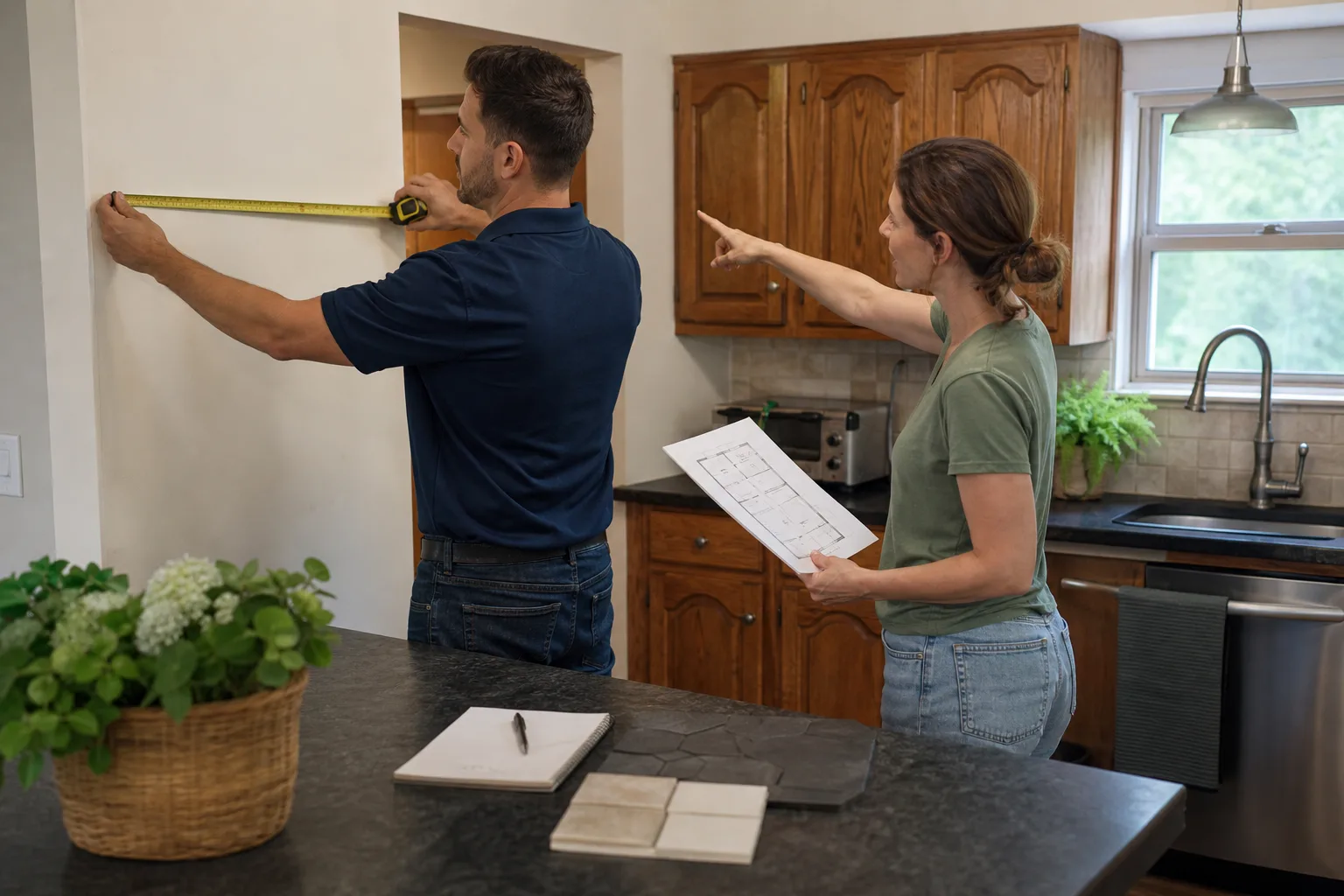
Here’s what that looks like in practice. A legitimate contractor walks your property, takes measurements, asks about your insurance claim, and then goes back to the office and writes a scope of work. That scope lists each repair item: “remove and replace 12 linear feet of water-damaged drywall at ceiling in living room, including insulation and texture match.” Each item has a price. The total is the total. There’s no hourly rate, no “we’ll see what we find,” no number that moves at the door.
At Bradford Remodeling, this is how every job works, and it’s not a courtesy, it’s how we’re structured. The Garrison Standard puts every price and every guarantee in writing before a single tool comes out. When the work is done, you get a written guarantee: the 365-Day Done Right Promise. If the repair fails within that year, we come back and correct it at no charge. That’s the whole point of the framework. A contractor who won’t put a price or a guarantee in writing is asking you to trust them instead of the document, and after a disaster, that’s exactly the wrong time to extend that trust.
Questions to ask any post-disaster contractor in Los Angeles: Are you licensed by the CSLB? Will you give me a written, line-item scope before any work starts? What’s your deposit requirement? (California caps it at 10% or $1,000, whichever is less.) What exactly does your warranty cover, and for how long? If they hesitate on any of these, thank them for their time and call someone else.
For homeowners in Los Angeles considering a kitchen remodel or general contractor after a disaster event damages part of the home, the same standard applies: written price, fixed scope, warranty in hand. Damage restoration and remodeling are separate trades in some companies; at Bradford, they run through the same disciplined process.
Common Mistakes to Avoid
- Hiring the first contractor who knocks. After a declared emergency in Los Angeles, door-to-door solicitation by contractors is illegal. The first knock is often the worst deal. Take names, take photos, and report solicitors to the CSLB.
- Starting demolition before documentation. Tearing out wet drywall or charred wood before photographing and measuring it destroys the evidence your insurance adjuster needs. Document first, then demolish.
- Paying a large deposit upfront. California law limits deposits on home improvement contracts to 10% of the total or $1,000, whichever is less. Any contractor demanding more in a disaster zone is either ignorant of the law or counting on you being ignorant of it.
- Ignoring the 72-hour mold window. Water intrusion that isn’t dried within 72 hours becomes a mold remediation project, which adds thousands of dollars and a separate claim line. When water gets in, the clock starts.
- Assuming your insurance covers everything. Flood damage requires separate flood insurance in most Los Angeles neighborhoods. Earthquake damage requires earthquake insurance. Standard homeowner’s policies exclude both. Know your policy before the event, not after.
- Skipping the pre-event documentation walk. The single most common regret we hear from homeowners after a claim is “I wish I had photos of what the house looked like before.” That walk takes 30 minutes once a year.
- Treating a sticking door as a minor annoyance after an earthquake. A door that suddenly binds after a quake is often the first visible sign of a shifted frame or foundation. Don’t plane the door; call a structural engineer.
When to Call a Professional
Call a licensed structural engineer if you see any horizontal foundation crack, offset crack, chimney separation greater than 1/2 inch, or racked door and window frames after an earthquake. Call a licensed contractor with water damage experience if you have active water intrusion, soft drywall, or a musty smell in any room. Call a licensed electrician if water has contacted your electrical panel or any wiring. Call a licensed plumber if you need a seismic shut-off valve installed or if you’ve shut off your gas and need the line re-pressurized and inspected before restart. For any of these situations, Bradford Remodeling offers free estimates in Los Angeles, and we’ll give you a written scope with a fixed price before any work starts. Call (903) 568-7222.
Frequently Asked Questions
Check for gas leaks by smell and sound, shut off gas at the meter if you detect either, then visually inspect your foundation, chimney, and door and window operation for the signs described above. Photograph everything before you move or repair anything, and call a structural engineer if you see horizontal foundation cracks, offset cracks, or chimney separation. Call (903) 568-7222 for a written damage assessment if you’re unsure what you’re looking at.
In California, you generally have one year from the date of loss to file a homeowner’s claim, but you should file within days of the event. Your policy likely requires you to report damage promptly and to mitigate further damage by tarping roofs and drying water. Delaying both the claim and the mitigation can reduce or void coverage. Document first, mitigate second, file third.
No. California law prohibits door-to-door contractor solicitation in declared disaster areas. If a contractor knocks on your door offering repair services after a declared emergency, that solicitation is a violation you can report to the CSLB. Do not sign anything at the door, do not provide your insurance information, and do not agree to any work.
Anchor bolt retrofits typically run $3,000 to $8,000. Cripple wall bracing runs $5,000 to $12,000. Soft-story retrofits for homes over garages run $20,000 to $60,000. These are Los Angeles market ranges; your exact price depends on access, foundation condition, and the specific engineering required. Any contractor should give you a written, line-item price before work starts. Call (903) 568-7222 for a fixed-price quote.
Water damage is the damage caused by the water itself: saturated drywall, warped flooring, damaged insulation. Mold remediation is the process of containing and removing mold that grew because water sat too long. Most policies cover water damage but treat mold remediation as a separate, often limited, coverage. The 72-hour window between intrusion and mold germination is your best leverage to keep your claim in the water damage category.
Most structural retrofits, including anchor bolts, cripple wall bracing, and soft-story retrofits, require building permits from the Los Angeles Department of Building and Safety (LADBS). A legitimate contractor will pull the permit, schedule the inspection, and include those costs in the written scope. Anyone telling you to skip the permit on structural work is telling you to accept liability for something that could fail in the next earthquake.
The Bottom Line
Los Angeles homes face specific, recurring threats: earthquakes that damage foundations and cripple walls, fires that introduce ember and smoke damage, and atmospheric rivers that exploit every failed seal and flashing point. The homeowners who handle these events best are the ones who prepared before the event, documented carefully after it, and engaged contractors with a written scope and a fixed price. For more guides & resources, explore our blog. The Garrison Standard exists because too many LA homeowners have been burned by contractors who showed up after a disaster with a handshake and a moving number. You don’t have to accept that. The law gives you protections, and the right contractor gives you the rest: a written price, a written guarantee, and a clean site when the job is done.
Written by Curtis Lane, Owner at Bradford Remodeling, serving Los Angeles since 2004.
See the difference
 Before
 After
After Before
 After
After Before
 After
After