Last updated October 9, 2026




Free written scope consultation - allowances, timeline, and change-order rules on paper before a single trade is scheduled
How Long Does General Contractor Take? Timelines and What to Expect
Los Angeles Building and Safety inspection wait times have stretched to 10 to 15 business days for some trades. A contractor who hands you a tight completion date without accounting for that is either uninformed or setting you up for a change order. This guide walks through How Long Does Home Remodeling Take? Timelines and What to Expect for kitchen remodels, bathroom renovations, ADUs, and whole-house projects in Los Angeles, shows you how to read a project schedule, and explains what a delay clause in your contract should actually say.
Quick Answer
A kitchen remodel in Los Angeles typically takes How Long Does Kitchen Remodeling Take? Timelines and What to Expect-generally 8 to 14 weeks from design finalization to final inspection. A bathroom runs 4 to 8 weeks. An ADU takes 6 to 12 months, and a whole-house renovation runs 4 to 9 months. These numbers include the permit lag at LA Building and Safety, which currently adds 4 to 8 weeks to most projects depending on scope.
Styles & brands we work with



Table of Contents
- Phase-by-Phase Timelines for Los Angeles Remodeling Projects
- The Los Angeles Permit Reality: Why Your Contractor’s Date Might Be Wrong
- How to Read a Project Schedule (Gantt Chart or Milestone List)
- Delay Clauses in a Remodeling Contract: What Protects You
- Crew Preparation and Rough-In: Where Timelines Slip
- Finish Work, Punch Lists, and Inspection Close-Out
- How to Verify Your Contractor Actually Submitted the Permit
- Questions to Ask at Weekly Check-Ins That Catch Schedule Drift
Phase-by-Phase Timelines for Los Angeles Remodeling Projects
Every remodel in Los Angeles follows the same general sequence: design and scope lock, permits, demolition, rough-in, inspections, finishes, punch list, final inspection. What changes the timeline is project size, the age of the house, and how long LA Building and Safety takes to review your specific permit package.
Here are the benchmarks we use when we plan projects, with permit lag already built in:
- Kitchen remodel: 8 to 14 weeks. That includes 2 to 4 weeks for permit review, 1 week for demo, 2 to 3 weeks for rough-in (electrical, plumbing, framing), 2 to 3 weeks for cabinet and countertop installation, and 1 to 2 weeks for punch list and final inspection.
- Bathroom remodel: 4 to 8 weeks. Smaller footprint means shorter demo and rough-in, but waterproofing and tile setting can’t be rushed. A curbless shower or moving the toilet line adds time at the rough-in stage.
- ADU (garage conversion or new detached): 6 to 12 months. The permit itself can take 3 to 4 months through LA Building and Safety. Construction is 3 to 6 months for a detached unit. A garage conversion runs shorter because the shell already exists.
- Whole-house renovation: 4 to 9 months. The range is wide because we don’t know what’s inside the walls until demo starts. Older Los Angeles homes, especially pre-1980 builds, regularly reveal corroded galvanized pipe, cloth-wrapped wiring, or termite damage that changes scope.
These are planning numbers, not promises. A specific project gets a specific schedule once the scope is locked and the permit is submitted. But if a contractor quotes you a 3-week kitchen remodel in Los Angeles, that timeline assumes zero inspection delays. That assumption is not realistic in this city.
The Los Angeles Permit Reality: Why Your Contractor’s Date Might Be Wrong
LA Building and Safety runs the permit process for most residential remodeling in Los Angeles. The department’s own published wait times for plan review and inspection scheduling have run 10 to 15 business days for some trades in recent years. That is not a secret. Any contractor working in Los Angeles knows the inspection queue before they ever hand you a contract.
What that means for your timeline:
- Plan review for a kitchen or bath remodel (alteration permit): 2 to 4 weeks typical, longer if the reviewer requests corrections.
- Plan review for an ADU or addition: 6 to 12 weeks, sometimes longer depending on zoning checks.
- Inspection scheduling after rough-in: 1 to 2 weeks per inspection, and most projects need 3 to 6 inspections (rough electrical, rough plumbing, frame, insulation, final).
- Re-inspections if a correction is issued: another 1 to 2 weeks each round. Every failed inspection pushes the finish date further out.
A contractor who gives you a completion date as if the inspector shows up the next day is not being straight with you. The good ones build the inspection queue into the schedule from day one. That is the difference between a schedule that holds and a schedule that falls apart 6 weeks in.
How to Read a Project Schedule (Gantt Chart or Milestone List)
Before you sign anything, ask for the project schedule in writing. It will come in one of two forms: a Gantt chart (bars showing task durations and overlaps) or a milestone list (dated targets for each major phase). Both work if they include the right information.
Here is what to look for:
- Identify the critical path. This is the sequence of tasks where any delay pushes the whole project later. In a kitchen remodel, the critical path is usually: permit approval → demolition → rough-in → rough inspection → drywall → cabinet install → countertop template → countertop fabrication (2 to 3 weeks) → countertop install → final inspection. If the countertop template slips a week, the finish date slips a week. Tasks like painting the guest bathroom or swapping the hallway fixtures might sit on the critical path or float around it.
- Find the float. Float is how long a task can slip before it affects the critical path. A task with 2 weeks of float can start a week late and not move your finish date. A task with zero float is on the critical path. When you see zero-float tasks, ask what happens if that task slips.
- Check for permit milestones. If the schedule does not list “permit submitted” and “permit approved” as dated milestones, the contractor is not accounting for the Los Angeles permit process at all.
- Look for the fabrication windows. Custom cabinets take 6 to 10 weeks to build. Stone countertops take 2 to 3 weeks after templating. If the schedule shows cabinets arriving 2 weeks after order, the schedule is fiction.
- Ask which tasks have inspection hold points. In Los Angeles, you cannot insulate over un-inspected rough wiring. You cannot hang drywall over un-inspected framing. Identify those hold points so you understand why work pauses for a week at a time.
Delay Clauses in a Remodeling Contract: What Protects You
Most contractor delay clauses in Los Angeles are written to protect the contractor. Read the language carefully before you sign. Here is what a fair delay clause looks like and what a red flag looks like.
A fair force majeure clause protects the contractor from delays that neither party controls: LA Building and Safety inspection backlogs, material shortages, shipping delays, extreme weather events, utility permit delays. It should say the contractor is not liable for those delays but must notify you in writing within a set window, usually 5 to 10 days.
A red flag clause says “contractor shall not be liable for any delay for any reason.” That language gives the contractor an exit from every deadline, including ones they caused by over-booking crews or ordering materials late.
What to look for specifically:
- Contractor-caused delays should have consequences. If the contractor fails to order cabinets by the date listed in the schedule, and that pushes your project 4 weeks, the contract should say what happens: a credit, an expedited shipping fee paid by the contractor, or an extended warranty term. If it says nothing, you are absorbing every contractor mistake.
- Liquidated damages provisions work in some contracts. A liquidated damages clause sets a dollar amount per day the contractor owes you for missing a milestone that was within their control. In Los Angeles, these are enforceable when the amount reflects a reasonable estimate of your actual costs (temporary housing, storage, lost rental income). Do not expect a contractor to sign a liquidated damages clause for delays caused by LA Building and Safety. No one controls that. But a clause tied to contractor-caused delays is reasonable to ask for.
- Get the notice requirement in writing. The contract should say the contractor must notify you in writing within a set number of days once they discover a potential delay. Verbal “I’ll let you know next week” is how schedule drift becomes a blown deadline.
At Bradford Remodeling, our General Contractor services include a written price and written scope before work starts, with the schedule as part of that package. The 365-Day Done Right Promise covers the completed work for a full year. Neither protects you if the contract language around delays is vague, so we put the schedule, the delay notice terms, and the close-out process in writing every time.
Crew Preparation and Rough-In: Where Timelines Slip
The rough-in phase is where projects in Los Angeles lose the most time. Rough-in means the work inside the walls: framing changes, electrical wiring, plumbing lines, HVAC ducting, and any structural work. It is called rough-in because it is the work done before drywall covers it. Once drywall goes up, changing any of it means tearing the wall open again.
Common timeline killers during rough-in:
- Undersized electrical panels. If you are adding a kitchen island with outlets, a built-in microwave, or an induction cooktop, the panel may need an upgrade from 100 amps to 200 amps. That requires a separate permit and sometimes an LADWP service change. Add 1 to 3 weeks.
- Old galvanized supply lines. Homes built before 1980 in Los Angeles often have galvanized steel pipe that is corroded inside. Once the wall is open, the plumber may find the pipe is too compromised to connect to. Replacing the supply lines adds days to the rough-in.
- Dry rot or termite damage. Southern California’s drywood termites do not care about your schedule. When the crew opens an exterior wall and finds damaged framing, an inspector may require repair before passing the frame inspection.
- Drywall repair scope creep. If the demo crew hits a rough patch of plaster removal and the original scope only accounted for minor patch, the drywall sub now has more square footage to hang, tape, and texture than the schedule assumed.
The way to protect against rough-in surprises is to assume the walls will reveal something. A good Los Angeles contractor plans rough-in with contingency days built in. Not because they know what is in the wall, but because they have opened enough walls in this city to know there is always something.
Finish Work, Punch Lists, and Inspection Close-Out
Finish work is the phase everyone sees: cabinets, countertops, tile, flooring, trim, paint, fixtures. It is also the phase where homeowners start asking if the project will ever end. It always ends. But the final 2 to 3 weeks move slower than the first 6 because the work is detail-heavy and inspections are sequential.
What the close-out sequence looks like on a Los Angeles kitchen remodel:
- Cabinet installation: 2 to 5 days, depending on cabinet count and whether any cabinet arrives damaged and needs a replacement order.
- Stone countertop templating: 1 day on site, then 2 to 3 weeks for fabrication off site before installation.
- Backsplash tile and grout: 2 to 4 days, with grout cure time before plumbing fixtures are set.
- Final electrical and plumbing: 1 to 2 days for fixture install (Kohler or Moen fixtures, per the spec sheet) and switch plate dress-out.
- Final inspection: the inspector walks the project, checks the permitted work, and signs off. This is the milestone that officially closes the permit.
After the final inspection comes the punch list. This is the round of small corrections: a cabinet door that needs a hinge adjustment, a paint touch-up on a door jamb, a section of grout that shrank slightly. A disciplined contractor walks the punch list with you room by room, writes every item down, and works it to zero. That is what a squared-away job close looks like: a clean site, a documented scope that matches the finished work, and a written guarantee in your hand.
At Bradford Remodeling, every completed project includes the 365-Day Done Right Promise. If the work fails inside that window, we return and correct it at no charge. The promise is in writing, and it is handed to the homeowner at close-out along with the final inspection record.
How to Verify Your Contractor Actually Submitted the Permit
In Los Angeles, a contractor who says “the permit is submitted” has not necessarily submitted anything. This matters because the permit clock starts when the application is accepted, not when the contractor says they plan to file.
Here is how to verify, step by step:
- Ask for the permit application number. LA Building and Safety assigns a reference number when the application is entered. No number means no submission.
- Check LA Building and Safety’s online portal. The city’s permit search tool lets you look up the property address and see the status of permit applications and issued permits. If nothing shows for your address, the permit has not been filed.
- Ask for the plan review comments. When LA Building and Safety reviews a permit package, they issue written comments (corrections or approvals). The contractor has a copy. If they cannot produce any correspondence from the department, the permit is not in review.
- Look for the green permit card. Once the permit is issued, LA Building and Safety provides a permit card that must be posted at the job site. No card on site means no issued permit. Do not let a crew start demolition without it.
A contractor who resists showing you the permit status is not a contractor you want on your project. The permit process is public record in Los Angeles. There is no reason to hide it unless there is something to hide.
Questions to Ask at Weekly Check-Ins That Catch Schedule Drift
Schedule drift does not happen in a single day. It happens in small increments: a sub shows up a day late, a material delivery gets pushed, an inspection gets scheduled a week out instead of 3 days. Catch it early and you can recover the time. Let it stack and you lose a month without knowing why.
Here are the questions to ask your contractor at every weekly check-in:
- What got completed this week? Get concrete answers, not “we made good progress.” Concrete means “the rough electrical passed inspection on Wednesday and the drywall went up Thursday and Friday.”
- What did not get completed, and why? Every missed task has a reason. If the reason is a material delay, ask for the new delivery date. If the reason is a sub no-showed, ask what the fix is.
- What is scheduled for next week? This should match the master schedule. If it does not, ask why the schedule is shifting.
- Are there any open permit items or upcoming inspections? In Los Angeles, inspection scheduling drives the schedule just as much as the crew does. Know what is queued.
- Is the critical path still holding? If the contractor does not know what the critical path is, that is an answer in itself.
Write the answers down. Every week. When there is a dispute later about whether a delay was communicated, your notes are the record. This is how homeowners in Los Angeles protect themselves from “I told you about that” conversations.
Common Mistakes to Avoid
- Signing a contract with no schedule attached. If the contract does not include a dated milestone list or a Gantt chart, the contractor has not committed to any timeline at all. You are signing a blank check on their pace.
- Assuming a 6-week quote includes permits. Always ask: “Does this timeline include the LA Building and Safety review and inspection queues, or does it assume permits arrive instantly?” If the answer is unclear, add 4 to 8 weeks to whatever they quoted.
- Buying materials before the permit is issued. Homeowners sometimes order a fridge, a vanity, or flooring before the permit clears to lock in a sale price, only to have the material sit in a garage for 3 months while the permit lags. Order materials when the schedule says to order them, not before.
- Paying a large upfront deposit. California law caps contractor down payments at 10% of the project price or $1,000, whichever is less. A contractor asking for 40% or 50% up front is breaking state law. Walk away.
- Ignoring the inspection schedule. Every failed inspection in Los Angeles resets the queue. If rough electrical fails, the re-inspection may be 2 weeks out. Homeowners who do not track inspections miss the single biggest source of schedule slip in this city.
- Skipping the weekly written check-in. Verbal updates fade. Written weekly notes, even a short email summary, give you a record if a schedule dispute lands in court or with the Contractors State License Board.
- Hiring the lowest bidder without checking their permit history. LA Building and Safety records are public. A contractor with a pattern of expired permits or failed inspections will deliver the same on your project.
See the difference
 Before
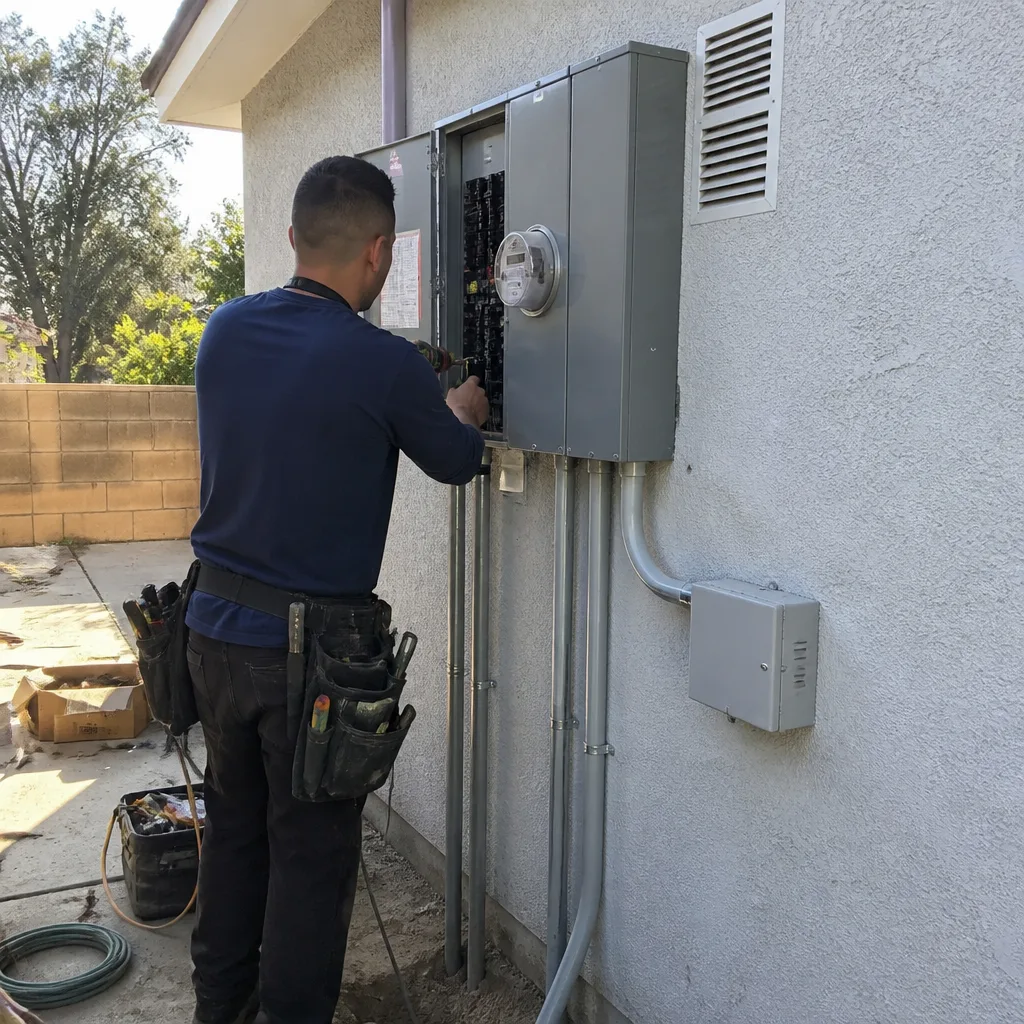 After
After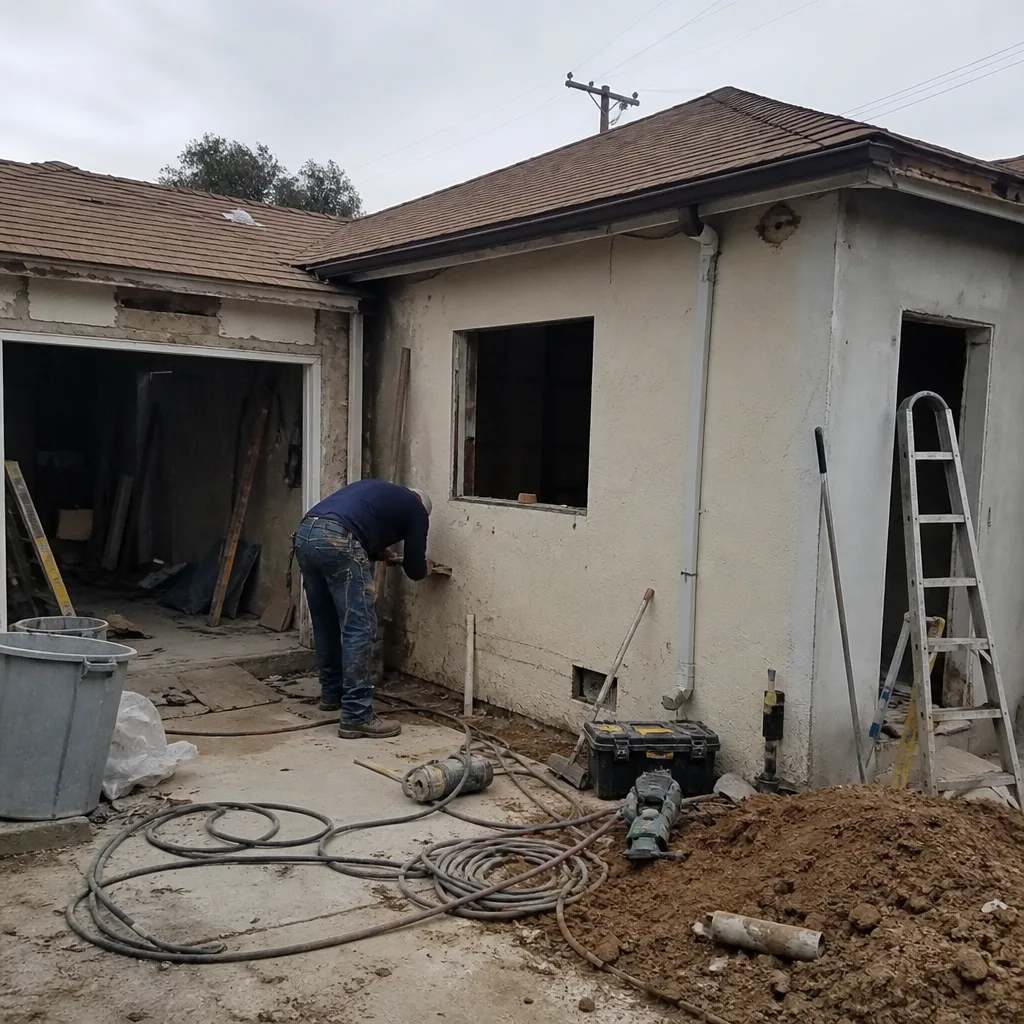 Before
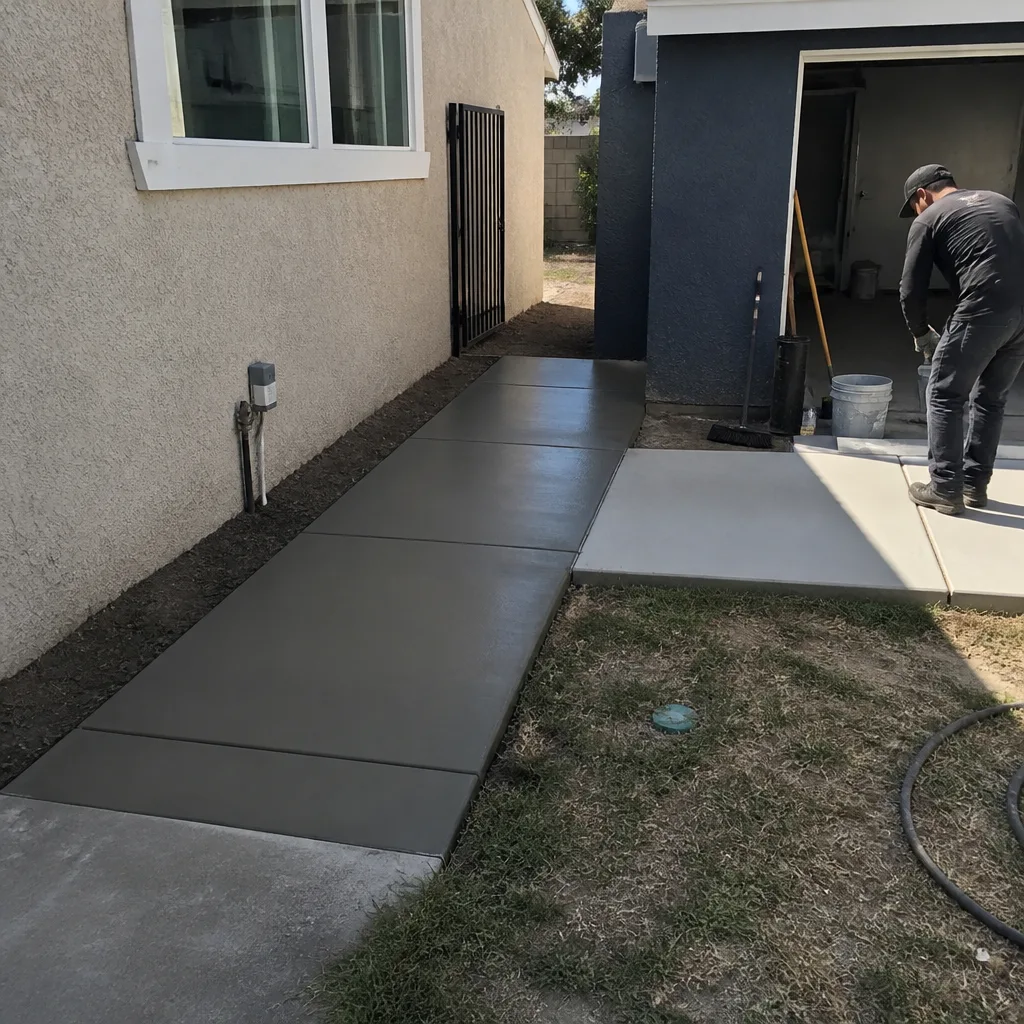 After
After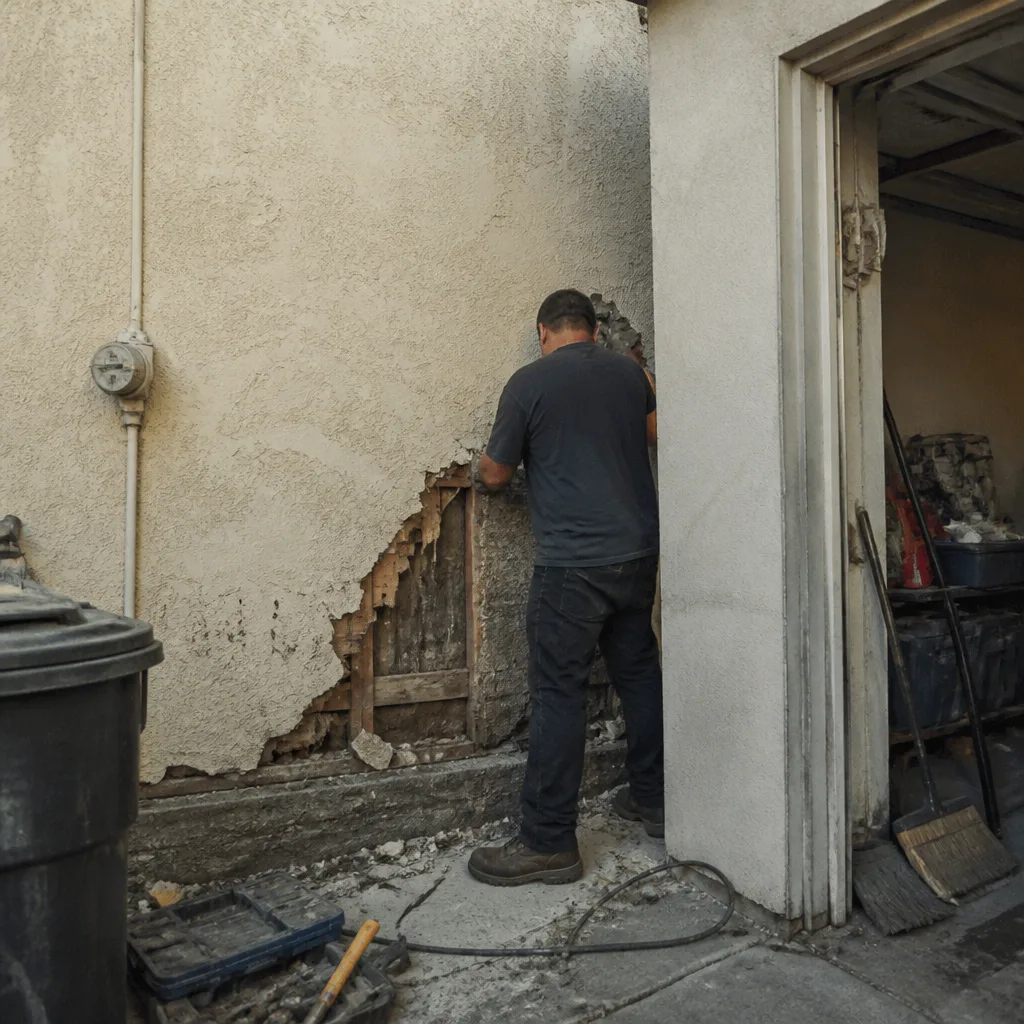 Before
 After
AfterWhen to Call a Professional
Any project that touches structural framing, electrical, plumbing, or load-bearing walls in Los Angeles requires a permit and a licensed contractor. That is not a preference. It is California law. If your project involves moving a gas line, re-routing a waste pipe, adding a window opening, or converting a garage to living space, you need a general contractor who pulls permits and schedules inspections. The risk of doing it unpermitted is not just the fines. Unpermitted work surfaces when you sell the house, and the buyer’s inspector will find it. Fixing it then costs more than doing it right the first time. Bradford Remodeling offers free estimates in Los Angeles. Call (903) 568-7222 to schedule yours.
Frequently Asked Questions
A kitchen remodel in Los Angeles typically takes 8 to 14 weeks from design lock to final inspection. The range includes 2 to 4 weeks for permit review at LA Building and Safety, 1 week for demolition, 2 to 3 weeks for rough-in, 2 to 3 weeks for cabinet and countertop work, and 1 to 2 weeks for punch list and close-out. Custom cabinets or a panel upgrade will push you toward the longer end. Call (903) 568-7222 to get a written schedule for your specific kitchen.
Los Angeles permit review and inspection scheduling at LA Building and Safety runs 10 to 15 business days for many trades, which adds 4 to 8 weeks to a project compared to cities with faster municipal review. The inspection queue is outside the contractor’s control, but a disciplined contractor builds it into the schedule from the start.
Only if the permit is already issued, the scope is cosmetic (no plumbing moves, no electrical changes), and no inspection is required. A bathroom remodel that moves a toilet, adds a circuit, or changes a shower valve needs a permit and at least one rough inspection, which alone can add 1 to 2 weeks in the LA inspection queue.
A liquidated damages clause sets a dollar amount the contractor owes you for each day a milestone is missed, but only when the delay is within the contractor’s control. It does not apply to LA Building and Safety backlogs, material shipping delays, or other force majeure events. Ask your contractor to tie the clause specifically to contractor-caused delays.
Search your property address on the LA Building and Safety online permit portal. The search shows all permit applications and issued permits associated with the address. If nothing appears, ask for the application reference number. No reference number and no portal record means the permit has not been filed.
Yes. Bradford Remodeling offers free estimates for general contracting, kitchen remodeling, and home remodeling projects in Los Angeles. Every estimate includes a written price and a written scope before work starts, backed by the 365-Day Done Right Promise. Call (903) 568-7222 to schedule yours.
The Bottom Line
For more guides & resources, Los Angeles remodel timelines run long because the permit process runs long. A real schedule accounts for LA Building and Safety review times, inspection queues, material fabrication windows, and the reality that older homes hide surprises inside their walls. A contractor who gives you a tight date without those contingencies is not doing you a favor. They are setting up the change order conversation. Get the schedule in writing. Get the delay terms in writing. Verify the permit submission yourself. Ask the weekly questions and write down the answers. That is how you hold a timeline in a city known for letting them slip.
For more on how Bradford Remodeling plans and prices projects, start at the Bradford Remodeling home page. If you’re specifically planning a kitchen, see our Kitchen Remodeling in Los Angeles guide. For broader project planning, read the Home Remodeling in Los Angeles overview or learn about our General Contractor in Los Angeles services.
Written by Curtis Lane, Owner at Bradford Remodeling, serving Los Angeles since 2004.