Last updated October 9, 2026







Free written scope consultation - allowances, timeline, and change-order rules on paper before a single trade is scheduled
Home Remodeling Warning Signs Every Homeowner Should Know
The most expensive sentence in a remodel is not “that’ll cost extra.” It’s “we’ll figure that out later.” In Los Angeles, where remodel costs run higher than the national average and permit waits stretch for weeks, a vague scope of work is a blank check written against your savings. What follows is a field guide to the warning signs that show up before a contractor ever swings a hammer, during the rough-in, and at the final walkthrough. Some signs sit squarely on the contractor’s side of the table. Others, and this is the part most guides skip, sit on yours.
Quick Answer
The biggest Home Remodeling services warning sign is a contract signed before the scope of work is fully defined. Other red flags include allowance budgets without fixed specifications, no written payment schedule, a prime contractor who won’t name their subcontractors, and mid-project requests for cash outside the agreed schedule. Any one of these is a reason to pause. Two or more is a reason to walk.
Styles & brands we work with







Table of Contents
- The Pre-Contract Decisions That Create Vulnerability
- The CSLB Complaint History Check and What It Actually Tells You
- The Low-Bid Warning Sign: Efficiency vs. Scope Omission
- What a Subcontractor Disclosure Should Look Like
- Mid-Project Warning Signs: Cash, Materials, and Inspection Delays
- Allowance Budgets: Where the Money Evaporates
- The Payment Schedule: Your Only Real Leverage
- Common Mistakes to Avoid
The Pre-Contract Decisions That Create Vulnerability
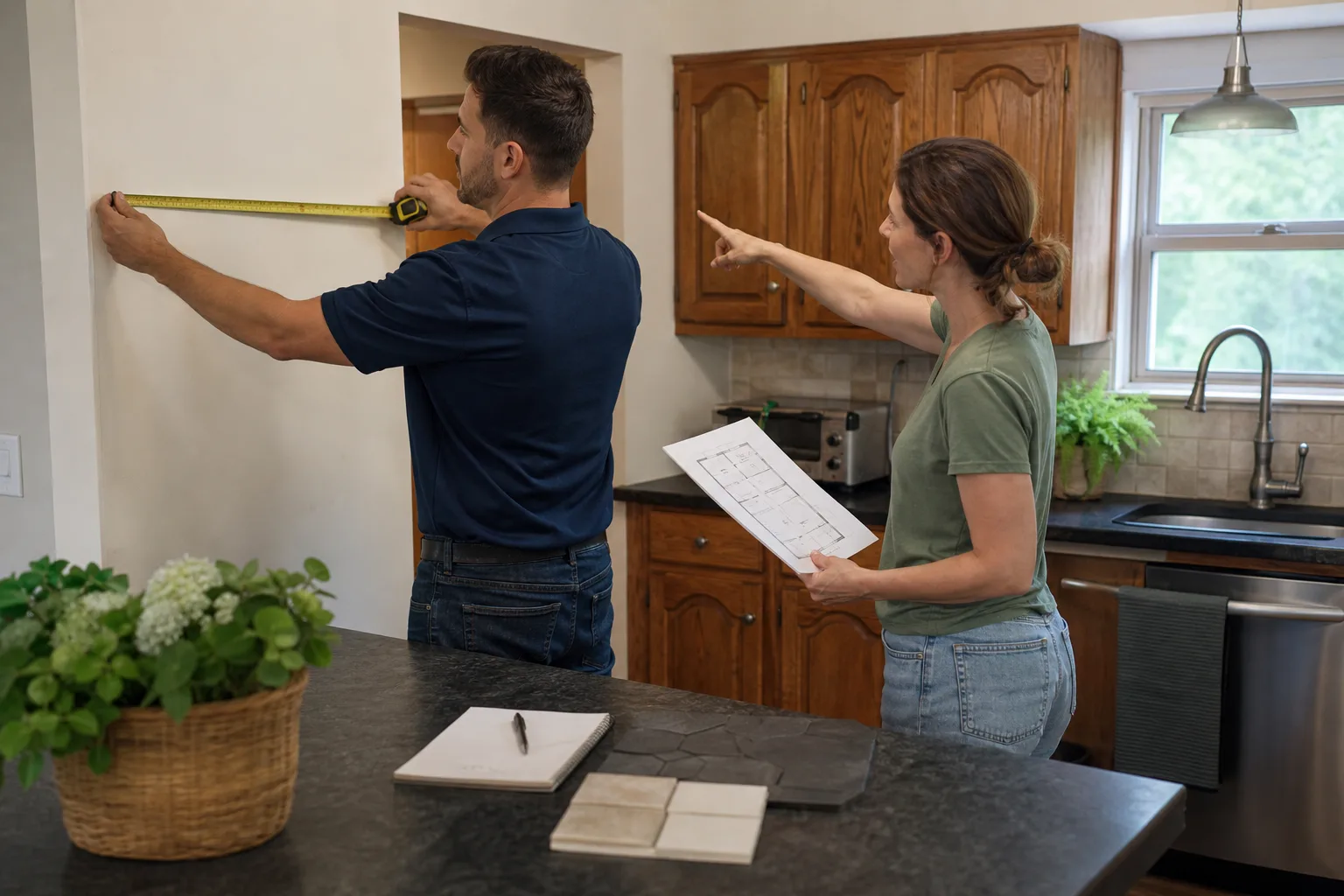
A homeowner who signs a contract before the drawings are complete has handed over a legal instrument with blank spaces. Not literal blank spaces, though those happen too. We mean undefined scope: “kitchen remodel per plan” when the plan is still a napkin sketch. In Los Angeles, where the Department of Building and Safety requires detailed submittals for any structural or MEP change, an undefined scope is worse than a licensing violation. It’s a contract that cannot be enforced because there is nothing specific to enforce.
The three pre-contract decisions that create the most vulnerability:
- Signing before drawings are complete. If the plan set is not stamped, dimensioned, and annotated with material callouts, the scope is negotiable. The contractor decides what “per plan” means, and you have no leverage to argue.
- Approving an allowance budget without fixed specs. Allowance line items are placeholders. If the contract says “$12,000 for cabinetry” but does not name the manufacturer, line, finish, and hardware, you have agreed to pay $12,000 for whatever is cheapest to source. See the allowance section below for how this plays out.
- Skipping a written payment schedule. No payment schedule means no draw structure, no retention, and no incentive for the contractor to finish. The contractor who does not put the payment schedule in writing knows exactly what they’re doing.
In our experience across Los Angeles County, the homeowners who get burned are not gullible. They are rushed. They want the kitchen done before the holidays or the ADU rented by spring, and they trade specificity for speed, often without reading How Long Does Home Remodeling Take? Timelines and What to Expect. A disciplined contractor will not accept that trade. And neither should you.
Bradford Remodeling home walks every client through a written scope before a contract is drafted. That is not a sales pitch. It is a structural requirement of how we operate under The Garrison Standard, and it exists because we’ve seen what happens when it’s skipped.
The CSLB Complaint History Check and What It Actually Tells You
Every contractor working on projects over $500 in California must hold a license from the Contractors State License Board. Before you hire anyone in Los Angeles, look up their license number on the CSLB website. It takes four minutes. Fewer than half of homeowners do it.
But the complaint history check requires interpretation. “No complaints” in the CSLB database does not mean the contractor has a clean record. It means no complaint was filed, adjudicated, and posted. Many homeowners who are unhappy do not file formal complaints. They eat the loss. So the absence of complaints is a minimum bar, not a positive signal.
What complaint patterns actually signal:
- Repeated complaints citing the same issue – abandonment, unauthorized work, payment disputes – indicate a systemic operating problem, not a one-off.
- Complaints with arbitration awards or settlements paid show the dispute was resolved in the homeowner’s favor. Read those carefully.
- A pattern of license suspensions or revocations, even if later reinstated, signals regulatory friction the contractor has not resolved cleanly.
- Multiple complaints in a compressed window often precede a business entity change. A contractor who dissolves and reincorporates under a new name is a known CSLB pattern.
- Ask for line-item breakdowns from every bidder. Not just bottom-line numbers. Labor hours by phase, material quantities with unit costs, permit fees as a separate line, contingency percentage. A contractor who refuses to itemize is not protecting trade secrets. They are protecting omissions.
- Compare the line items directly. If Bid A has 140 hours of rough carpentry and Bid B has 60, something is missing. Ask Bid B to explain. If they cannot, that is your answer.
- Look for the “to be determined” line items. TBD is a placeholder for money you will owe later. Add up the TBD line items in a low bid and the number is usually not low anymore.
- Check the material brands by name. A low bid that says “quartz countertops” without a brand is pricing the cheapest slab in the yard. When the contract is signed, you get that slab. If the spec does not say Cambria, Silestone, or Caesarstone, the contractor can legally deliver an import slab with no warranty documentation and the price holds. You have no recourse.
- Sub name and license number for each trade on the project.
- Scope of work for each sub, written in one or two sentences per trade.
- Insurance certificates for each sub, if they carry their own coverage, or confirmation that they are covered under the prime’s policy.
- The name of the site supervisor who will coordinate the subs, if the prime’s project manager is not on site daily.
- How change orders affecting sub scope will be documented and approved.
- Every allowance line must name a manufacturer and a line. Not “cabinetry” but “KraftMaid Vantage line, maple face frames, full-overlay doors, soft-close hinges.” If the contractor will not name a brand, the allowance is infinite.
- Allowances must carry a specification sheet separate from the contract. A cut sheet for the Delta faucet, the Caesarstone color code, the specific Kohler toilet model. Specifications are traceable.
- The allowance should have a reconciliation clause. If actual cost comes in under the allowance, the difference is credited back to you. If over, a written change order is signed before the material is ordered. Without a reconciliation clause, the allowance flows one way.
- Deposit: 10-15% at contract signing. In California, the deposit for home improvement work is capped at 10% or $1,000, whichever is less, under state law. If a contractor asks for more upfront, that is a legal red flag, not a business preference.
- Milestone 1: Demolition and rough-in complete. Payment released only after the rough-in inspection passes, if the scope includes permitted work.
- Milestone 2: Drywall and finish trades complete. Payment released after the work is visible and verified against the spec sheet.
- Final payment: Retain the last 10% until the punch list is cleared. Never release the final draw before the punch list. The final draw is what gets the contractor back to fix the crooked drawer.
- Signing a contract the same day the estimate arrives. Any contractor who pressures you to sign the same afternoon has a reason. A written scope takes time to develop. If the scope is already done the same day, it probably was not done at all.
- Hiring a contractor without checking the CSLB license and complaint record. Four minutes on the CSLB website is the highest-return time you will spend on the entire project. Most Los Angeles homeowners skip it.
- Paying cash for anything beyond a nominal deposit. Cash payments are untraceable and unenforceable. If a contractor asks for cash for a draw, that is a compliance warning in itself.
- Approving verbal change orders. A verbal change order is a handshake that becomes a line item on the final invoice at a number you never agreed to. If it is not written and signed, it did not happen.
- Releasing the final payment before the punch list is complete. This is the single most common mistake we see. The punch list is the work. Hold the payment until the work is done.
- Using an unlicensed “contractor” for a permit-required job in Los Angeles. Unlicensed operators cannot pull permits, cannot be enforced against through the CSLB, and their work will not pass a resale inspection. The short-term savings are a structural liability.
- Comparing bids by bottom-line number instead of line-item scope. The estimate with the lowest bottom line is often the least complete document, not the best value.
Check the license classification too. A “B” General Building license covers remodeling work in Los Angeles. A “C” specialty license, like C-36 for plumbing or C-10 for electrical, does not authorize the license holder to act as a prime contractor on a whole-home remodel. Verify the classification matches the scope you are hiring for.
General Contractor in Los Angeles work requires a B license with the appropriate bonding. Bradford Remodeling operates under a state-licensed structure and every project produces a written price before work starts. No exceptions, and the license status is something we invite every client to verify before signing.
The Low-Bid Warning Sign: Efficiency vs. Scope Omission
A low bid is not a warning sign by itself. Some contractors run lean, buy materials at volume discounts through established supplier relationships, and schedule crews with less downtime. That efficiency shows up as a lower number on the estimate. Fine.
The warning sign is a low bid that has not been itemized. When one bid comes in 20% or more below the field, that delta is not efficiency. It is omission. The contractor has left something out: permits, dumpster fees, flooring underlayment, electrical upgrades, paint prep, or the final coat of something. They know it. They are counting on you not to line-item the comparison.
How to tell the difference:
The homeowner who asks for line items is the homeowner who does not get repriced at the door. In Los Angeles, where a kitchen remodel runs $40,000 to $80,000 on average and the spread between the low bid and the field can be $15,000 or more, that one question is worth the asking.
What a Subcontractor Disclosure Should Look Like
A prime contractor who will not name their subs before work starts is a structural problem. Not a personality quirk. A structural problem in how the project will be supervised, scheduled, and warranted.
Here is why. In a typical Los Angeles remodel, the prime contractor is not doing the plumbing, electrical, HVAC, or tile work. Subcontractors are. The subs are the people cutting into your walls and pulling wire through your framing. If you do not know who they are, you cannot verify their licenses, their insurance, or their work history. You are effectively hiring strangers by proxy.
A legitimate subcontractor disclosure should include:
A contractor who says “we have our guys” but will not put names on paper before the contract is signed is either protecting a rotating cast of unlicensed day labor or planning to swap in cheaper crews after the contract is locked. Both scenarios end the same way.
Under The Garrison Standard, every Bradford Remodeling project includes a documented sub roster before work begins. Homeowners know who walks through the door, and the technicians on site are background-checked and uniformed. That standard is set at the Garrison Partners level and it is not left to individual job sites to figure out.
Mid-Project Warning Signs: Cash, Materials, and Inspection Delays
The contract is signed, the deposit is paid, and work has started. The warning signs do not stop at the door. They change form. Here are the three mid-project signals that indicate a project going sideways, and what each one means.
Cash requests that skip the schedule
Every written contract has a payment schedule: deposit, framing, rough-in, drywall, finish, final. When a contractor asks for a draw outside that schedule, the schedule is no longer governing the project. The request might sound reasonable: “I need to pay the tile guy before he walks.” But that is what the scheduled draw was for. A contractor who cannot float their own trade payables is a contractor operating without working capital. That is a solvency warning, not a scheduling inconvenience.
Material deliveries that do not match the spec sheet
You specified Kohler fixtures. The boxes on the driveway say something else. You specified a Cambria quartz slab. The fabricator calls about a “comparable” slab that “came in faster.” These are not substitutions for your benefit. They are substitutions for the contractor’s margin. The answer is the same every time: refuse the material and reference the spec sheet. The spec sheet is the contract. The delivery does not match the contract. That is not a conversation. That is a stop-work order.
Inspection delays the contractor explains but never documents
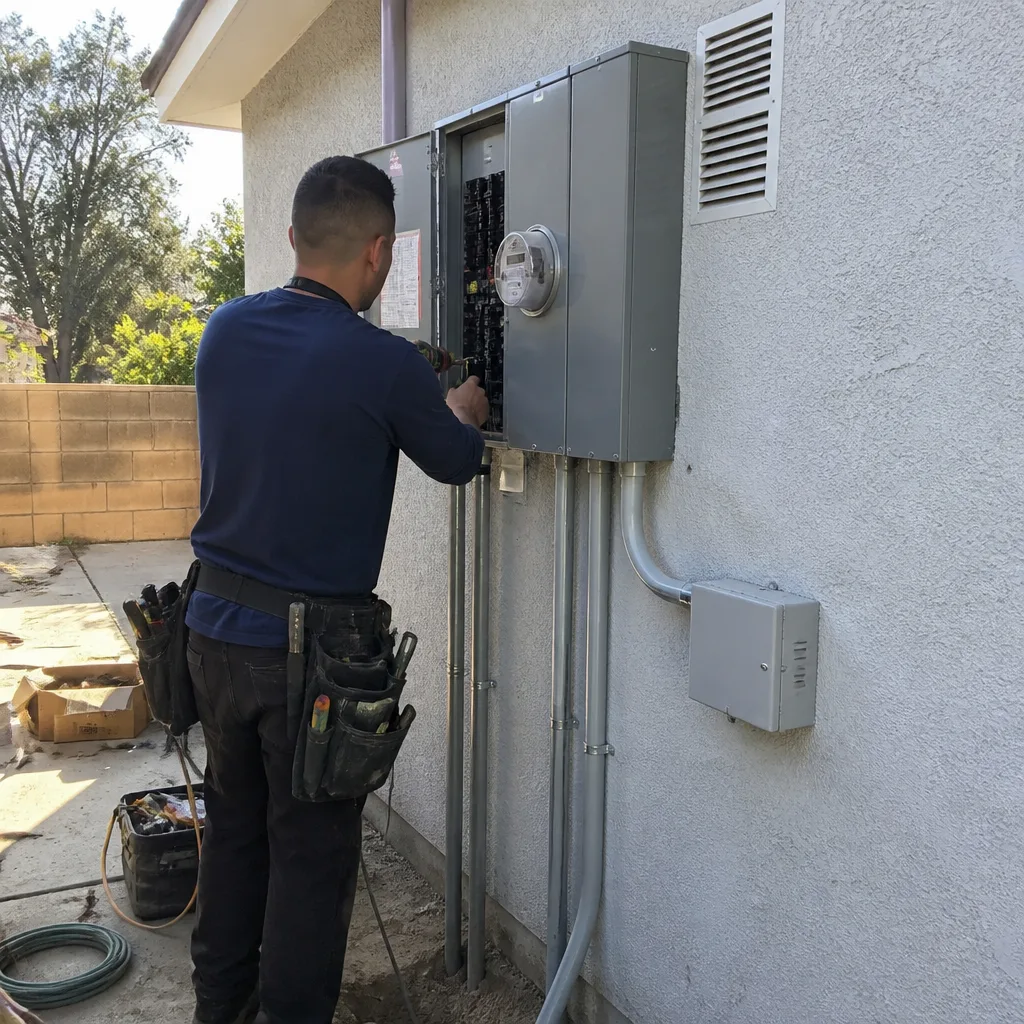
In Los Angeles, inspections are scheduled through the Department of Building and Safety. They are missed, rescheduled, and delayed all the time. That is normal. What is not normal is a contractor who keeps telling you the inspector delayed the inspection but never shows you the scheduling confirmation, the correction notice, or the inspector’s notes. If the inspection was really delayed by the city, there is a record. Ask for it. If there is no record, the delay is on the contractor’s side, and the project timeline is being managed with narrative instead of documentation.
We have seen every one of these patterns on projects across Los Angeles. The remedy is always the same: written documentation, referenced against the written scope. When a contractor operates from documentation, the mid-project surprises are manageable. When they operate from conversation, the surprises compound.
Allowance Budgets: Where the Money Evaporates
An allowance is a dollar figure in the contract assigned to a category of work: cabinetry, countertops, plumbing fixtures, flooring. The allowance system exists so homeowners can make selections after the contract is signed without the contractor having to reprice the whole job. It is a legitimate tool. It is also the most reliable place for money to disappear in a Los Angeles remodel.
The trap works like this. The contract says “Kitchen Cabinets – Allowance $15,000.” You picture a full set of semi-custom cabinets with soft-close everything. The contractor prices a stock line with melamine interiors and painted MDF doors, bolts it in, and pockets the difference between the $15,000 allowance and the $8,000 actual cost. The contract did not specify the brand, line, or materials. The contractor did nothing legally wrong. You paid $15,000 for an $8,000 kitchen.
The preventatives are specific:
Bradford Remodeling writes allowances with manufacturer name, line, and model where applicable, and every project is spec’d with a documented brand roster that includes Cambria, Silestone, Caesarstone, and Kohler, among others. When the spec is written, the allowance cannot be arbitraged.
The Payment Schedule: Your Only Real Leverage
Once the contract is signed and the deposit is paid, the homeowner has exactly one piece of leverage: the remaining payments. The contractor who controls the draw schedule controls the job. The homeowner who controls it controls the outcome.
A written payment schedule is not a negotiation tactic. It is the operating document of the project. It should be specific to the work, not to calendar dates. “30% at contract signing, 40% at rough-in, 30% at final.” Each milestone triggers payment only when the work is verifiably complete and inspected, where inspection applies.
What a real payment schedule looks like:
If the contractor proposes a schedule that front-loads heavily or skips milestones entirely, that is a warning sign. Not because they are necessarily dishonest, but because a contractor without a working schedule is a contractor without a completion incentive. And in our experience, the homeowners who retain final payment until the punch list is done are the homeowners who get the punch list done.
Home Remodeling in Los Angeles projects under The Garrison Standard always include a written payment schedule tied to verification milestones. The schedule is part of the written price, part of the written scope, and part of the written guarantee. That is how the job gets squared away.
Common Mistakes to Avoid
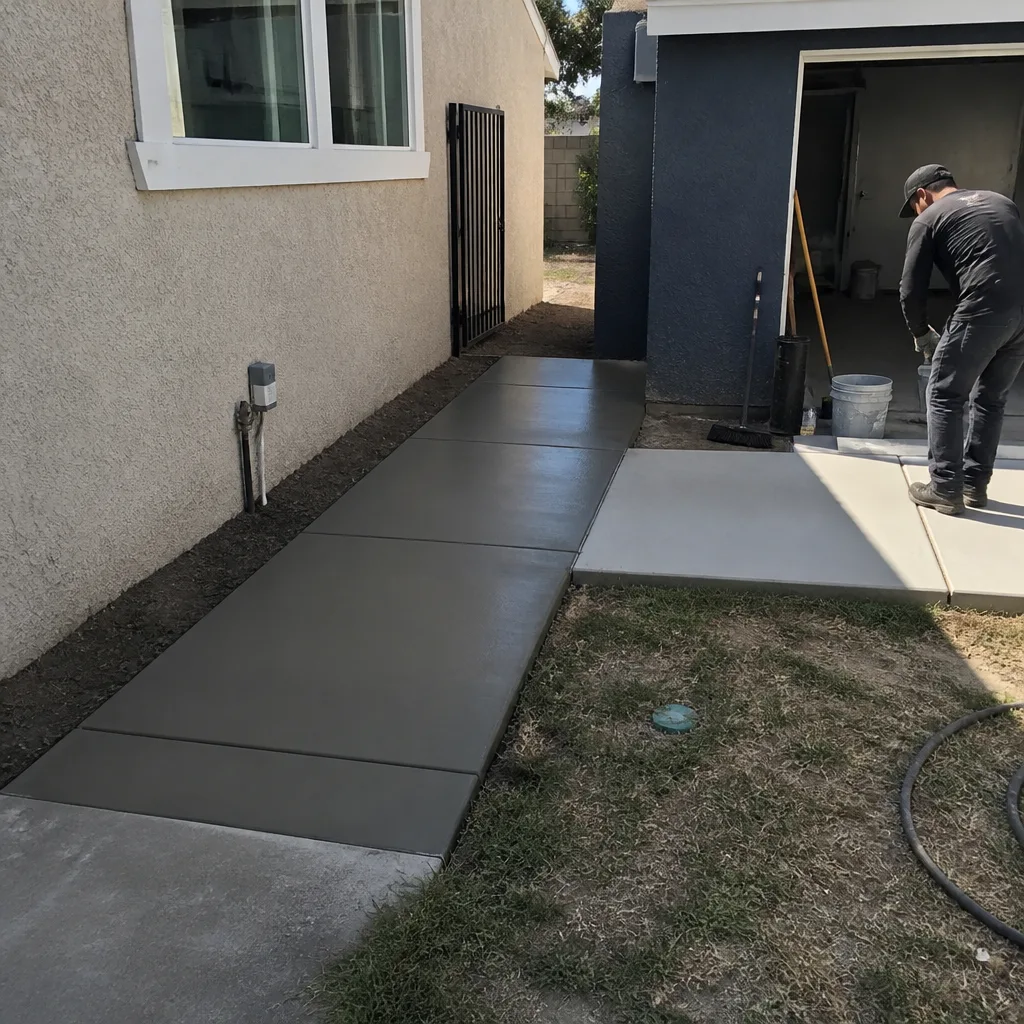
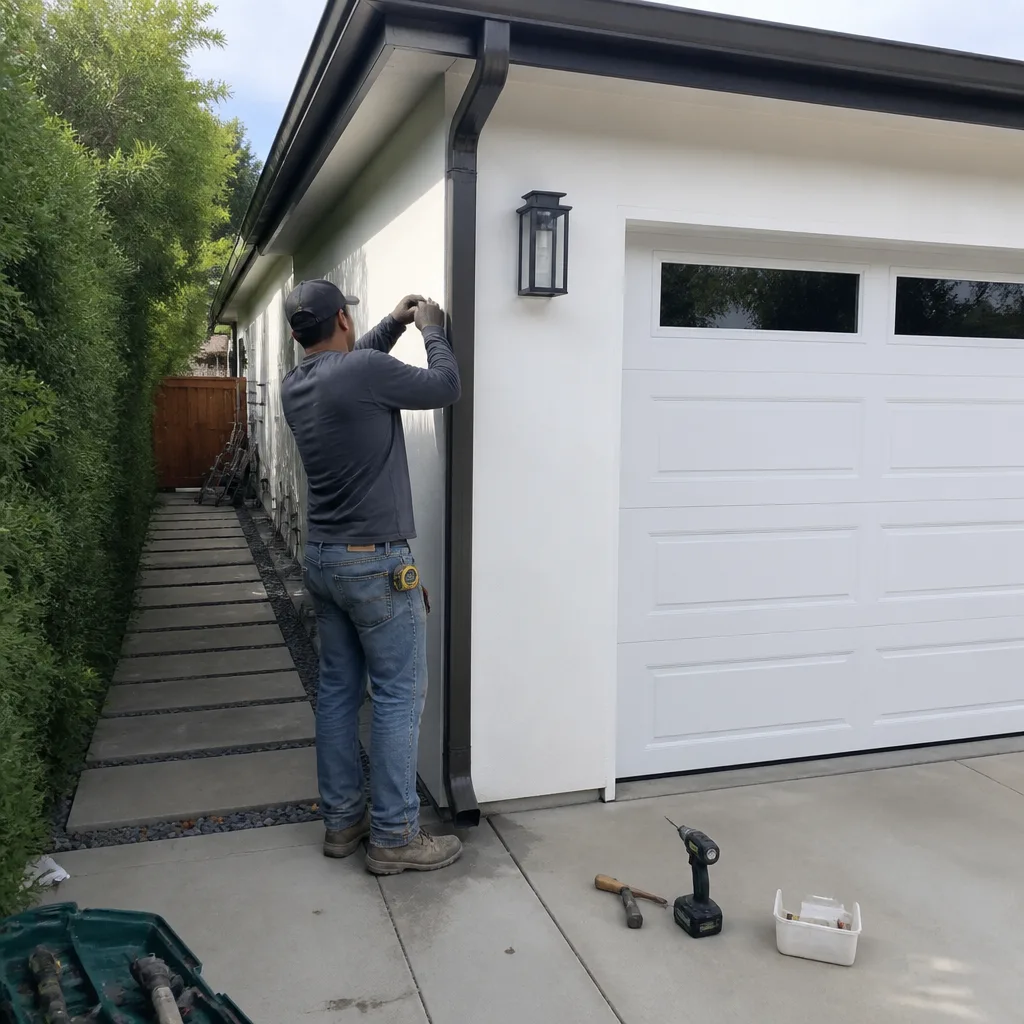
See the difference
 Before
 After
After Before
 After
After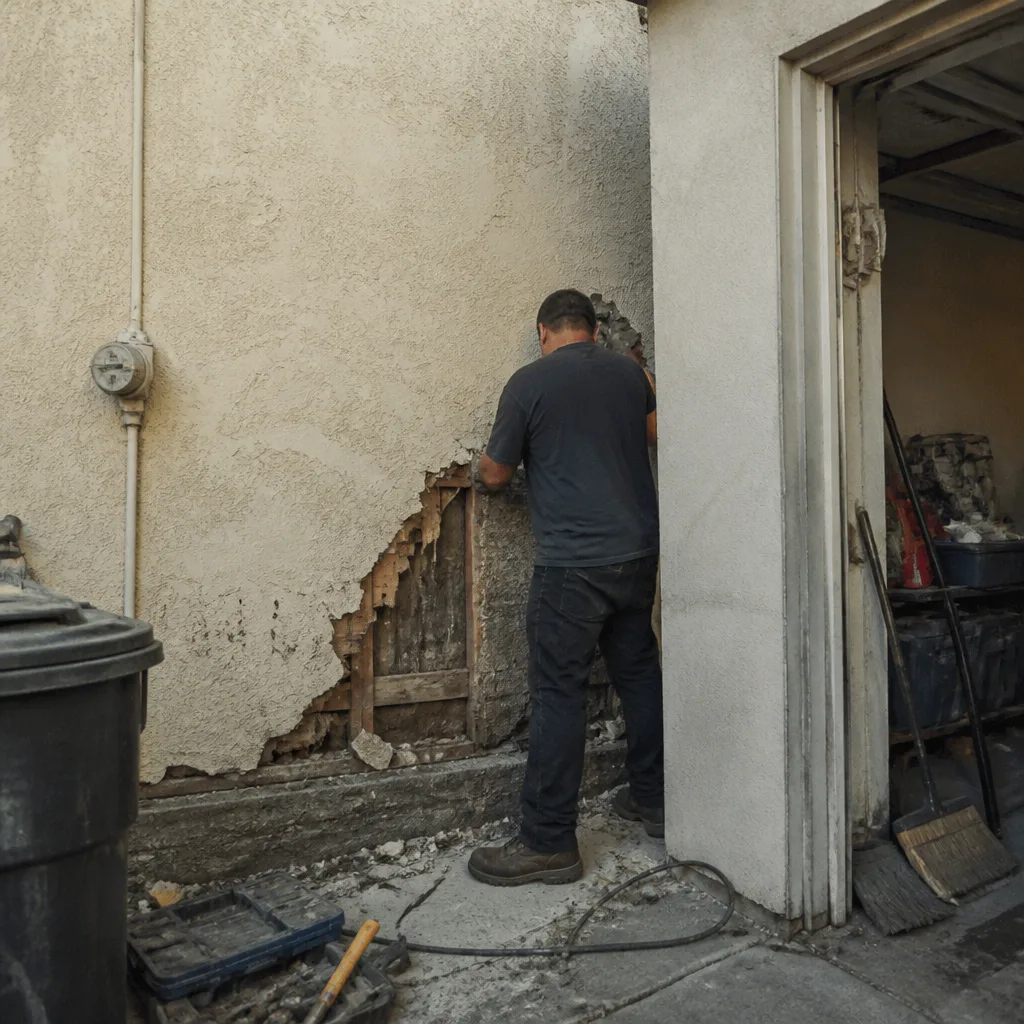 Before
 After
AfterWhen to Call a Professional
If any of the warning signs above have already appeared on your project, stop work and get a professional review of the contract, the scope, and the work in place. A licensed contractor can assess whether the work matches the documentation, whether the permits are in order, and whether the project can be salvaged. This is not a time for self-diagnosis. The cost of a professional review is a fraction of the cost of undoing non-compliant work after the fact. Bradford Remodeling offers free estimates in Los Angeles, and that estimate includes a written scope and written price before any work starts, as detailed in our guide on How Long Does General Contractor Take? Timelines and What to Expect. Call (903) 568-7222 to schedule the conversation.
Frequently Asked Questions
The number one warning sign is a contract signed before the scope of work is fully defined, including drawings, material specifications, and a written payment schedule. A contract with undefined scope is a legal document that gives the contractor discretion over what gets built and what it costs. Call (903) 568-7222 to have a written scope and price prepared before you sign anything.
Look up the contractor’s license number on the Contractors State License Board website and review the license classification, bond status, and any complaints or enforcement actions. A clean CSLB record is a minimum bar, not a positive signal, so also ask for local references with Los Angeles addresses you can verify. Bradford Remodeling invites every client to verify our license and complaint record before signing.
California law caps the down payment for home improvement work at 10% of the contract price or $1,000, whichever is less. If a contractor asks for more than that upfront, that is a legal red flag, not a business preference. The rest of the payment schedule should be tied to completion milestones, not calendar dates.
An allowance is a dollar amount assigned to a category of work, like cabinetry or countertops, that is finalized after the contract is signed. Allowances are the most common place for remodel costs to inflate in Los Angeles, so every allowance line must name a specific manufacturer and line, like KraftMaid cabinetry or a Caesarstone slab, with a written reconciliation clause.
Only if the low bid survives a line-item comparison against the other bids. A bid that comes in 20% or more below the field is usually omitting scope, not running lean. Ask every bidder for line-item breakdowns by phase, and compare the hours, materials, and permit fees directly. A bid that will not itemize is not a bargain; it is a blank.
Refuse the request and reference the written payment schedule. A contractor who cannot stick to the schedule they wrote is either undercapitalized or managing the schedule informally, and both are warning signs. Every draw should be documented against a completed milestone, and the final 10% should be held until the punch list is cleared.
The Bottom Line

The warning signs that predict a failed remodel are visible before the first hammer swing. They show up in contracts with blank spaces where the scope should be, allowances without brand names, bids without line items, and a prime contractor who will not name their subs. They also show up in homeowner decisions: signing early, skipping the CSLB check, and releasing final payment before the punch list. The remedy is not suspicion. It is specificity. Written scope, written price, written schedule, written guarantee. Everything else is hope, and hope is not a construction material.
Written by Curtis Lane, Owner at Bradford Remodeling, serving Los Angeles since 2004.